BNN Summary
World Space Week 2026 has officially commenced worldwide, highlighting the profound impact of the 'Rocket Revolution' on global space travel, declining launch costs, and deep-space imaging breakthroughs.
In-Depth Analysis
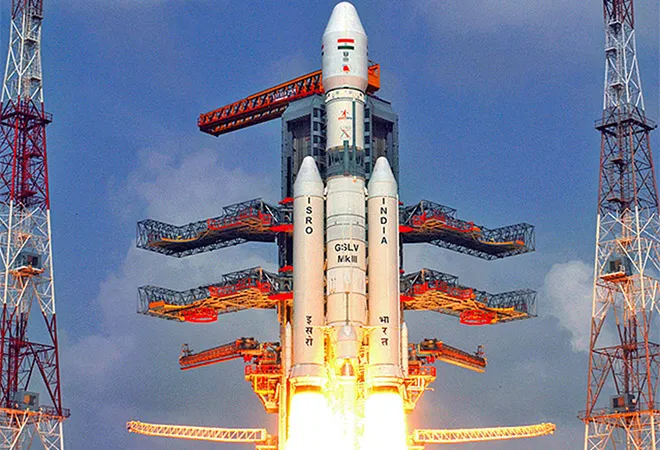
The global scientific and space exploration communities have officially kicked off World Space Week 2026, centering this year's celebrations around the profound impact of the 'Rocket Revolution'. This timely theme highlights the monumental shifts in how humanity accesses outer space, focusing on the dramatic reduction in launch costs, the accelerating speed of payload deployment, and the evolving future of interplanetary travel.
The Rise of Reusable Spaceflight
Historically, space exploration was the exclusive domain of highly funded government agencies. Today, a vibrant ecosystem of private aerospace companies, international alliances, and commercial enterprises has democratized access to the stars. The transition from single-use expendable launch systems to fully reusable rocket boosters has fundamentally altered the economics of spaceflight. Industry experts note that the cost per kilogram to reach low Earth orbit (LEO) has dropped by orders of magnitude over the last decade, allowing universities, startups, and developing nations to launch their own payloads and conduct cutting-edge research.
Digital Tributes and Deep Space Art
To mark the beginning of this global event, Google unveiled a dedicated Google Doodle that celebrates the mystery and beauty of deep space. The digital artwork specifically features stunning depictions of deep-space nebulas and the famous Herbig-Haro 46/47 object. Herbig-Haro 46/47 is an active, star-forming region located in the constellation Vela, approximately 1,400 light-years from Earth. The choice of this astronomical phenomenon highlights the advancements in space observatory technology, particularly the high-resolution infrared imaging provided by the James Webb Space Telescope, which continues to unveil the secrets of stellar birth and cosmic evolution.
Global and Local Celebrations
Events are underway across the globe, spanning from major aerospace hubs to local science centers. In Florida, home to the historic Kennedy Space Center and Cape Canaveral, community-driven educational programs and public lectures are bringing the excitement of the Rocket Revolution directly to the public. Meanwhile, in countries like India, which has emerged as a major player in the global commercial satellite launch market, academic institutions are hosting exhibitions detailing the nation's own contributions to affordable space missions, including the legendary Polar Satellite Launch Vehicle (PSLV) and the newer LVM3 rockets.
The Future of Space Governance
World Space Week, which runs annually from October 4 to October 10, commemorates two milestone events: the launch of Sputnik 1, the first artificial human-made satellite, in 1957, and the signing of the Outer Space Treaty in 1967. This year's conversations are not only celebratory but also cautionary. Panel discussions and symposiums are addressing the challenges brought by the rapid increase in rocket launches, such as orbital debris management, atmospheric impact of rocket emissions, and the preservation of dark skies for ground-based astronomical research.
As the week progresses, the international community continues to reflect on how the democratization of space technology can solve terrestrial challenges, from monitoring climate change with high-frequency satellite constellations to providing global high-speed internet access to remote regions. The Rocket Revolution is no longer just a technological milestone; it is the foundation of a new global space economy that promises to reshape human society for generations to come.
How do you feel about this story?
Discussion
No comments yet. Be the first to share your thoughts.
Join the discussion
Sign in to share your thoughts on this story.