
BNN Summary
World Space Week 2026 is underway globally, celebrating a historic year of rocket launch achievements and deep-space missions. The event highlights major breakthroughs by international space agencies and private enterprises while honoring local contributions, such as regional aerospace hubs and legendary astronauts. With a strong emphasis on STEM outreach, this year's global celebrations aim to inspire the next generation of pioneers as humanity prepares for upcoming lunar and interplanetary missions.
In-Depth Analysis
World Space Week 2026 has officially commenced, uniting scientists, educators, and space enthusiasts worldwide to celebrate humanity's ongoing journey into the cosmos. This year's celebration carries a special significance, highlighting a remarkable period of rocket launch milestones, deep-space achievements, and the rapid expansion of the global space economy. From national space programs to local grassroots initiatives, the event underscores how space science has transitioned from a competitive race into a collaborative global endeavor.
A Year of Unprecedented Rocket Launch Milestones
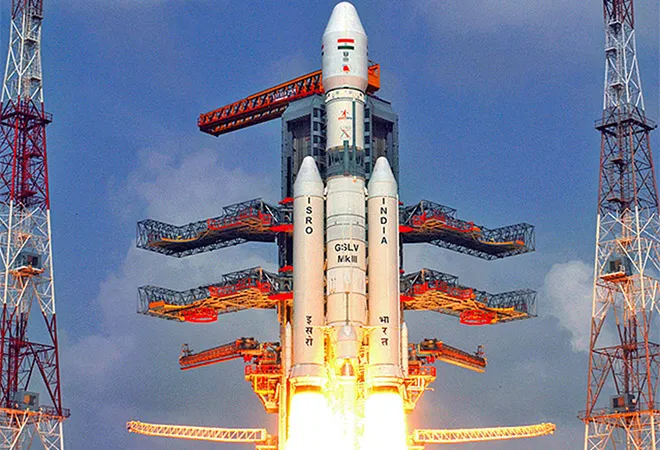
The year 2026 has witnessed some of the most ambitious rocket launches in recent history. World Space Week serves as an ideal platform to reflect on these monumental engineering achievements. Major space agencies, including NASA, the European Space Agency (ESA), and the Indian Space Research Organisation (ISRO), have reached new heights. ISRO's progress with the Gaganyaan human spaceflight program and its continuing lunar exploration missions have cemented India's position as a premier spacefaring nation. Concurrently, private aerospace companies have maintained an unprecedented launch frequency, successfully deploying advanced communication satellite constellations and testing heavy-lift reusable vehicles that promise to drastically lower the cost of reaching orbit. Moreover, collaborative agreements between nations are helping to establish shared frameworks for space debris mitigation, ensuring that orbit remains sustainable for future generations. This global consensus represents a critical step forward as commercial activity in Low Earth Orbit reaches unprecedented density.
Honoring Regional Contributions and Astronaut Legacies
While global attention often focuses on massive international missions, local communities play an indispensable role in supporting the aerospace industry. Across the United States, states are celebrating their unique historical ties to space flight. In Michigan, organizations are highlighting the state's deep academic and industrial contributions, which include manufacturing critical aerospace components and training generations of world-class physicists. Similarly, South Carolina is utilizing this week to pay tribute to its rich astronautical history, honoring the seven brave astronauts from the state who have traveled into space. These regional events emphasize that behind every successful mission are thousands of localized researchers, engineers, and technicians who work tirelessly behind the scenes.
Inspiring the Next Generation of Explorers
At its core, World Space Week is designed to spark curiosity and foster a passion for Science, Technology, Engineering, and Mathematics (STEM). Educational institutions, planetariums, and museums globally are hosting public outreach programs, stargazing nights, and interactive webinars. In India, schools are conducting workshops centered on the country's growing space capabilities, encouraging students to pursue careers in astrophysics and aerospace engineering. By bringing real-world space science into the classroom, organizers hope to prepare the next generation of scientists who will eventually spearhead future manned missions to Mars.
Looking Toward a Bold Future
As World Space Week 2026 draws to a close, the global aerospace community is already looking ahead to the next decade of exploration. Planned missions include establishing permanent habitats on the Moon, launching advanced space telescopes to probe the early universe, and sending robotic explorers to the icy moons of Jupiter and Saturn. The cooperative spirit celebrated during this week serves as a vital blueprint for future international missions, ensuring that humanity's next giant leap is taken together.
How do you feel about this story?
Discussion
No comments yet. Be the first to share your thoughts.
Join the discussion
Sign in to share your thoughts on this story.


