BNN Summary
An analytical perspective on the United Nations explores its structural limitations, its role as a diplomatic stage rather than a world government, and why its persistent failures do not negate its utility in international relations.
In-Depth Analysis
For decades, the United Nations has occupied a paradoxical position in global politics. Critics frequently point to its inability to prevent major conflicts, halt humanitarian crises, or enforce international law as evidence of a systemic failure. However, a deeper examination of the institution reveals that these shortcomings are often the result of misdiagnosing its core purpose. The United Nations was never designed to function as a world government; rather, it is a global stage built for continuous diplomatic engagement.
The Architecture of Compromise
The fundamental structure of the United Nations is rooted in the geopolitical realities of the post-World War II era. The establishment of the Security Council, with its permanent five members holding veto power, ensured that the organization could not take enforcement action against any of the major powers without their consent. While this design frequently leads to paralysis during severe international crises, it was the essential compromise required to keep powerful nations talking rather than fighting.
Critics argue that this framework renders the body impotent when it matters most. From the civil wars of the 1990s to more recent conflicts in various regions, the UN has often stood by as atrocities unfolded. These failures lead many observers to question the financial and political cost of maintaining such a vast bureaucracy. Yet, evaluating the UN solely through the prism of conflict resolution overlooks its broader mandate and daily operations.
Beyond Peacekeeping: The Vital Safety Net
Away from the high-stakes politics of the Security Council, the United Nations system performs critical functions that few other organizations can manage. Agencies such as the World Health Organization, the UN Refugee Agency, and the World Food Programme operate on the frontlines of global challenges, providing aid to millions of displaced people, managing pandemic responses, and coordinating international development efforts.
These specialized agencies represent a form of practical internationalism that thrives precisely because the broader political framework provides a neutral umbrella. Even hostile states often find common ground in technical cooperation, proving that the UN apparatus possesses profound utility beneath its contentious political surface.
A Permanent Diplomatic Forum
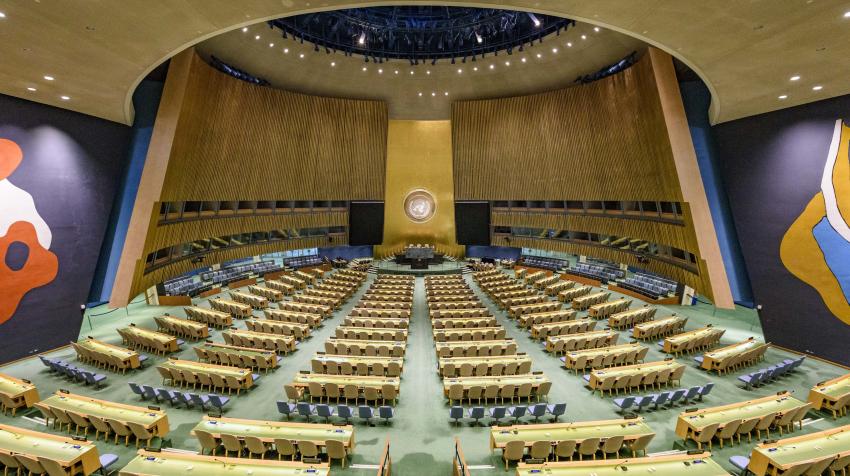
Perhaps the greatest value of the United Nations lies in its role as a permanent diplomatic clearinghouse. In an era of resurgent nationalism and shifting alliances, having a physical venue where adversaries must sit across from one another remains invaluable. The General Assembly serves as a barometer of global opinion, allowing smaller nations to voice concerns that might otherwise be ignored by great powers.
While it cannot compel compliance, it establishes international norms and legal frameworks that shape global discourse. Treaties on climate change, maritime law, and human rights originate or find consensus within these halls, creating a baseline of expected behavior for sovereign states.
Redefining Success and Failure
Ultimately, dismissing the United Nations as a failure stems from unrealistic expectations. It cannot override national sovereignty, nor can it transcend the ambitions and rivalries of its member states. It merely reflects the world as it is, complete with all its friction, inequality, and conflict.
Acknowledging this reality does not excuse the institution from necessary reforms. Proposals to expand the Security Council to better reflect the modern distribution of global power have circulated for years, hampered only by the very veto powers who benefit from the status quo. Nevertheless, as a mechanism for crisis management, humanitarian relief, and unending dialogue, the United Nations remains an indispensable, if flawed, pillar of international stability.
How do you feel about this story?
Discussion
No comments yet. Be the first to share your thoughts.
Join the discussion
Sign in to share your thoughts on this story.