BNN Summary
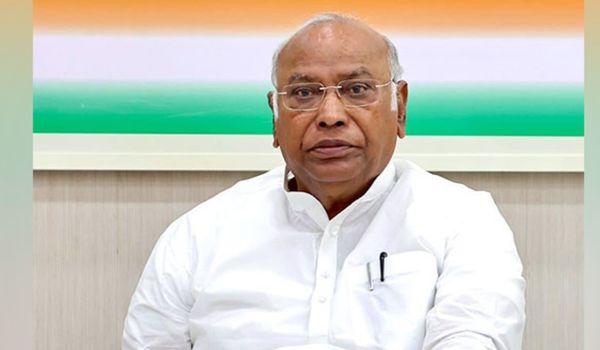
The Indian National Congress has raised serious concerns regarding the upcoming parliamentary constituency delimitation, warning it could penalize southern states for their successful family planning initiatives. The ruling Bharatiya Janata Party strongly rejected these allegations, accusing the opposition of shifting goalposts and attempting to divide the nation along regional lines.
In-Depth Analysis
Amajor political debate has erupted across the country following renewed apprehensions expressed by the Indian National Congress regarding the proposed delimitation of parliamentary constituencies. The opposition party has voiced deep fears that southern states, which have successfully controlled population growth over the past several decades, might face a significant reduction in their political representation in the Lok Sabha once the exercise is carried out based on fresh census data.
Senior leaders from the opposition camp argued that penalizing progressive states for adhering to national population control policies would fundamentally undermine the federal structure of India. They contended that southern states like Kerala, Tamil Nadu, Karnataka, and Andhra Pradesh have contributed immensely to the socio-economic development of the nation. According to these leaders, reducing their relative weight in Parliament would create a severe sense of alienation and severely compromise the principle of cooperative federalism.
In sharp contrast, the ruling Bharatiya Janata Party launched a scathing counter-attack against the opposition, dismissing the fears as politically motivated and baseless. Top BJP spokespersons accused opposition leaders of constantly 'changing goalposts' to suit their political narratives and create artificial fault lines between northern and southern India. The ruling party maintained that the delimitation process is a constitutional mandate governed by laid-down procedures and will be executed with absolute transparency after extensive nationwide consultations.
Political analysts note that the delimitation exercise, slated to take place after the next comprehensive census, poses complex structural challenges for Indian democracy. The core dilemma stems from the demographic divergence between northern and southern states. While northern states like Uttar Pradesh and Bihar have experienced higher population growth rates, southern states have achieved replacement-level fertility rates much earlier. Consequently, an absolute population-based seat allocation would naturally increase the parliamentary share of northern states while potentially decreasing the proportional share of southern states.
Constitutional experts point out that the 84th Amendment to the Constitution of India had previously frozen the total number of Lok Sabha seats based on the 1971 census until the first census taken after the year 2026. This legislative freeze was specifically enacted to ensure that states implementing family planning programs were not penalized with reduced political power. As the deadline approaches, the debate has intensified over whether the central government will introduce safeguards or alternative allocation formulas to protect the interests of high-performing southern states.
The exchange of sharp words between the two national parties highlights the growing political sensitivity surrounding demographic shifts and federal resource allocation. Regional parties in the south have also begun mobilizing public opinion, demanding constitutional guarantees to ensure that no state loses its parliamentary clout due to successful demographic management. As the political temperature rises, the central government faces the delicate task of balancing constitutional requirements with the aspirations and anxieties of regional stakeholders across the country.
How do you feel about this story?
Discussion
No comments yet. Be the first to share your thoughts.
Join the discussion
Sign in to share your thoughts on this story.