Public Reaction Summary
“ज्ञानेश कुमार: चुनाव आयोग की निष्पक्षता पर बढ़ते सवाल और लोकतंत्र की अग्निपरीक्षा”
Analysis based on 5,000 commentsJoy
Summary
The social media comments surrounding Gyanesh Kumar reflect intense public polarization, with widespread demands for his resignation, arrest, and thorough audits of the Election Commission. Users expressed strong anti-establishment sentiments, criticizing the ruling government and alleging electoral malpractice, while simultaneously praising independent journalism outlets like Indian Express and specific reporters for exposing the issues. Conversely, a faction of commenters used humor and direct outrage to demand accountability, comparing the political situation to broader systemic corruption. Overall, the discourse highlights deep distrust in current institutional integrity and a fervent demand for democratic reform.
Breakdown of emotional tone across all comments
Key Takeaway
Public sentiment is heavily fractured and critical of the Election Commission under Gyanesh Kumar, signaling an urgent crisis in institutional trust that media outlets are uniquely positioned to amplify.
Full Dashboard
Trending Keywords
✅ Top Positive Reactions
“CJP comeback at jantar mantar Indian needs you 😊”
“इंडियन एक्सप्रेस❤❤❤❤❤अभी जिंदा है लोकतंत्र का चौथा स्तम्भ”
⚠️ Critical Perspectives
“Arrest him immediately 😮”
“He must resign”
BNN Summary
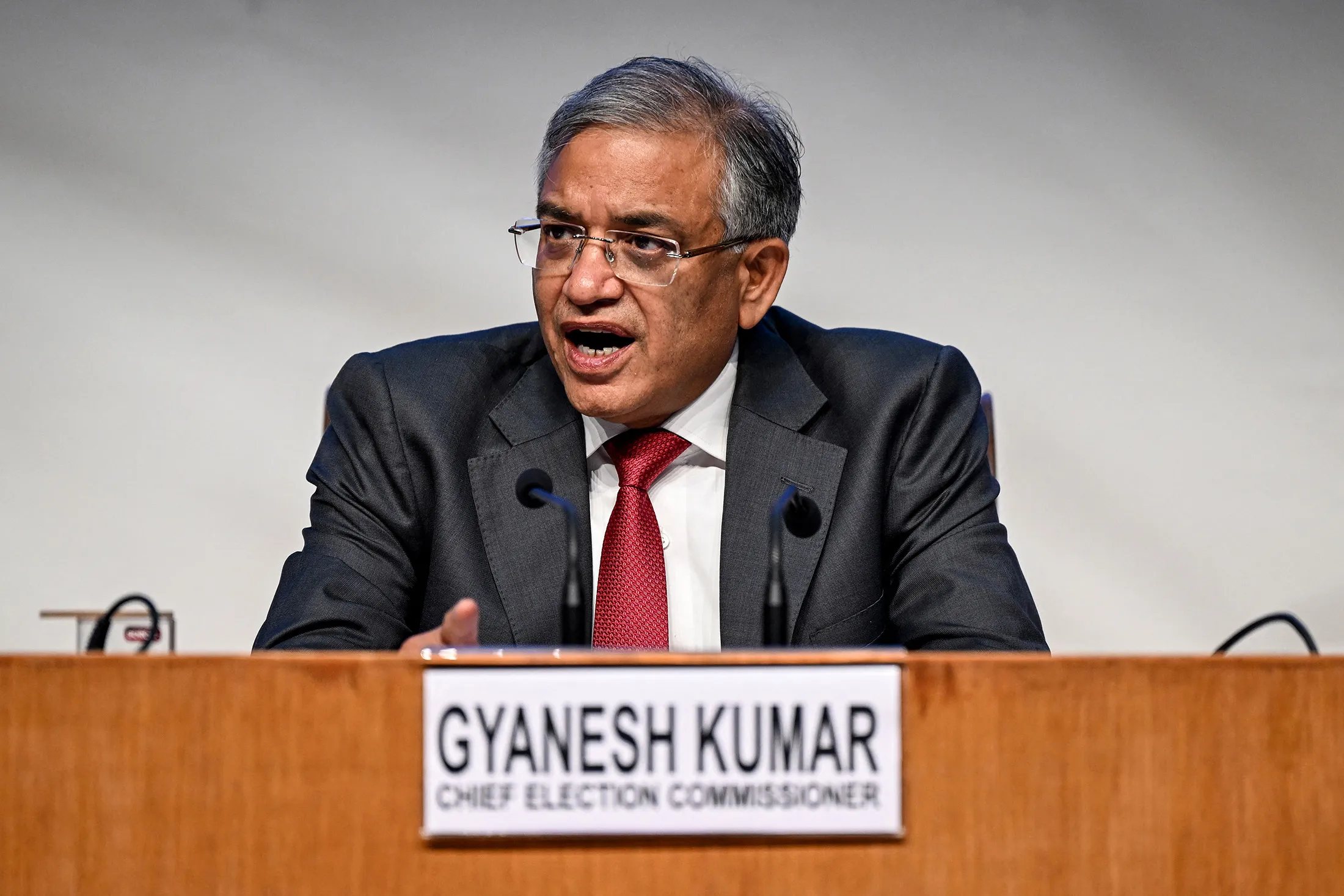
Election Commissioner Gyanesh Kumar has emerged at the center of intense national debate, as surging public scrutiny questions the Election Commission's regulatory impartiality. This friction highlights a critical juncture for the world's largest democracy, where maintaining institutional trust and constitutional integrity remains a paramount public concern amid sharp partisan divisions.
In-Depth Analysis
New Delhi — In the high-stakes arena of Indian politics and governance, few figures command as much public attention as Election Commissioner Gyanesh Kumar. Over the past week, Kumar has emerged as the central figure in a major trending political news cycle, generating massive public interest with a search volume exceeding 20,000 queries. As the nation navigates a complex electoral landscape, the actions and administrative decisions of the Election Commission continue to sit squarely at the intersection of public trust, constitutional duty, and intense partisan debate.
Introduction and Core Facts
The recent surge in search volume and media attention surrounding Gyanesh Kumar stems from ongoing debates regarding the execution of regulatory duties by the Election Commission of India. As a key constitutional authority tasked with overseeing the world's largest democratic exercises, the Commission's every move is scrutinized by political parties, legal experts, and citizens alike.
At the heart of the current news cycle are questions regarding how institutional policies are rolled out and enforced. While the Election Commission maintains that its procedures are strictly aligned with the Representation of the People Act and constitutional mandates, critics and observers have raised questions about the transparency and procedural clarity surrounding specific regulatory actions. The current discourse highlights a growing public demand for absolute neutrality and operational transparency from autonomous bodies, making Kumar a focal point of both praise and sharp critique.
Context and Implications
The significance of this trending story extends far beyond an individual bureaucrat; it strikes at the very core of institutional independence in India’s democracy. The Election Commission of India has historically been viewed as a pillar of democratic integrity. However, in an increasingly polarized political environment, the institution often finds itself caught in the crossfire between ruling coalitions and opposition parties.
For India, the implications of these debates are profound. When administrative bodies face public skepticism—whether concerning the timing of notices, the enforcement of the Model Code of Conduct, or procedural execution—the broader legitimacy of the democratic process can be impacted. The ongoing discussions around Gyanesh Kumar reflect a systemic tension: the challenge of maintaining public confidence in state institutions when political stakes are exceptionally high. Observers note that policy execution gaps and perceived biases, real or constructed, can erode the fragile trust that underpins India's electoral democracy.
Public Response and Sentiment
Public sentiment surrounding Gyanesh Kumar is deeply polarized, mirroring the broader ideological divisions in the country. On social media and digital forums, citizens have expressed strong, often contradictory views regarding his tenure and institutional role.
On one side of the spectrum, highly critical voices accuse the Election Commission of partisan alignment. One prominent comment from a citizen reflects this intense dissatisfaction: "Ye to pahle din se pata tha jis din se ye ayukt bane ki ye desh ka gaddar h Desh drohi h Sirf ik party ko protect kar rha h bakiyo ko notis bhejta h Lekin ye meediya or andhbhakt use protect karte h." Another user echoed constitutional concerns, stating, "Kaha vivadit hai bilkul sahi kaha smwidhan ko gayanesh ne khatm kia hai." These remarks underscore a deep-seated distrust among certain segments of the population who believe the regulatory framework is being selectively applied.
Conversely, more analytical and governance-focused critiques approach the issue through the lens of administrative efficiency rather than partisan intent. Observers point out that "Execution details remain extremely blurry," while another critical overview notes that "A critical overview indicates policy execution gaps." These balanced yet critical perspectives suggest that beyond the political rhetoric, there are genuine operational concerns about how policies are communicated, executed, and evaluated.
As the discourse continues to evolve, the challenge for leadership at the Election Commission will be to bridge these trust deficits, ensuring that both the reality and the perception of absolute impartiality are preserved in the eyes of the Indian electorate.
How do you feel about this story?
Discussion
No comments yet. Be the first to share your thoughts.
Join the discussion
Sign in to share your thoughts on this story.