Public Reaction Summary
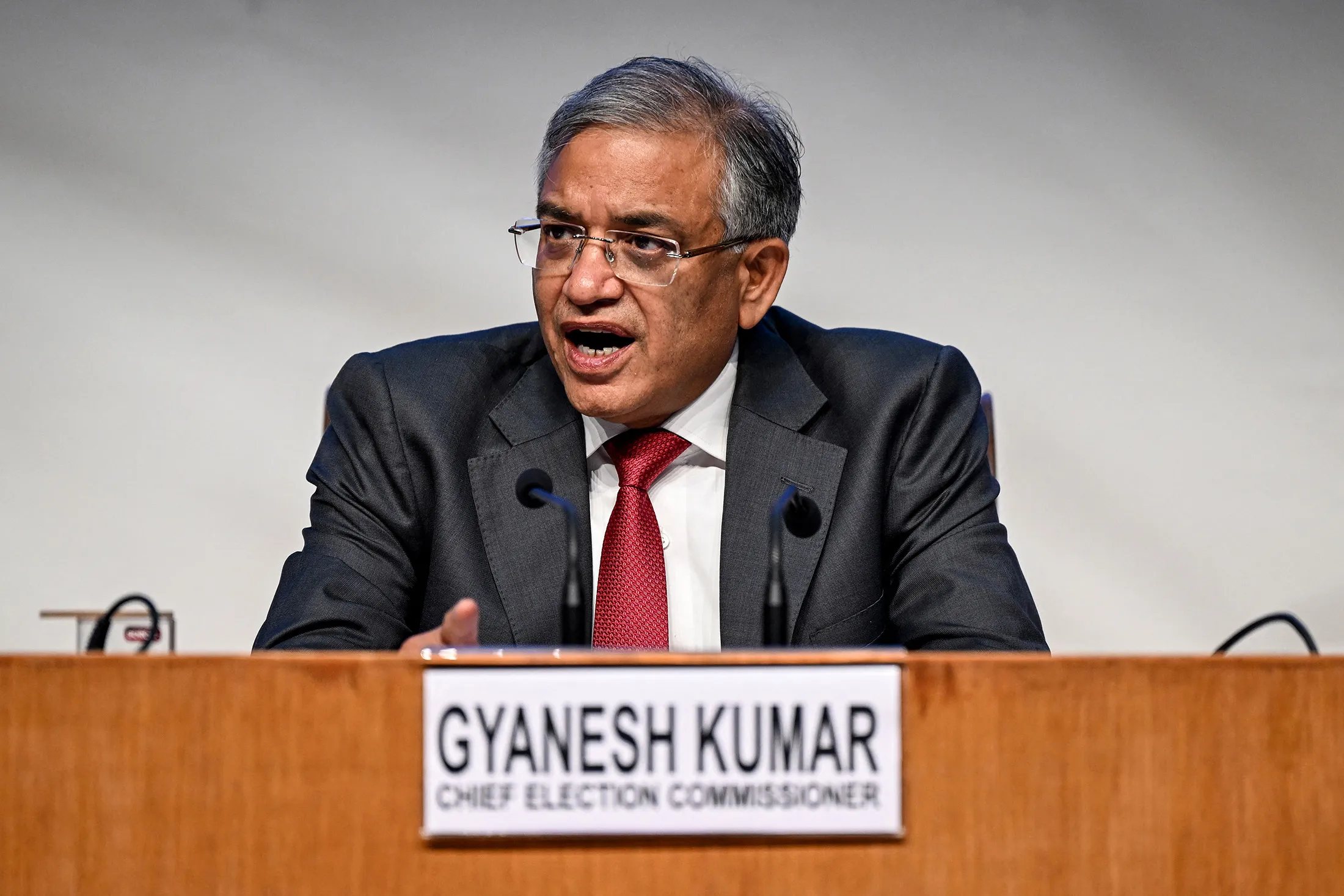
“The Architect of Democracy Under Fire: Is Gyanesh Kumar Ready for India’s Ultimate Electoral Test?”
Analysis based on 10 commentsAnger
Summary
Public sentiment regarding CEC Gyanesh Kumar reflects a complex mix of political frustration, systemic critique, and civic apathy. While some citizens acknowledge the importance of the matter for democracy, they note it lacks the mass mobilization potential of student-driven protests like NEET. Conversely, severe criticism targets the entire election administration and appointment process, with voices demanding resignations and accountability. Overall, the discourse highlights a deep skepticism toward institutional fairness rather than just individual actions.
Breakdown of emotional tone across all comments
Key Takeaway
Public frustration is driven by deep-seated anger over institutional integrity, advising editors to focus coverage on systemic transparency rather than just individual figures.
Full Dashboard
Trending Keywords
✅ Top Positive Reactions
“I don't think this will get same support as with NEET Protests. That got popular because it was joined by students which are in large number in India. This CEC matter is good for democracy but not so easily understood by large number of people. But, let's see, what happens.”
“Honorable Supreme Court, Lakhon-Karodo logon ko pareshan karne ke jurm mein kripya Gyaneshwar Kumar ka pichwada belt treatment se laal kar dein 🙏”
⚠️ Critical Perspectives
“Think it's time that the citizens DEMAND the RESIGNATION of the PM, EC and ALL involved in this ABSOLUTE DISGRACE to DEMOCRAC Class action suits against all guilty from BJP and ECI. Shame on them 😮😮😮”
“Gyanesh Kumar is not the problem. The real problem is an unfair appointment of CECs”
BNN Summary
Chief Election Commissioner Gyanesh Kumar has drawn intense national scrutiny amid rising public debate over the transparency and structural integrity of India's electoral machinery. While search volumes remain moderate, the discourse reflects deep-seated public anxieties regarding the independence of constitutional bodies and the future of the nation's democratic checks and balances.
In-Depth Analysis
Chief Election Commissioner (CEC) Gyanesh Kumar has emerged at the center of a high-stakes national conversation, dominating political search trends and public discourse across India. While the weekly search volume sits at a moderate 5,000, the underlying debate touches the raw nerves of the world's largest democracy. The discussion revolves around the administration, transparency, and structural integrity of the Election Commission of India (ECI), placing Mr. Kumar and the broader apparatus of electoral oversight under intense public and legal scrutiny. As debates intensify regarding the independence of constitutional bodies, the actions and office of the CEC have become a focal point for critics and observers alike, reflecting deep-seated anxieties over the future of democratic checks and balances in the country.
At its core, the controversy surrounding the CEC is not merely about an individual bureaucrat, but about the systemic framework governing India's democratic machinery. The appointment process of Election Commissioners has long been a subject of intense debate among constitutional experts, opposition parties, and civil society. Critics argue that the structural design of these appointments leaves room for executive overreach, potentially compromising the perceived neutrality of an institution designed to be an impartial arbiter of the nation's democratic process. For India, a nation where public faith in independent institutions is the bedrock of political stability, any perception of bias or institutional compromise carries profound implications. The debate forces a reckoning with how institutional autonomy is safeguarded in an era of dominant-party politics, raising critical questions about accountability, transparency, and the separation of powers.
Public reaction to the unfolding situation is sharply divided, characterized by a complex mix of systemic critique, political outrage, and pragmatic realism regarding civic mobilization in India. On one hand, critical voices have expressed deep disillusionment with the current state of affairs, with some citizens taking to digital platforms to demand sweeping accountability. One prominent critical comment demanded the resignation of leadership across the board, stating, "Think it's time that the citizens DEMAND the RESIGNATION of the PM, EC and ALL involved in this ABSOLUTE DISGRACE to DEMOCRAC Class action suits against all guilty from BJP and ECI. Shame on them." Another critical perspective looked beyond the individual officeholder to target the systemic root, noting, "Gyanesh Kumar is not the problem. The real problem is an unfair appointment of CECs."
Conversely, more measured or cynical public commentary highlights the stark reality of how political movements gain traction in India compared to localized, student-driven crises. A pragmatic positive or analytical observation noted, "I don't think this will get same support as with NEET Protests. That got popular because it was joined by students which are in large number in India. This CEC matter is good for democracy but not so easily understood by large number of people. But, let's see, what happens." Meanwhile, extreme anti-establishment frustration also surfaced in colloquial terms, reflecting the visceral anger held by certain segments of the populace toward perceived administrative apathy. As the discourse surrounding CEC Gyanesh Kumar continues to evolve, it remains a barometer of the Indian public's delicate, highly scrutinized relationship with its democratic institutions.
How do you feel about this story?
Discussion
No comments yet. Be the first to share your thoughts.
Join the discussion
Sign in to share your thoughts on this story.