Image: Wikimedia
BNN Summary
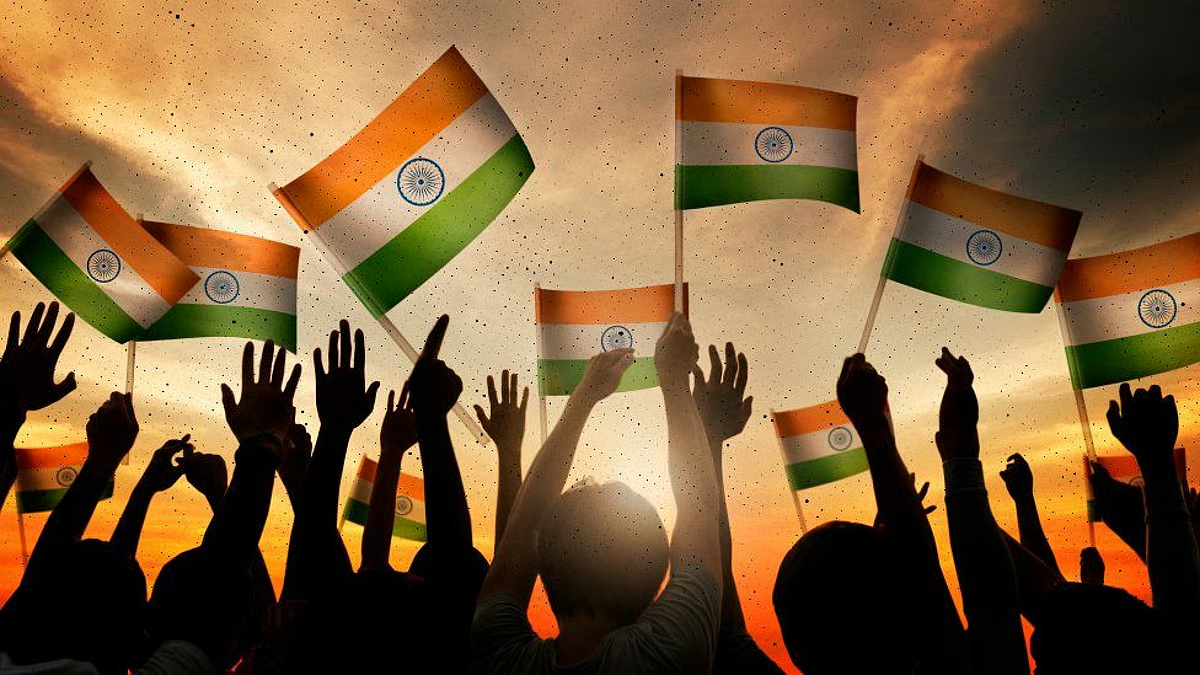
Women rights activists and various civil society groups gathered in New Delhi to protest against the conditional implementation of the Women Reservation Act, specifically calling for the removal of the delimitation and census links.
In-Depth Analysis
New Delhi witnessed a significant surge of advocacy as women rights activists and concerned citizens converged in the national capital to demand the immediate implementation of the Women Reservation Act. The central point of contention for the protesters is the clause linking the reservation of seats for women in the Lok Sabha and state legislative assemblies to the processes of census and delimitation.
The Core Grievance
While the historic passage of the Nari Shakti Vandan Adhiniyam was celebrated as a milestone for gender equality in Indian parliamentary politics, the legislation includes a provision that makes the reservation effective only after a new census is conducted and a subsequent delimitation exercise is completed. Activists argue that this creates an indefinite delay, effectively sidelining the urgent need for gender parity in the legislature for an indeterminate period.
During the demonstrations, protesters held placards and raised slogans highlighting that women cannot afford to wait for decades to secure their rightful share of representation. The protestors argue that the government has the legislative capacity to implement the reservation immediately, rather than waiting for bureaucratic processes that are subject to administrative delays. By linking the reservation to the delimitation process, critics feel the government has turned a progressive policy into a distant aspiration.
Impact on Democratic Representation
Speaking at the protest site, prominent organizers emphasized that the lack of women in decision-making roles continues to impact the formulation of policies that directly affect the lives of millions. According to the participants, the current gender gap in the Indian Parliament is a systemic issue that requires an immediate legislative remedy. They argue that the promise of 'Nari Shakti' (women power) should be reflected in the current composition of the house, rather than being pushed to a future election cycle.
'The linkage between reservation and the delimitation process is a strategic move to defer the inclusion of women in the political mainstream,' one activist stated during the rally. The demonstrators expressed concern that if the reservation is tied to delimitation, the entire process could get entangled in political controversies regarding electoral boundaries, thereby defeating the very purpose of the legislation which was meant to empower women immediately.
Nationwide Call to Action
Similar sentiments are being echoed across other states, with reports of protests emerging from regions like Shimla, where groups are also demanding the removal of these preconditions. The collective voice across the country is demanding that the Parliament should reconsider the clause and allow for the reservation to take effect from the upcoming legislative sessions.
As the movement gains momentum, it remains to be seen how the central government will respond to these mounting pressures. For now, the protesters have pledged to continue their agitation until the law is amended to ensure that the promise of 33 percent reservation for women becomes a reality in the immediate future, without the burden of delayed administrative hurdles.
How do you feel about this story?
Discussion
No comments yet. Be the first to share your thoughts.
Join the discussion
Sign in to share your thoughts on this story.