BNN Summary
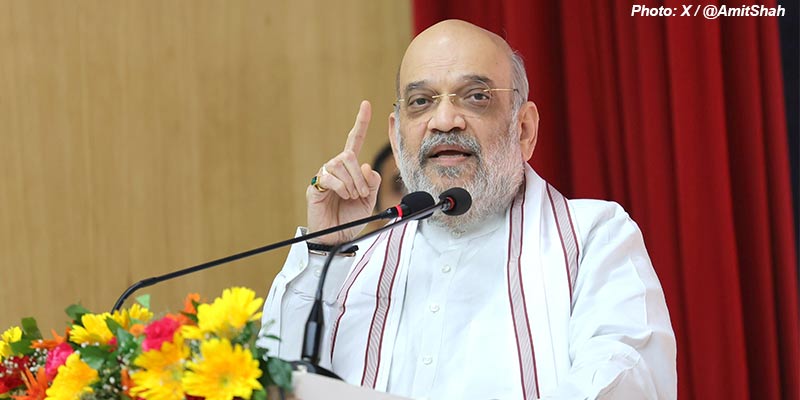
Uttar Pradesh Minister Sanjay Nishad has launched a stinging critique against Samajwadi Party leader Akhilesh Yadav. Nishad accused the former Chief Minister of adopting a 'soft Hindutva' strategy for political convenience while defending the integrity of the Shri Ram Janmabhoomi Teerth Kshetra Trust.
In-Depth Analysis
In a pointed political exchange unfolding in the Ballia district of Uttar Pradesh, state minister and Nishad Party president Sanjay Nishad has launched a severe critique against Samajwadi Party (SP) chief Akhilesh Yadav. The core of the disagreement centers on what Nishad describes as the inconsistent approach of the SP leader toward religious identity and the construction of the Ram temple in Ayodhya.
The Accusation of Political Opportunism
Minister Sanjay Nishad accused Akhilesh Yadav of engaging in a calculated performance of 'soft Hindutva' simply to garner support from a broader voter base. According to Nishad, the Samajwadi Party has historically maintained a distance from traditional Hindu sentiments, and its recent gestures toward religious symbols are merely a facade to distract the public from past policies. Nishad suggested that this change in stance is not rooted in genuine conviction but is instead a strategic maneuver designed to counter the surging influence of the Bharatiya Janata Party (BJP) within the state.
'People are observant and they understand when a leader shifts their ideological stance to suit electoral needs,' Nishad remarked during his address in Ballia. He further alleged that the SP leadership is struggling to find a coherent identity, oscillating between minority-centric politics and an attempt to embrace Hindu imagery, which he claimed confuses the electorate.
Defending the Ram Temple Trust
Beyond the critique of Akhilesh Yadav, Sanjay Nishad also took the opportunity to defend the Shri Ram Janmabhoomi Teerth Kshetra Trust. In recent times, opposition parties have frequently raised questions regarding the functioning, financial transparency, and land acquisition processes of the trust overseeing the construction of the Ram Mandir in Ayodhya.
Nishad dismissed these allegations as malicious misinformation campaigns orchestrated by political rivals. He stated that the trust is operating with the highest level of accountability and that the project remains a symbol of national pride. He urged the opposition to refrain from politicizing a monument that holds profound cultural and religious significance for millions of Indians.
Political Implications
This confrontation highlights the ongoing tension between the ruling BJP-led alliance and the opposition in Uttar Pradesh. The Nishad Party, a key coalition partner of the BJP, plays a significant role in consolidating the votes of the Nishad community. By positioning himself as a staunch defender of the Hindutva cause and the Ram temple, Sanjay Nishad aims to solidify the support of his base while simultaneously undermining the credibility of the Samajwadi Party among religious voters.
As the political landscape in Uttar Pradesh becomes increasingly polarized, the debate over who holds the authentic mandate to represent Hindu interests continues to occupy the central stage. For the Samajwadi Party, the challenge lies in balancing its traditional support blocks while attempting to make inroads into the Hindu-majority voter base. Conversely, for leaders like Sanjay Nishad, the strategy is to frame the opposition's pivot as a desperate, insincere act that lacks the foundational dedication to the cultural heritage of the region.
How do you feel about this story?
Discussion
No comments yet. Be the first to share your thoughts.
Join the discussion
Sign in to share your thoughts on this story.