BNN Summary
Union Home Minister Amit Shah has declared that a future Bharatiya Janata Party government in West Bengal will prioritize the securing of India's international borders, describing current gaps as a major national security threat.
In-Depth Analysis
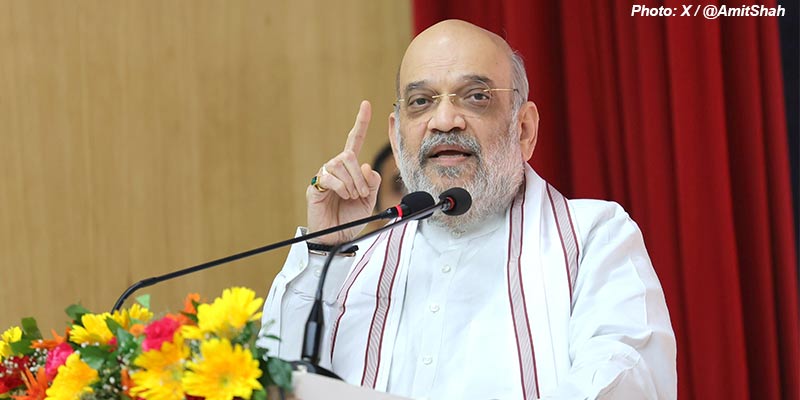
Union Home Minister Amit Shah recently emphasized the critical need for a change in governance in West Bengal, asserting that the primary objective of a Bharatiya Janata Party (BJP) administration in the state would be to secure India's international borders. Addressing a large gathering, Shah identified the porous nature of the border in West Bengal as the single most significant vulnerability in India's current national security framework.
Addressing the Security Vacuum
During his address, the Home Minister articulated a strong stance on border management, stating that illegal infiltration remains a major challenge that undermines the stability of the region and the broader national interest. He argued that the current political leadership in the state has failed to address this 'biggest hole' in national security, leading to demographic shifts and persistent law and order issues. According to Shah, the central government has repeatedly attempted to coordinate with state authorities, but the lack of cooperation has hindered effective border control measures.
A Commitment to National Integrity
Shah promised that once the BJP assumes power in West Bengal, the government would implement a robust, technology-driven approach to border surveillance. This plan includes:
- Enhanced Border Fencing: Upgrading existing infrastructure to prevent unauthorized crossing in vulnerable sectors.
- Smart Surveillance Integration: Utilizing advanced drones, thermal imaging, and sensor-based technology to provide real-time monitoring of the border regions.
- Heightened Coordination: Establishing a more cohesive synergy between the Border Security Force (BSF) and local state law enforcement agencies to ensure a unified response to security threats.
- Stringent Enforcement: Implementing stricter verification processes to distinguish between citizens and illegal migrants.
Political Implications
The Home Minister's remarks signal a shift in the BJP's electoral strategy for West Bengal, focusing heavily on issues of national security, sovereignty, and the protection of local resources. By framing the border issue as a top-tier national concern, the party aims to appeal to voters who feel that the state government has been lenient on issues regarding border control.
'The security of our nation starts at our borders,' Shah stated during the event. He added that the party remains committed to ensuring that the sovereign integrity of India is protected from external pressures. The Home Minister further suggested that the infiltration problem is not merely a border issue but a socio-economic one that burdens the state's infrastructure and impacts the livelihood of its genuine citizens.
Looking Ahead
The political discourse surrounding this issue is expected to intensify as the assembly elections approach. The BJP leadership maintains that the current state administration's policy of 'appeasement' has prevented meaningful action on the ground. Meanwhile, the opposition parties continue to refute these claims, characterizing the narrative as a political tactic aimed at polarizing the electorate. Regardless of the ongoing political debate, the Home Minister's rhetoric underscores a firm commitment to institutionalizing more rigorous border management protocols should the party receive the mandate from the people of West Bengal.
How do you feel about this story?
Discussion
No comments yet. Be the first to share your thoughts.
Join the discussion
Sign in to share your thoughts on this story.