BNN Summary
Prime Minister Narendra Modi has articulated a transformative vision for Indian governance, emphasizing that the BJP has established a pioneering political principle centered on national interest and meeting the evolving aspirations of a rapidly progressing nation.
In-Depth Analysis
Prime Minister Narendra Modi recently addressed the shifting landscape of Indian politics and governance, asserting that his administration has successfully institutionalized a new principle that prioritizes the nation above all else. Speaking on the necessity of a modern, efficient, and empathetic governance model, the Prime Minister highlighted how India is currently advancing at an unprecedented pace, driven by the needs of a young and aspirational population.
The Core Philosophy of Nation-First Governance
According to the Prime Minister, the Bharatiya Janata Party (BJP) has fundamentally altered the political discourse in India by moving away from traditional, fragmented approaches. He argued that the new governance model is defined by three pillars: efficiency, transparency, and a deep-seated commitment to national welfare. This approach is intended to replace long-standing bureaucratic hurdles with a digital-first ecosystem that ensures benefits reach the most marginalized citizens directly.
'India is witnessing a significant transformation,' the Prime Minister noted during his address. 'Our governance model is not just about policy implementation; it is about keeping the aspirations of every Indian at the heart of our decision-making process. We have established a principle where the nation is the primary stakeholder.'
Digital Integration and Administrative Reforms
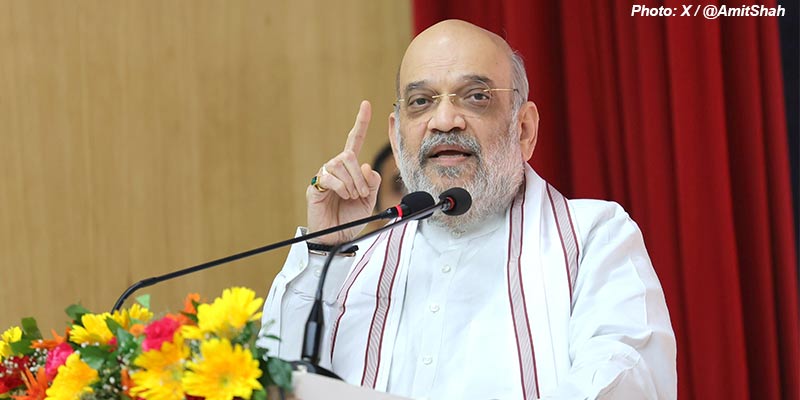
Parallel to the Prime Minister's vision, significant administrative upgrades are underway to simplify engagement between the government and citizens. This is evidenced by recent developments within the Union Home Ministry. Union Home Minister Amit Shah recently inaugurated a revamped version of the Foreign Contribution Regulation Act (FCRA) portal, alongside the launch of the e-OCI (Overseas Citizen of India) card facility. These initiatives are designed to leverage technology to reduce human intervention, thereby enhancing the ease of doing business and facilitating smoother administrative interactions for citizens and global partners alike.
Strengthening the Political Fabric
Beyond technological reforms, the ruling party is intensifying its grassroots presence to ensure this vision of 'Nation-First' governance is effectively communicated and implemented across all states. In regions like Telangana, party leadership, including national figures like Nitin Nabin, have been actively calling for a more robust political engagement to address regional challenges. The push for a more comprehensive and cohesive political narrative is part of a larger strategy to unify the country under a single governance standard that focuses on development and institutional accountability.
Looking Toward the Future
The Prime Minister emphasized that as India marches toward becoming a developed nation, the governance model must be flexible enough to adapt to global changes while remaining firmly rooted in local realities. By prioritizing the integration of technology, such as the new portals launched by the Home Ministry, and fostering a culture of accountability, the government aims to build a foundation that is resilient against corruption and inefficiency. The focus remains on fulfilling the long-standing dreams of the populace through a governance framework that is both proactive and people-centric. As India continues to navigate the complexities of the 21st century, these foundational shifts are expected to define the country's trajectory for years to come.
How do you feel about this story?
Discussion
No comments yet. Be the first to share your thoughts.
Join the discussion
Sign in to share your thoughts on this story.