BNN Summary
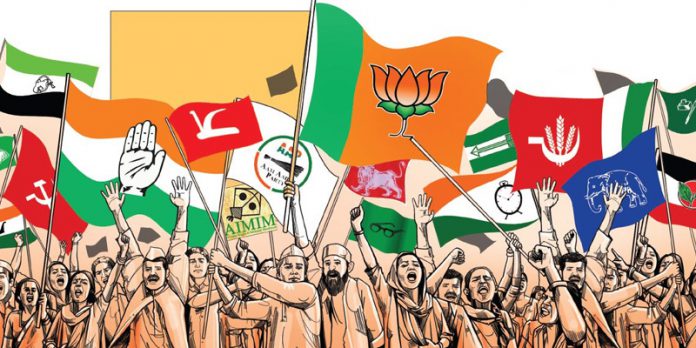
Acoalition of twenty-three opposition parties and an independent member of parliament have submitted a formal letter to Chief Justice of India Surya Kant. The group expresses deep concern over the Election Commission's implementation of the Systemic Integrity Review (SIR) and its alleged role in influencing electoral fairness.
In-Depth Analysis
In a significant development reflecting the ongoing friction between the Indian opposition and constitutional authorities, twenty-three political parties, supported by independent parliamentarian Kapil Sibal, have collectively approached the Chief Justice of India, Surya Kant. The petition centers on the Election Commission of India's (ECI) recent deployment of the Systemic Integrity Review (SIR), a mechanism that the signatories claim is being weaponized to secure partisan advantages for the Bharatiya Janata Party (BJP).
Concerns Over Electoral Integrity
The letter, which represents a rare show of unity among the diverse members of the INDIA bloc, including heavyweights like the DMK and the Aam Aadmi Party (AAP), highlights fears regarding the erosion of institutional neutrality. Opposition leaders have repeatedly argued that the ECI, tasked with conducting free and fair elections, must operate with absolute transparency. By implementing the SIR, critics argue that the commission has overstepped its mandate and is now actively engaged in administrative maneuvering that favors the ruling establishment.
Jairam Ramesh, a senior leader of the Indian National Congress, emphasized that the opposition remains firmly committed to the principles of the Systemic Uniformity and Representation Exercise (SURE). He articulated that the current grievances are not merely procedural but go to the heart of the democratic process. The coalition demands an immediate judicial review of the protocols surrounding the SIR to ensure that electoral outcomes remain a reflection of the people's mandate rather than bureaucratic interference.
The Role of the Supreme Court
The decision to petition the Chief Justice directly signals a loss of confidence in the internal dispute-resolution mechanisms currently available at the Election Commission. By escalating the matter to the judiciary, the opposition is testing the constitutional boundaries of the apex court's authority over administrative decisions made by the ECI. Legal experts note that while the judiciary is generally hesitant to intervene in the day-to-day operations of the Election Commission, the scale of this representation—involving nearly two dozen parties—may necessitate a formal acknowledgment from the Supreme Court.
Key Allegations and Future Implications
The core of the complaint involves the following points:
- The lack of transparency in how the SIR criteria are defined and applied across various constituencies.
- The potential for the SIR to influence voter sentiment through non-transparent data collection methods.
- The alleged bias in the ECI's communication with political stakeholders regarding the implementation of electoral reforms.
As the political landscape heats up, the response from Chief Justice Surya Kant and the broader Supreme Court bench will be watched closely. Whether the court decides to treat this as a substantive matter of electoral law or refers it back to the commission for internal review will have long-term implications for the perceived independence of India's democratic institutions. The opposition has made it clear that they intend to keep the spotlight on the EC, promising further parliamentary protests if their concerns regarding systemic integrity are not addressed with the required gravity.
How do you feel about this story?
Discussion
No comments yet. Be the first to share your thoughts.
Join the discussion
Sign in to share your thoughts on this story.