BNN Summary
Twenty-three political parties and an independent Member of Parliament have formally petitioned the Chief Justice of India, expressing grave concerns regarding the Stochastic Integrity Report (SIR) process and the overarching conduct of election administration by the Election Commission of India.
In-Depth Analysis
In a significant move highlighting escalating tensions between the Indian political opposition and the constitutional authorities governing the electoral process, a coalition of 23 political parties, alongside an independent Member of Parliament, has addressed a formal letter to the Chief Justice of India (CJI). This collective action underscores a deep-seated apprehension among opposition ranks regarding the transparency, neutrality, and procedural integrity of the Election Commission of India (ECI).
The Core Issues at Stake
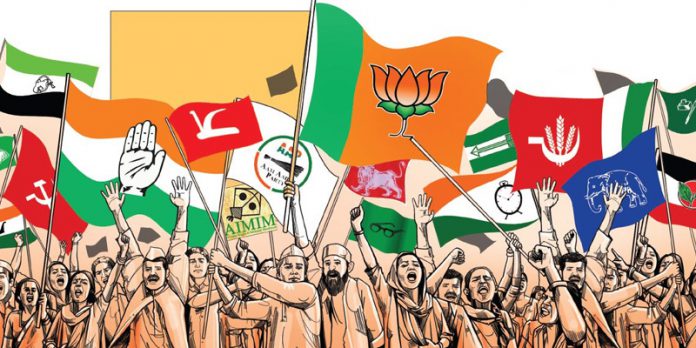
At the heart of the correspondence lies the controversial Stochastic Integrity Report (SIR) process. Opposition leaders argue that the lack of clarity surrounding the implementation and findings of these reports has led to widespread skepticism regarding the sanctity of the electoral exercise. The signatories represent a diverse spectrum of national and regional parties, including members of the INDIA bloc, the Aam Aadmi Party (AAP), and the Dravida Munnetra Kazhagam (DMK), signaling a unified front against what they describe as 'procedural opacity.'
Congress leader Jairam Ramesh, speaking on behalf of the coalition, emphasized that the letter serves as an urgent plea for judicial intervention to ensure that the ECI functions with the absolute impartiality required by the Constitution of India. The petition raises critical questions about the role of the Election Commission in maintaining a level playing field, specifically citing instances where administrative actions have allegedly favored the ruling dispensation.
Broader Context of Political Unrest
This judicial outreach coincides with reports of significant political unrest on the ground. In a separate development, Peoples Democratic Party (PDP) chief Mehbooba Mufti has leveled serious allegations against the National Conference (NC) government. Mufti claimed that numerous PDP leaders and party workers were placed under house arrest to preemptively suppress protests against what she termed as 'backdoor appointments.' This suggests a volatile political atmosphere where both national electoral processes and regional governance issues are becoming increasingly contentious.
Demands for Judicial Oversight
The coalition has urged the Chief Justice to examine the structural mechanisms that govern the ECI, particularly the SIR protocols. Critics argue that these protocols, rather than providing clarity, have been utilized to obfuscate the real-time data flow during critical election phases. By involving the Supreme Court, the opposition hopes to secure a mandate for:
- Greater transparency in the counting and verification processes.
- A comprehensive review of the ECI's conduct during recent electoral cycles.
- Judicial monitoring to prevent the alleged misuse of administrative machinery by ruling parties.
Legal experts note that while the Election Commission enjoys constitutional autonomy, the Supreme Court has historically played a supervisory role in ensuring that the commission adheres to democratic norms. The move by these 23 parties reflects a strategic attempt to shift the discourse from political rallies to the constitutional courts, framing the debate as a struggle for the survival of democratic institutions in India.
As the political landscape continues to evolve, the response from the office of the Chief Justice remains the most anticipated variable in this unfolding drama. The opposition's decision to formalize these grievances highlights a growing realization that institutional reform, rather than mere political campaigning, may be the only path toward restoring public confidence in the electoral system.
How do you feel about this story?
Discussion
No comments yet. Be the first to share your thoughts.
Join the discussion
Sign in to share your thoughts on this story.