BNN Summary
Apni Party chief Syed Muhammad Altaf Bukhari has launched a scathing attack on the National Conference, claiming the party shares a covert understanding with the BJP. This accusation comes amidst heightened political maneuvering in Jammu and Kashmir, as regional players continue to spar over governance and ideological allegiances.
In-Depth Analysis
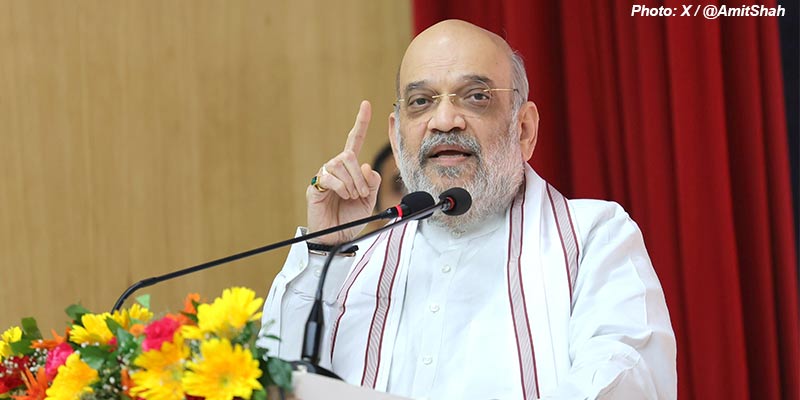
Srinagar — The political landscape of Jammu and Kashmir has witnessed a fresh wave of controversy following strong allegations leveled by Apni Party president Syed Muhammad Altaf Bukhari. During a recent public address, Bukhari accused the ruling National Conference (NC) of maintaining 'behind-the-scenes' ties with the Bharatiya Janata Party (BJP), effectively challenging the transparency of the current political discourse in the union territory.
The Allegation of Political Collusion
Bukhari claimed that while the National Conference publicly maintains a stance of opposition against the central government and the BJP, their actions on the ground suggest a hidden cooperation. According to the Apni Party leader, these clandestine connections are aimed at securing power dynamics at the cost of genuine regional interests. He further argued that the electorate is being misled by a narrative of confrontation that masks a deeper level of compromise between the two political entities.
'It is high time that the people realize the reality of this political theater,' Bukhari stated during his interaction. He emphasized that the National Conference is adept at playing a double game, projecting itself as the guardian of regional identity in public while facilitating the objectives of the central government behind closed doors. This critique is seen as a strategic move by the Apni Party to capture the political space occupied by the NC, positioning itself as a more authentic alternative for the citizens of Jammu and Kashmir.
Impact on Regional Dynamics
This accusation arrives at a delicate time when the region is grappling with significant administrative and constitutional transitions. The National Conference, led by figures like Dr. Farooq Abdullah, has consistently positioned itself as a bulwark against the policies of the central government. However, accusations of 'secret pacts' are not new in the complex political landscape of the valley, where regional parties have historically been accused of shifting allegiances.
Political analysts suggest that Bukhari’s remarks are intended to fragment the vote bank that traditionally supports the National Conference. By casting doubt on the party’s ideological purity, the Apni Party hopes to draw in disillusioned voters who feel that the leadership of the NC has compromised its core principles for political expediency.
Broader Context of Regional Concerns
While local politics remain turbulent, the leadership of the National Conference has also been vocal on international issues. Recently, Dr. Farooq Abdullah expressed deep concern over the escalating tensions in West Asia. He remarked that any actions capable of undermining global peace or fueling instability should be unequivocally discouraged. This focus on international diplomacy serves as a backdrop to the domestic accusations, as the National Conference attempts to project itself as a party with a global vision and a responsible political outlook.
However, for Bukhari and his supporters, such grandstanding on international issues is merely a distraction from the local 'understandings' with the ruling party at the center. The Apni Party continues to demand greater transparency, urging the public to scrutinize the legislative behavior and policy support provided by the National Conference during critical parliamentary sessions. As the political climate heats up, these exchanges are likely to intensify, shaping the narrative for future electoral contests across Jammu and Kashmir.
How do you feel about this story?
Discussion
No comments yet. Be the first to share your thoughts.
Join the discussion
Sign in to share your thoughts on this story.