BNN Summary
Union Home Minister Amit Shah has declared that a future Bharatiya Janata Party government in West Bengal will prioritize national security by sealing the state’s borders, addressing critical vulnerabilities that currently threaten the nation's integrity.
In-Depth Analysis
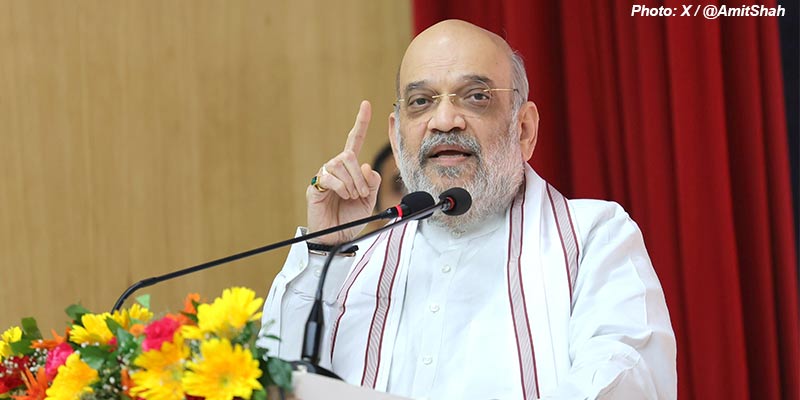
Union Home Minister Amit Shah has issued a stern commitment regarding the security architecture of West Bengal, asserting that the installation of a Bharatiya Janata Party (BJP) administration in the state is essential to addressing what he described as the 'biggest hole in national security.' Speaking at a public rally, Shah highlighted the strategic importance of West Bengal's geography and emphasized that the current administration's failure to regulate the porous borders has created a significant threat to internal stability.
National Security and Border Integrity
During his address, the Home Minister articulated a vision for the state where national security is treated with absolute priority. He argued that the current lack of strict enforcement at the borders has facilitated illegal activities, including human trafficking, narcotics smuggling, and the unauthorized movement of individuals, which undermines the safety of the entire country. Shah noted that West Bengal holds a unique position in India's geography, sharing extensive and challenging borders with neighboring countries, which necessitates a more robust and proactive security strategy.
The BJP's Vision for West Bengal
According to Shah, the path to national security begins with a strong, accountable government at the state level. He claimed that the current political climate in West Bengal has allowed various anti-national elements to operate with a sense of impunity. By transitioning to a BJP-led government, Shah promised that the state would align its security policies with those of the central government, ensuring seamless coordination between state law enforcement and central intelligence and security agencies.
Key pillars of this proposed strategy include:
- Advanced Surveillance Technology: Implementation of high-tech monitoring systems, including drone technology and AI-driven border management tools to oversee vast stretches of border terrain.
- Increased Patrols: Enhancing the strength and deployment frequency of border guarding forces to prevent infiltration attempts.
- Strict Policy Enforcement: Ensuring that central laws regarding citizenship and illegal entry are applied without political interference, thereby creating a deterrent against illegal border crossings.
Political Context and Implications
This rhetoric comes as a core part of the BJP's electoral strategy in the region. By framing the local election as a referendum on national security, the party aims to mobilize voters who are concerned about the perceived decline in regional law and order. Shah emphasized that the border issue is not merely a regional concern but a vital matter for India’s sovereign defense. He further criticized the local political leadership, suggesting that their policies have consistently prioritized vote-bank dynamics over the protection of citizens and national integrity.
In his closing remarks, the Home Minister urged the populace to support a leadership that views the border as a critical line of defense rather than a conduit for political gain. He asserted that a double-engine government, referring to the alignment of the central and state governments under the same party, is the only way to effectively seal the 'biggest hole' in the national security framework. The statement reflects a broader push by the central government to assert its influence in states where the security situation is viewed as an area of concern for national stability.
How do you feel about this story?
Discussion
No comments yet. Be the first to share your thoughts.
Join the discussion
Sign in to share your thoughts on this story.