BNN Summary
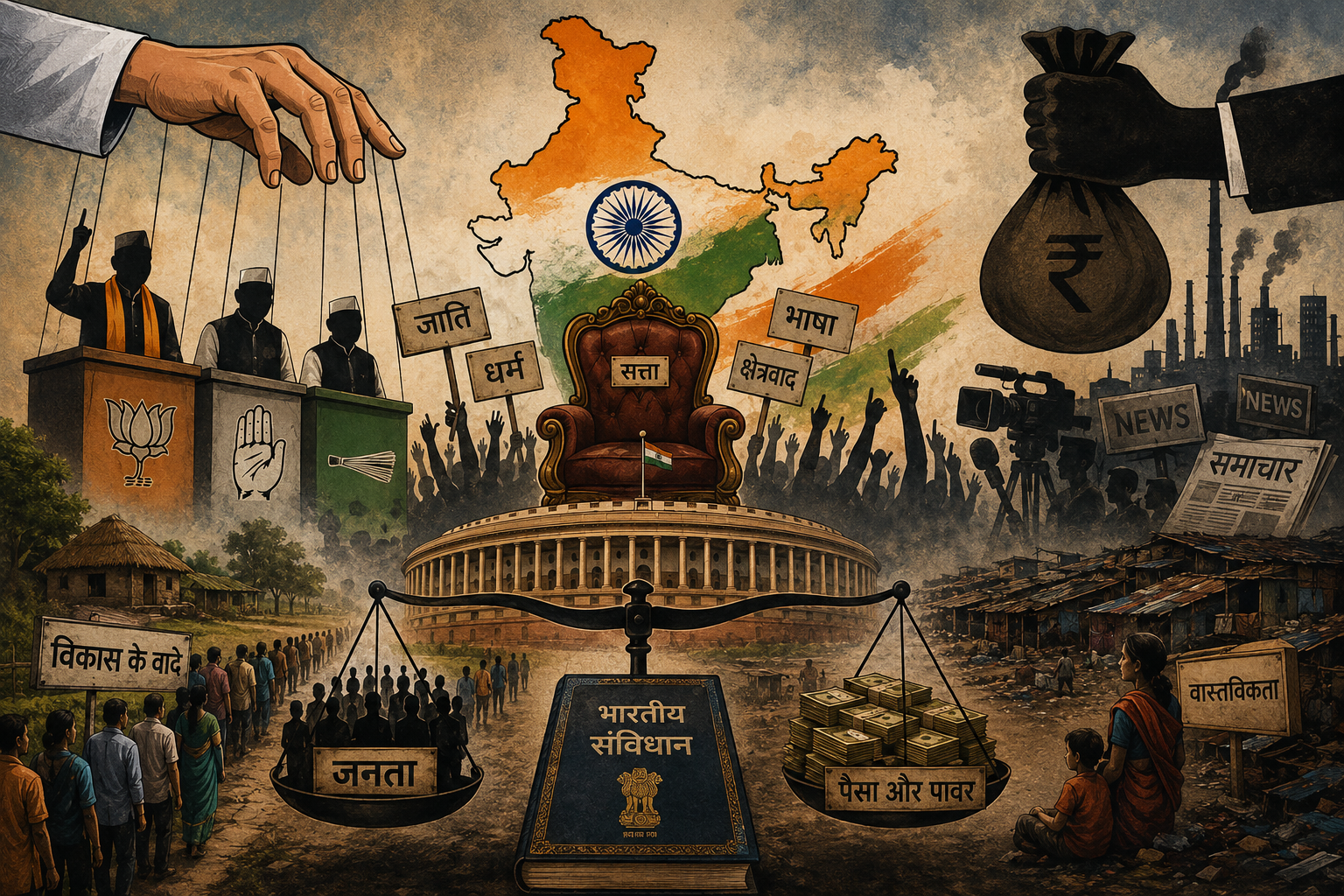
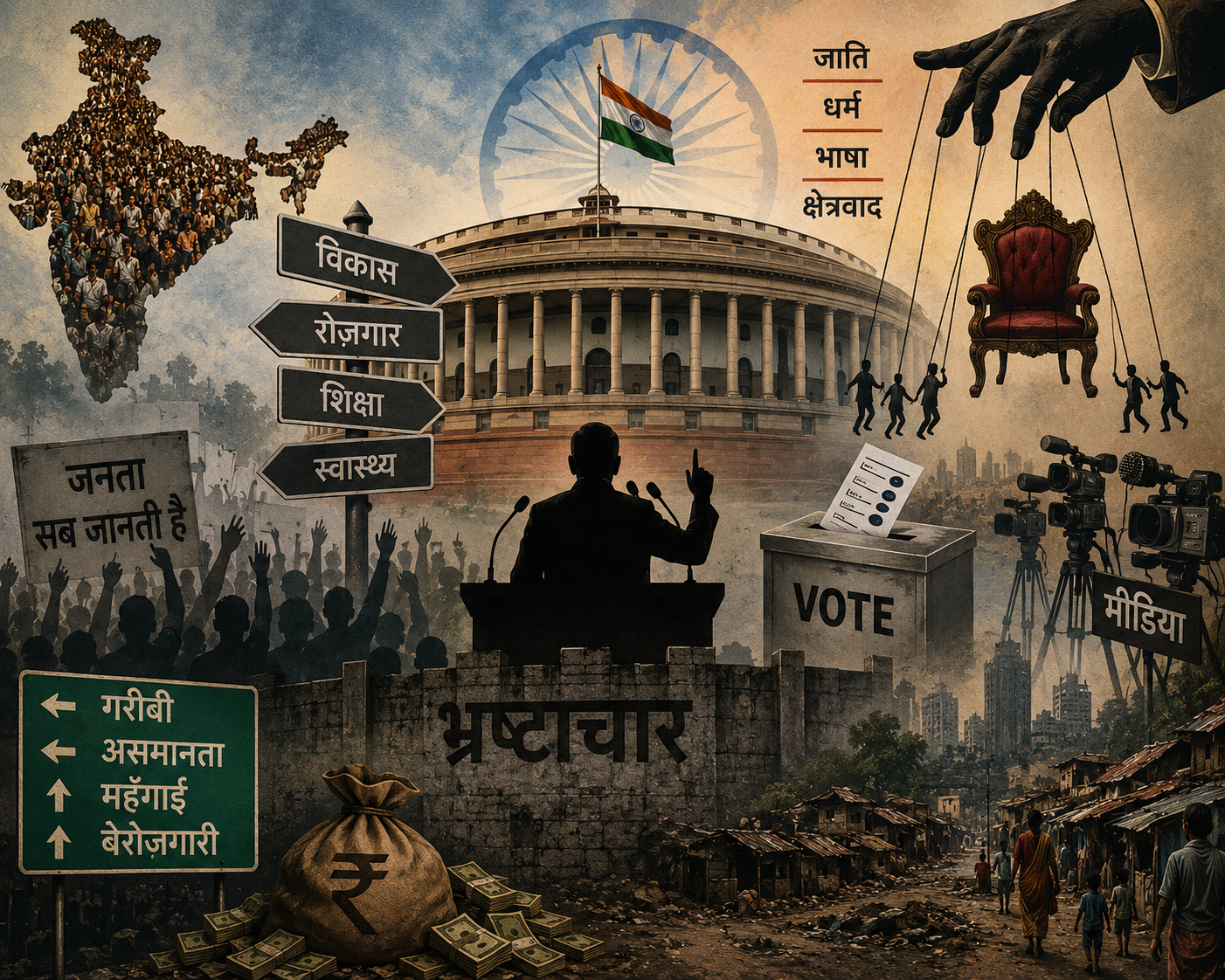
India's 2026 state elections showcased a nation grappling with contradictory political forces. While the ruling Bharatiya Janata Party (BJP) demonstrated continued strength and strategic expansion, particularly in the east, a significant wave of youth anger, fueled by economic insecurity and a feeling of being unheard, swept across the country. This 'cockroach moment' reflects deep societal frustrations that, despite not always translating into immediate electoral losses for the BJP, are shaping the discourse and setting the stage for the 2029 general elections.
In-Depth Analysis
The results of India's 2026 state elections have painted a complex picture of the nation's political trajectory, revealing a country simultaneously moving in two distinct directions. On one hand, the Bharatiya Janata Party (BJP) showcased remarkable resilience and strategic expansion, securing significant victories in states like Assam and achieving a landslide win in West Bengal, traditionally a stronghold of regional parties. This consolidation of Hindu votes and a focus on cultural revival, security, and livelihoods contributed to their success, demonstrating the party's capacity to extend its influence beyond its traditional Hindi heartland.
However, beneath this visible assertion of BJP power lies a simmering and increasingly vocal wave of youth anger, a phenomenon that has been starkly termed India's 'cockroach moment'. This moniker emerged from a controversial remark by the Chief Justice of India, Surya Kant, who, in a May 2026 hearing, reportedly compared unemployed young people to 'cockroaches' and 'parasites of society' for their perceived drift into media, social media, and activism due to lack of professional opportunities. This off-the-cuff comment inadvertently sparked a satirical yet deeply significant political movement, the 'Cockroach Janta Party' (CJP), which rapidly amassed millions of followers online, far surpassing the ruling party's digital reach.
The CJP, founded by Abhijeet Dipke, a public relations graduate and former social media strategist, became an immediate symbol of profound youth frustration. Its slogan, 'Secular, Socialist, Democratic, Lazy,' satirizes traditional political rhetoric while encapsulating widespread discontent over critical issues such as jobs, rising food prices, exam paper leaks, corruption, and the general anxieties of economic survival. Young Indians, feeling increasingly unheard and economically insecure, embraced the 'cockroach' identity as an outlet for grievances that mainstream politics seemed to ignore.
The roots of this youth anger are deeply economic. India, with over 65% of its 1.4 billion people under the age of 35, faces a severe jobs crisis. Reports indicate that nearly 83% of the country's unemployed are its youth, with a staggering unemployment rate of 29.1% among graduates, nine times higher than for those without formal schooling. The economy is failing to create enough professional jobs, leading to underemployment where many graduates take informal or low-paying positions. Adding to this, inflation and the rising cost of living, particularly for housing, food, and fuel, have squeezed household budgets, pushing young people into despair.
Artificial intelligence (AI) and automation are further exacerbating the job crisis, threatening to reduce job growth prospects, especially in sectors like IT services, historically a major employer for young Indians. The demographic dividend that leaders often tout risks transforming into a demographic liability, potentially triggering unrest if employment opportunities do not expand adequately. The anxiety among youth also extends to climate change and environmental degradation, with surveys indicating a significant proportion of young people feeling anxious and affected by these issues.
Despite the widespread discontent, translating this anger into a cohesive electoral challenge for the opposition remains a formidable task. While the 2026 state elections saw the Congress-led United Democratic Front (UDF) perform well in Kerala, increasing the number of Congress-ruled states, it has not yet established itself as a credible national alternative to the BJP. Opposition parties have struggled to convert societal frustration into electoral gains, and the momentum gained by the BJP's failure to secure a solo majority in the 2024 general election appears to have dissipated.
For the BJP, the path to the 2029 general elections involves continued focus on its core strategies: welfare delivery, strong leadership messaging, and meticulous booth-level organization. The party aims to offset any potential saturation in its traditional Hindi heartland by expanding in eastern and southern states. Analysts suggest that the BJP is in a strong position, leveraging consolidated Hindu votes and advancing ideological initiatives, including at the state level.
However, the 'cockroach moment' signals a critical juncture. The rise of a meme-driven, leaderless movement highlights a shift in how political grievances are expressed and mobilized in the digital age. While online energy doesn't always translate directly into organizational power or electoral outcomes, it serves as a powerful diagnostic tool, revealing deep-seated frustrations that traditional political structures have struggled to address. The challenge for all political parties on the 'Road to 2029' will be to genuinely respond to these underlying anxieties, particularly among the youth, to ensure that India's dual realities can converge towards a more stable and inclusive future.
How do you feel about this story?
Discussion
No comments yet. Be the first to share your thoughts.
Join the discussion
Sign in to share your thoughts on this story.