BNN Summary
Asaduddin Owaisi's All India Majlis-e-Ittehadul Muslimeen (AIMIM) has been consistently excluded from the opposition INDIA bloc since 2023. This strategic decision by the alliance reflects complex political calculations, aiming to project a united secular front. However, the exclusion has sparked significant debate among Muslim communities, with opinions sharply divided on whether this move ultimately strengthens or weakens the pursuit of community representation and political influence in India.
In-Depth Analysis
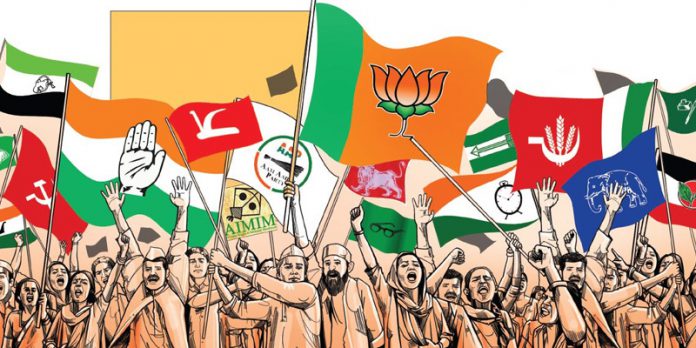
The political landscape leading up to the crucial 2026 elections continues to be shaped by the strategic decisions of major political players, most notably the INDIA bloc, an alliance of opposition parties aiming to challenge the ruling establishment. A persistent feature of this alliance's formation and consolidation has been the deliberate exclusion of Asaduddin Owaisi's All India Majlis-e-Ittehadul Muslimeen (AIMIM). This exclusion, which has been in effect since 2023, underscores a complex interplay of political strategy, ideological positioning, and electoral calculations on the part of the INDIA bloc.
From the perspective of the INDIA bloc, the decision to keep AIMIM at arm's length is likely rooted in several key considerations. Primarily, the alliance seeks to present a unified, broad-based secular front capable of appealing to a wide spectrum of voters. Associating with AIMIM, a party often perceived by some critics as having a sectarian or polarizing image, could potentially complicate this narrative. Many constituent parties within the INDIA bloc, particularly those with strong secular credentials or aspirations, may fear that an alliance with AIMIM could alienate centrist voters or Hindu voters, thereby undermining their core objective of consolidating anti-incumbency votes. The concern is that AIMIM's presence might inadvertently allow political rivals to paint the entire INDIA bloc as catering to specific community interests, rather than a national, inclusive agenda. Furthermore, there's an underlying electoral calculation that AIMIM, while significant in certain pockets, might not add substantial electoral heft across the broader national stage in a way that outweighs the potential political costs of association. The bloc's strategy appears to prioritize a 'clean' secular image, free from any perceived religious overtures that could be exploited by political opponents.
Conversely, AIMIM and its leader, Asaduddin Owaisi, have consistently carved out an independent political identity, often positioning themselves as the authentic voice for Muslim representation and rights in India. Owaisi has frequently criticized mainstream secular parties for allegedly taking the Muslim vote for granted without genuinely addressing their socio-economic and political concerns. His party's independent stance allows it to directly challenge what it views as the inadequate representation provided by other parties. For AIMIM, maintaining its distinct identity, even outside a larger alliance, might be seen as crucial for its political survival and growth, particularly in states where it has a dedicated vote base. The party's electoral strategy often involves contesting seats where it believes it can mobilize significant Muslim support, even if it means potentially splitting the 'secular' vote, a point of contention for many INDIA bloc members.
On the ground, among Muslim communities, the INDIA bloc's exclusion of AIMIM has evoked a sharply divided response. One faction believes that AIMIM's exclusion is a pragmatic necessity for the INDIA bloc. Proponents of this view argue that for the opposition alliance to effectively counter the ruling party, it needs to broaden its appeal beyond identity politics and project a universally secular image. They contend that including AIMIM might only serve to consolidate votes for the incumbent party by inadvertently fueling communal polarization. This perspective prioritizes the defeat of the ruling establishment above specific community representation via AIMIM, believing that a stronger, united secular front offers a better long-term outcome for all minorities. They may also express concerns that AIMIM's political rhetoric, while advocating for Muslim rights, might inadvertently lead to further ghettoization or exacerbate communal divisions, thereby hurting the community's broader integration and welfare.
However, another significant segment of Muslim voices expresses disappointment and concern over AIMIM's continued isolation. This group argues that excluding AIMIM from the INDIA bloc essentially sidelines a prominent Muslim voice and diminishes the community's direct representation within a major opposition alliance. They contend that by not including AIMIM, the INDIA bloc misses an opportunity to address specific community grievances directly and authentically. For these individuals, AIMIM's presence in a national alliance would lend legitimacy to concerns specific to the Muslim community and ensure that their unique perspectives are not overlooked in the broader political discourse. They feel that the 'secular' parties, by shunning AIMIM, are failing to fully embrace diversity within the opposition and are perhaps bowing to a majoritarian narrative. They view Owaisi as a leader who fearlessly articulates their issues, and his exclusion is perceived as a missed opportunity for stronger advocacy and a more inclusive alliance. This division highlights the complex and often contradictory expectations placed upon political representation within a diverse democratic framework.
As the 2026 electoral cycle draws closer, the strategic implications of AIMIM's exclusion will continue to be a subject of intense debate and analysis. The INDIA bloc faces the challenge of maintaining its unity and broad appeal, while AIMIM navigates its path as an independent political force, striving to expand its influence without the advantage of a larger alliance. The differing opinions within the Muslim community itself underscore the nuanced and multifaceted nature of political identity and strategy in contemporary India.
How do you feel about this story?
Discussion
No comments yet. Be the first to share your thoughts.
Join the discussion
Sign in to share your thoughts on this story.