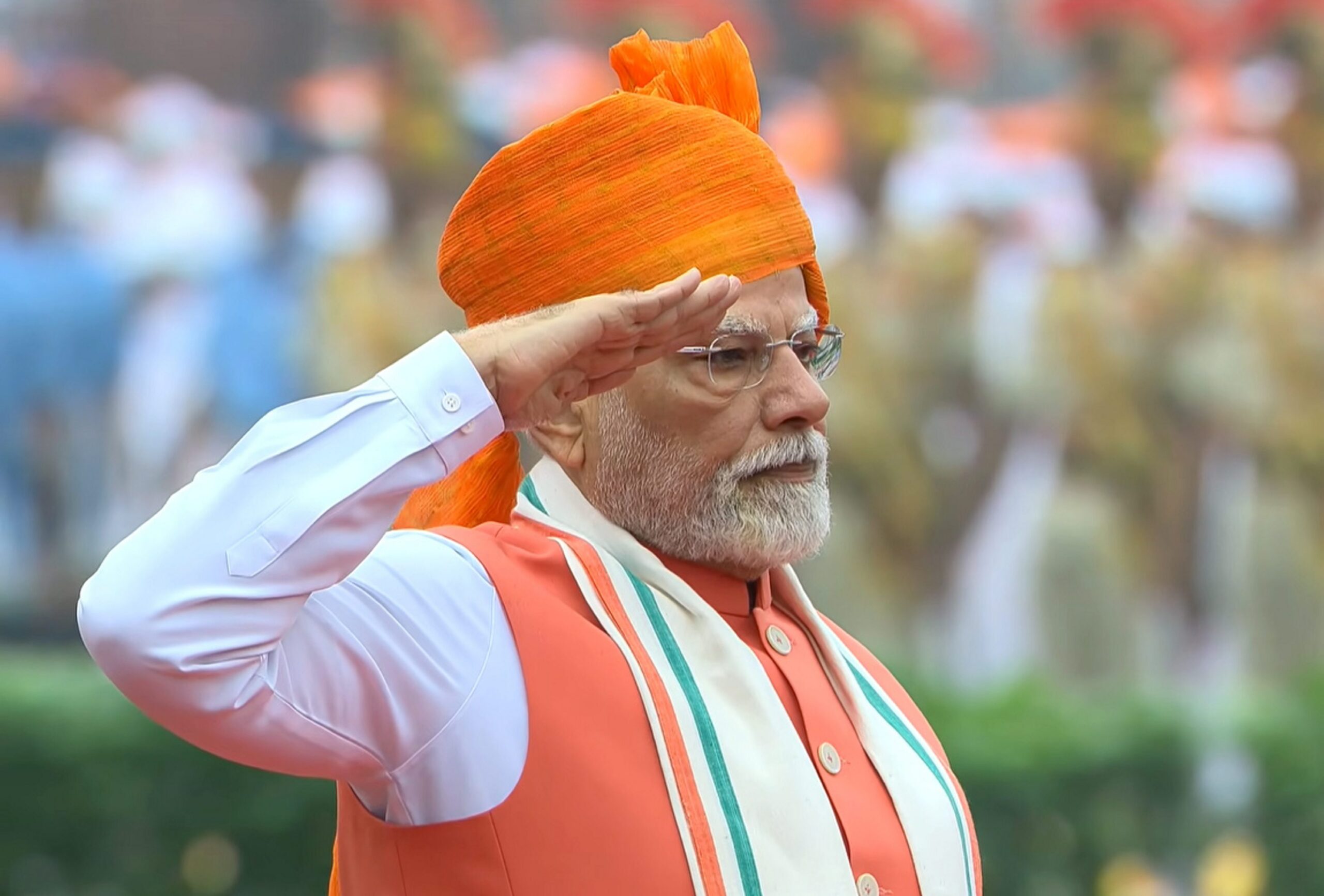
Image: Wikimedia
BNN Summary
Arecent report by the Bangkok Post highlights growing concerns that India's democratic system is undergoing a significant 'inversion.' The publication suggests that the government is increasingly influencing its electorate, rather than being chosen by the populace, a critical departure from foundational democratic principles. This alleged shift signals potential challenges to electoral integrity and voter sovereignty within the nation's political landscape, prompting calls for vigilance regarding democratic norms and institutions.
In-Depth Analysis
Recent observations published by the Bangkok Post have brought to the forefront a serious concern regarding the state of Indian democracy, alleging a 'remarkable inversion' where the government appears to be 'choosing its voters rather than the other way around.' This assertion points to a profound challenge to the fundamental principles of a representative democracy, where the electorate traditionally holds the ultimate power to determine its leaders and future policy direction.
In a healthy democracy, free and fair elections are paramount. They serve as the bedrock upon which citizen participation, accountability, and peaceful transfers of power are built. These elections allow citizens to select their leaders and hold them responsible for their performance in office. The very essence of democratic self-governance relies on holding elections and ensuring that power transitions in accordance with their outcomes. When the integrity of this process is questioned, the foundational trust between the populace and its governing institutions can erode, potentially leading to a decline in democratic quality.
The concept of a 'government choosing its voters' can manifest through various mechanisms, often falling under the broader phenomenon of democratic backsliding. Democratic backsliding is characterized as a gradual, incremental erosion of institutions, rules, and norms, frequently orchestrated by duly elected governments that consolidate power while outwardly maintaining democratic processes. This process is typically subtle, making it difficult to detect and counter until it reaches an advanced stage.
Several methods can be employed to manipulate electoral systems, even without resorting to overt illegalities. These can include:
- Electorate Manipulation: This might involve artificial migration to concentrate voters or move them into marginal seats, or even using immigration law to manipulate electoral demography.
- Voter Disenfranchisement: Efforts can be made to prevent qualified voters from participating, for instance, by providing misleading information about election times, dates, or places. Partisan voter suppression efforts and the erosion of voting rights are also concerns.
- Exclusion of Candidates: Preventing promising opposition candidates from standing for election on flimsy excuses or false accusations is a known tactic in some contexts.
- Uneven Playing Field: A truly democratic election campaign requires a 'level playing field.' This includes state neutrality in elections, unrestricted political rights, media freedom, and balanced reporting. When these conditions are not met, it can create an environment where the incumbent has an unfair advantage.
- Disinformation and Misinformation: Deliberate disinformation campaigns can cast doubt on election integrity, undermine confidence in the process, and polarize public discourse, making it difficult for citizens to distinguish fact from fiction. Such tactics can erode trust in electoral processes and the legitimacy of elected leaders.
- Control of Legislature and Oversight Erosion: Rulers' control of the legislature can weaken checks on executive power. Legislative oversight, which is crucial for accountability, can be gradually undermined in practice even if formally preserved.
The importance of free and fair elections cannot be overstated. They provide the mechanism for citizens to exercise their voice in decision-making, influence policies and laws, and hold leaders accountable. Universal suffrage, freedom to register and run for office, freedom of speech for candidates, objective information from a free press, and an impartial system for conducting and verifying elections are all vital components. When these elements are compromised, the ability of citizens to collectively elect representatives and affirm self-governance is diminished.
The observation by the Bangkok Post underscores a critical concern for India's democratic health. Such an 'inversion' threatens the very fabric of democratic societies by undermining public trust and the foundational principle that power belongs to the people. As democratic backsliding emerges as a global trend, understanding these mechanisms becomes essential for evaluating democratic resilience and safeguarding the integrity of political participation worldwide. It highlights the continuous need for vigilance to ensure that elections truly reflect the will of the people, rather than being a tool for those in power to perpetuate their rule.
How do you feel about this story?
Discussion
No comments yet. Be the first to share your thoughts.
Join the discussion
Sign in to share your thoughts on this story.