Image: Wikipedia
BNN Summary
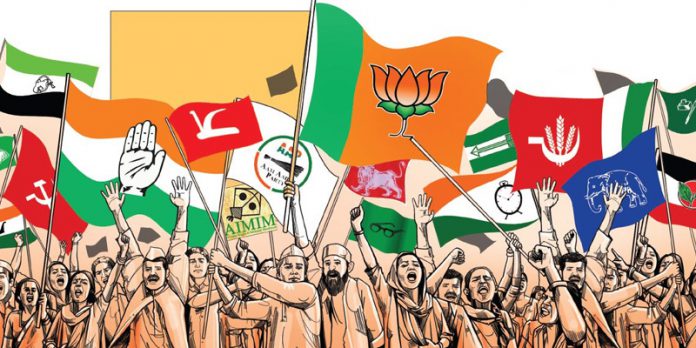
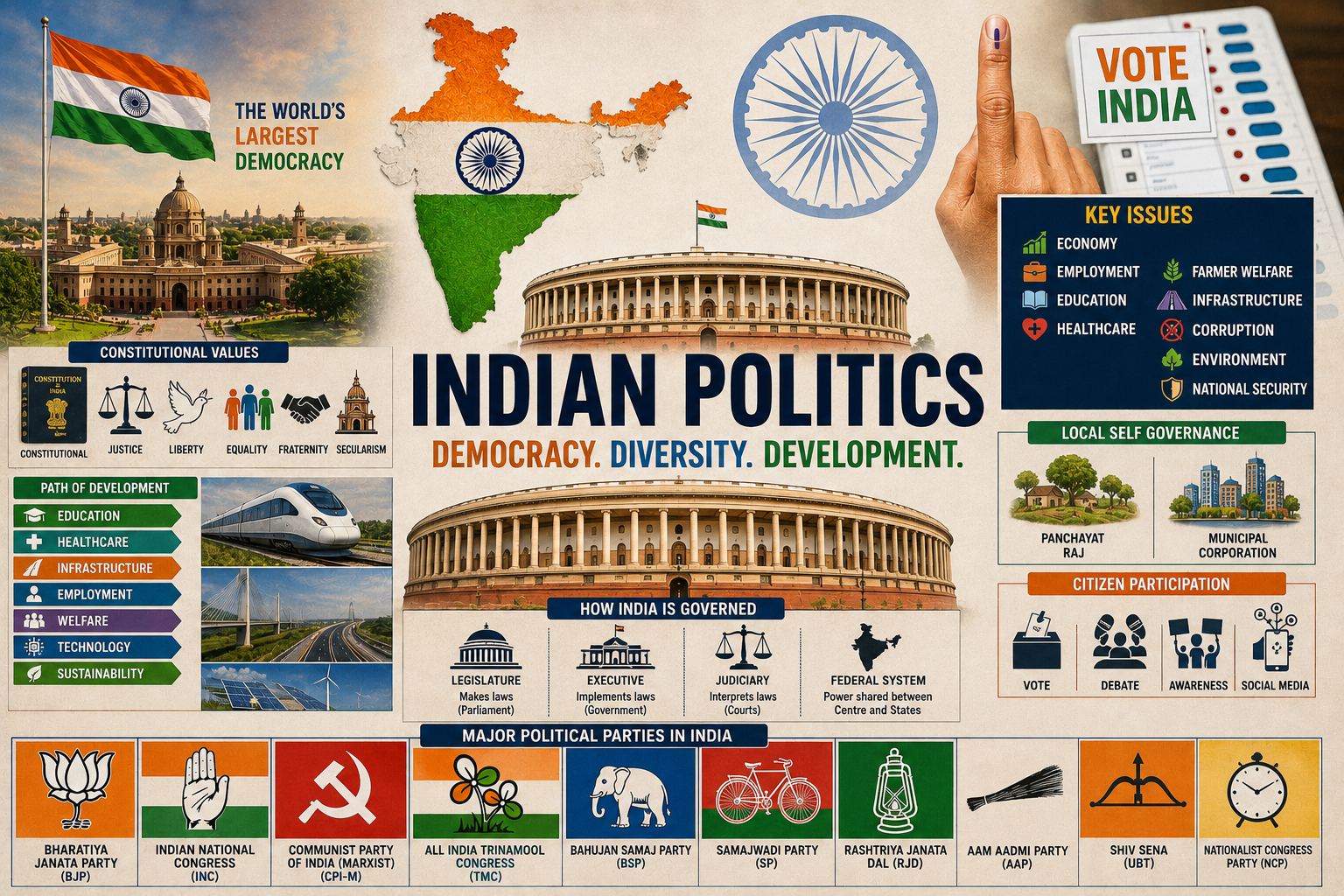
The political landscape of Maharashtra has undergone a dramatic transformation with the fracturing of powerful regional parties like the Shiv Sena and the Nationalist Congress Party (NCP). These engineered splits, often orchestrated or leveraged by the Bharatiya Janata Party (BJP), highlight a broader national trend of the BJP consolidating power by weakening formidable regional forces across India. The shifts raise significant questions about India's federal polity and the future of multi-party democracy.
In-Depth Analysis
India's political arena is witnessing a profound reconfiguration, with the Bharatiya Janata Party (BJP) actively pursuing a strategy that has led to the significant weakening, and in some cases, the virtual collapse of once-dominant regional parties. A striking example of this national trend is unfolding in Maharashtra, where the political powerhouses of Shiv Sena and the Nationalist Congress Party (NCP) have both experienced severe internal fragmentation, altering the state's dynamics and strengthening the BJP's footprint. This systematic approach, often described as 'gradual absorption, strategic alliances, engineered splits, and ideological co-option,' aims not merely at electoral victory but at the decimation of rival political organizations to reshape the balance of power for years to come.
The Shiv Sena, a formidable regional party with deep roots in Maharashtra's Marathi identity politics, underwent a dramatic vertical split in 2022. This internal rebellion, led by Eknath Shinde, saw a significant number of Shiv Sena Members of Legislative Assembly (MLAs) break away from the faction led by then-Chief Minister Uddhav Thackeray. Shinde's faction subsequently allied with the BJP, leading to the collapse of the Maha Vikas Aghadi (MVA) coalition government—comprising the Shiv Sena (Uddhav Balasaheb Thackeray), NCP, and Indian National Congress—and Shinde assuming the Chief Ministership with BJP's support. The crisis escalated when the Election Commission of India (ECI) recognized the Shinde-led faction as the 'original' Shiv Sena and allocated it the party's traditional bow and arrow symbol, leaving the Uddhav Thackeray faction with a new name and symbol. This development was a significant blow to the Thackeray-led Shiv Sena, which had previously been a key constituent of the BJP-led National Democratic Alliance (NDA) until a fallout over power-sharing in 2019.
Hot on the heels of the Shiv Sena's fragmentation, the Nationalist Congress Party (NCP), another crucial player in Maharashtra politics, experienced a similar rupture in July 2023. Ajit Pawar, a prominent leader and nephew of party founder Sharad Pawar, orchestrated a defection along with a substantial number of NCP MLAs, aligning them with the BJP-Shiv Sena alliance. Ajit Pawar was sworn in as Deputy Chief Minister, further solidifying the 'triple-engine sarkaar' narrative promoted by the BJP. The split led to two distinct factions, with the Election Commission of India eventually recognizing the Ajit Pawar-led group as the official NCP in February 2024. This move severely curtailed Sharad Pawar's influence within Maharashtra's opposition politics and further fragmented the anti-BJP ecosystem.
The BJP's strategic approach extends beyond Maharashtra. Across India, the party has been steadily expanding its influence, often by leveraging internal dissent within regional parties, forming strategic alliances, and, when necessary, engineering defections. This has led to a scenario where regional outfits, once dominant in their respective states and often kingmakers in national coalitions, are now finding their autonomy diminished. In Odisha, the Biju Janata Dal (BJD), which had ruled for 24 years, was recently unseated by the BJP. In West Bengal, the Trinamool Congress (TMC) has faced internal fracturing and electoral setbacks, with the BJP making significant inroads. Even in Karnataka, the Janata Dal (Secular) [JD-S] has seen a serious decline in its electoral strength and influence, exemplified by the BJP's decision to deny party patriarch H.D. Deve Gowda another Rajya Sabha term.
This trend, where national narratives increasingly overshadow regional ones, prompts critical discussions about the future of India's multi-party democracy and its federal structure. Scholars and political observers note a 'structural shift' from the era of coalition politics, where regional parties held immense sway, to a more centralized, BJP-dominated political system. While some argue that this might bring uniformity and stability, others contend that it imperils the pluralism inherent in Indian democracy by diminishing the diverse voices and identities represented by regional forces. The strategies employed by the BJP, ranging from welfare politics to the use of central agencies against opposition figures, have made opposing the national government riskier for regional leaders, further cementing the dominance of the ruling party. The systematic dismantling and absorption of regional entities continue to reshape India's political jungle, creating a more homogenized landscape.
How do you feel about this story?