BNN Summary
The Union Cabinet has unanimously passed a resolution lauding Prime Minister Narendra Modi for becoming India's longest continuously serving elected Prime Minister. This historic milestone acknowledges his 4,399 days in office, surpassing Jawaharlal Nehru's record. The Cabinet also reaffirmed its full support for his ambitious 'Viksit Bharat' (Developed India) vision, which aims to transform India into a developed nation by its centenary of independence in 2047, focusing on inclusive growth and global leadership.
In-Depth Analysis
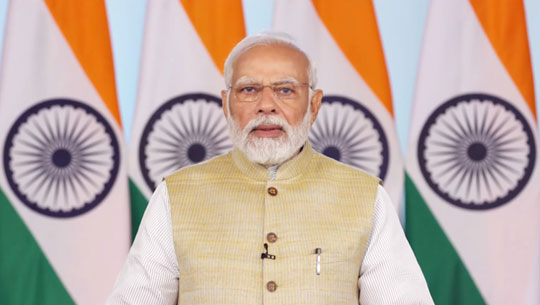
New Delhi, India – The Union Cabinet, in a significant display of unity and commendation, unanimously passed a resolution on Wednesday, June 10, 2026, applauding Prime Minister Narendra Modi for achieving the historic milestone of becoming India's longest continuously serving elected Prime Minister. This landmark achievement, marking 4,399 days of uninterrupted service as an elected Prime Minister, surpasses the previous record held by India's first Prime Minister, Jawaharlal Nehru, who served for 4,398 continuous days from 1952 to 1964.
The resolution, adopted after a Cabinet meeting in New Delhi, also unequivocally reaffirmed the government's unwavering support for Prime Minister Modi's visionary 'Viksit Bharat' agenda. Information and Broadcasting Minister Ashwini Vaishnaw, while briefing the media, highlighted that this resolution not only acknowledges the historic length of service but also outlines numerous commitments and achievements under PM Modi's leadership. Members of the Cabinet reportedly gave a standing ovation to the Prime Minister, underscoring the significance of the moment.
The 'Viksit Bharat @2047' initiative is a long-term, ambitious vision by the Government of India to transform the nation into a developed country by the year 2047, which will mark 100 years of India's independence. This comprehensive plan encompasses various facets of national development, including robust economic growth, social advancement, environmental sustainability, and effective governance. The core pillars of this vision are articulated around 'Yuva' (Youth), 'Garib' (Poor), 'Mahilayen' (Women), and 'Annadata' (Farmers), aiming for inclusive growth that benefits all sections of society.
Key objectives of 'Viksit Bharat 2047' include increasing India's economy to an estimated USD 30-40 trillion by 2047, eliminating poverty, ensuring high per capita income, and achieving high living standards, quality education, and healthcare for all citizens. The vision prioritizes areas such as education, healthcare, infrastructure, sustainability, technology, and social welfare, aiming for India to emerge as a leading global power. Policies aligned with this vision, such as income tax reforms and enhanced credit guarantee schemes for MSMEs and startups, have been announced in recent Union Budgets to foster economic growth and innovation.
The Cabinet's resolution specifically commended the government's focus on the welfare of the people, noting that the poor have remained central to governance. It detailed the unprecedented scale of amenities delivered, including pucca houses, electricity, clean drinking water, and direct benefit transfers. Over 80 crore citizens are reportedly receiving free foodgrains, and more than 60 crore beneficiaries have access to free medical treatment, contributing to strengthening national self-confidence and lifting over 25 crore people out of poverty.
Furthermore, the resolution highlighted the empowerment of key demographics. A strong focus on youth has positioned India as the world's third-largest startup ecosystem and led to major scientific milestones like the Chandrayaan mission. The government's commitment to women-led development was also underscored, citing initiatives such as smoke-free kitchens under the Ujjwala Yojana, the Lakhpati Didi campaign, and the passage of legislation providing 33 percent reservation for women in legislative bodies.
For farmers, recognized as a crucial pillar of 'Viksit Bharat,' the resolution lauded initiatives like the PM Kisan Samman Nidhi and the extension of Kisan Credit Cards to livestock rearers and fishermen, which have propelled agricultural exports past the five lakh crore rupees mark. The resolution also acknowledged significant strides in national security and the enactment of decades-pending reforms, including the abrogation of Article 370, implementation of GST, and the Bharatiya Nyaya Sanhita, among others.
Prime Minister Modi's tenure, which began with his first swearing-in on May 26, 2014, has been marked by a blend of economic development, national security, and social welfare programs. His government has focused on initiatives like 'Make in India' to boost manufacturing, 'Swachh Bharat Mission' for cleanliness, and 'Ayushman Bharat' for healthcare. The commitment to 'Viksit Bharat' by 2047 emphasizes a collective national effort, with the Prime Minister consistently urging citizen participation, particularly from the youth, to achieve this transformative vision.
How do you feel about this story?