BNN Summary
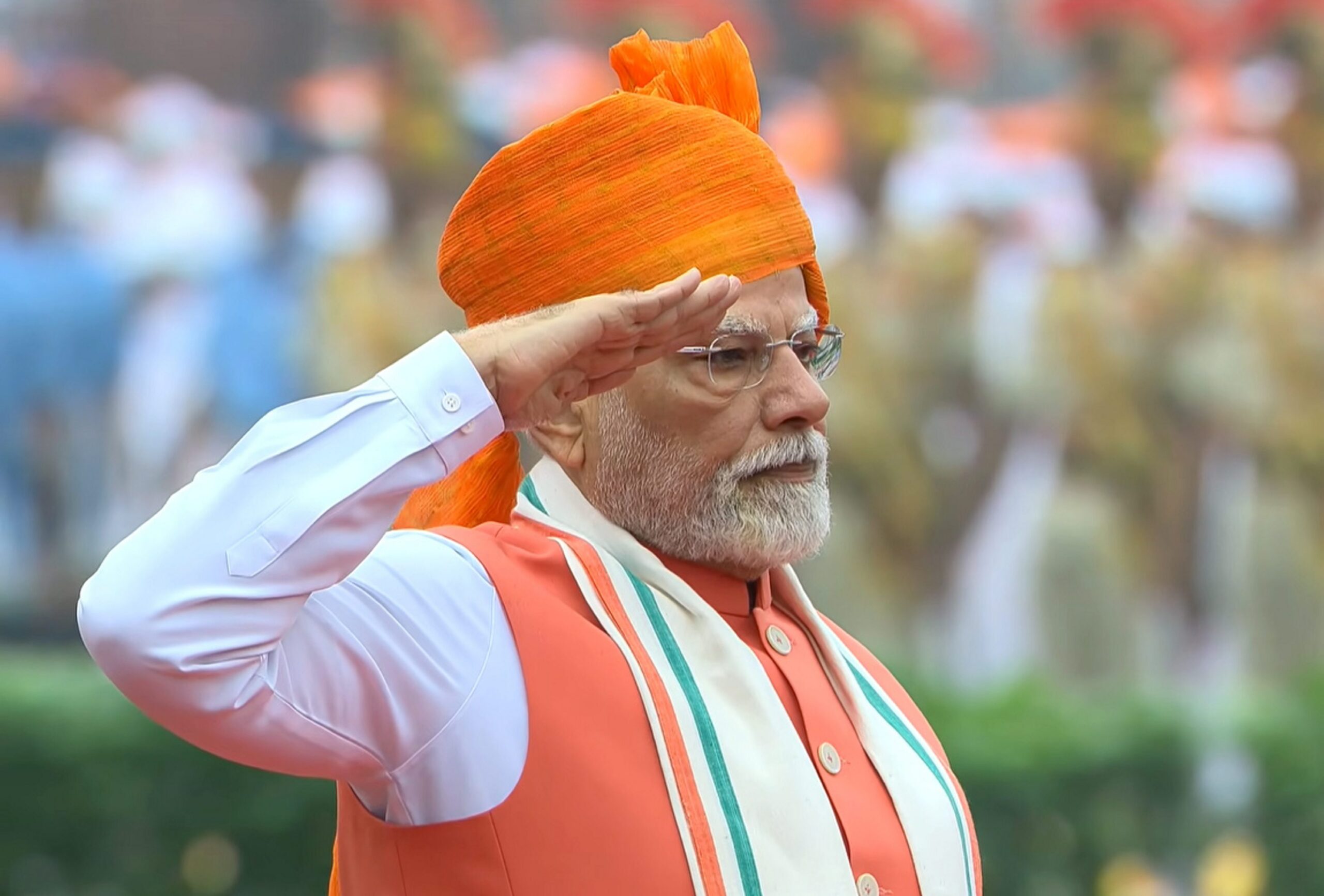
Prime Minister Narendra Modi is poised to make history on June 10, 2026, by becoming India's longest continuously serving democratically elected Prime Minister. He will surpass Jawaharlal Nehru's record, marking a monumental shift in contemporary statecraft and cementing his position as India's most electorally successful Prime Minister. This milestone underscores his remarkable political longevity and leadership in a rapidly evolving democratic landscape.
In-Depth Analysis
Prime Minister Narendra Modi is set to achieve a historic milestone on June 10, 2026, when he will officially become India's longest continuously serving democratically elected Prime Minister, surpassing the record previously held by the nation's first Prime Minister, Jawaharlal Nehru. This significant event marks a pivotal moment in India's political history, highlighting PM Modi's enduring impact and electoral success.
PM Modi, who first assumed office on May 26, 2014, will complete an impressive 4,399 consecutive days as Prime Minister on June 10, 2026. This tenure will officially exceed Nehru's record of 4,398 continuous days, which began on May 13, 1952, following India's inaugural general elections, and lasted until his passing on May 27, 1964. The attainment of this record reinforces PM Modi's status as a leader of unprecedented political longevity and effectiveness in modern Indian democracy.
This is not the first time PM Modi has eclipsed a significant longevity record in public office. On July 25, 2025, he surpassed former Prime Minister Indira Gandhi's longest uninterrupted tenure, which spanned 4,077 days from January 24, 1966, to March 24, 1977. Such achievements underscore his consistent presence at the helm of the Indian government over more than a decade.
Jawaharlal Nehru served as Prime Minister for nearly 17 years from India's independence in 1947 until his death in 1964, a total of 16 years and 286 days. His premiership laid the foundational stones for India's parliamentary democracy, secularism, and advancements in science and technology. Nehru's era was characterized by a Congress-dominated political landscape, where the party secured an overwhelming majority of seats in early general elections, such as winning 364 out of 489 Lok Sabha seats in 1952.
In stark contrast, PM Modi's tenure has unfolded in a vastly more complex and competitive political environment. He became the first non-Congress leader to win three consecutive general elections, securing a third consecutive term as Prime Minister in 2024, a feat only achieved by Nehru before him. Furthermore, he is the first non-Congress Prime Minister to complete two consecutive full-majority terms at the Centre.
The scale of India's democracy has also expanded dramatically between the two eras. When Nehru first led the nation, India's population was approximately 34 crore. By the time PM Modi assumed office in 2014, the population had swelled to over 131 crore, and it has since grown to more than 146 crore. The number of political parties contesting general elections has similarly soared, from 53 in 1951-52 to 464 in 2014, reaching 744 in the 2024 Lok Sabha elections. The electorate has also expanded significantly, from around 17 crore voters during the first general election to more than 83 crore voters by 2014.
PM Modi's leadership has been marked by a high command culture and significant centralization of power, a notable departure from previous administrations. His government has overseen a dramatic expansion in higher education and healthcare institutions, with the number of IITs increasing from 16 to 23, IIMs from 13 to 21, and AIIMS institutions from seven to 23 between 2014 and 2026. His premiership has also seen sweeping economic reforms, including demonetization and the introduction of the Goods and Services Tax (GST), along with liberalization of rules on direct foreign investment.
The Indian Constitution does not impose a fixed term limit on the Prime Minister; rather, a Prime Minister can serve as long as they maintain the confidence of the Lok Sabha. This constitutional flexibility has allowed for extended tenures such as those of Nehru and now, PM Modi. This upcoming milestone not only solidifies PM Modi's legacy but also represents a monumental shift in India's contemporary statecraft, reinforcing his standing as one of the nation's most impactful and electorally successful leaders.
How do you feel about this story?
Discussion
No comments yet. Be the first to share your thoughts.
Join the discussion
Sign in to share your thoughts on this story.