BNN Summary
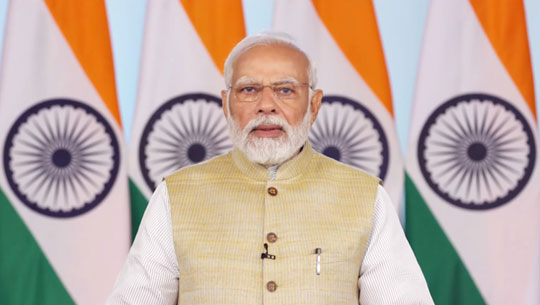
Prime Minister Narendra Modi is set to make history on June 10, 2026, by becoming India's longest continuously serving democratically elected Prime Minister. He will surpass the record previously held by the nation's first Prime Minister, Jawaharlal Nehru, marking a significant milestone in India's democratic journey and reflecting over 4,399 consecutive days in office.
In-Depth Analysis
Prime Minister Narendra Modi is poised to engrave his name into the annals of Indian democratic history on June 10, 2026, as he is set to become the nation's longest continuously serving democratically elected Prime Minister. This monumental achievement will see him surpass the record set by India's inaugural Prime Minister, Jawaharlal Nehru, who held the position for an extensive period following the country's independence.
On this significant date, Prime Minister Modi will have completed an unbroken tenure of 4,399 days in office. This milestone underscores not only his enduring political presence but also the consistent mandate he has received from the Indian electorate across two general elections. The current tenure reflects a period of sustained leadership at the helm of the world's largest democracy, a remarkable feat in itself.
Jawaharlal Nehru, a towering figure in India's freedom struggle and post-independence nation-building, served as Prime Minister from August 15, 1947, until his passing on May 27, 1964. His nearly seventeen-year term established many foundational democratic and institutional frameworks for the nascent republic. Nehru's long service was pivotal in guiding India through its initial decades, shaping its non-aligned foreign policy, and laying the groundwork for its economic and social development. For decades, his record stood as the benchmark for prime ministerial longevity in India.
Prime Minister Modi first assumed office on May 26, 2014, following a decisive victory for the Bharatiya Janata Party (BJP) in the general elections. His first term saw the implementation of several key policies and initiatives. He was subsequently re-elected with an even larger mandate in the 2019 general elections, commencing his second consecutive term on May 30, 2019. This continuous electoral success is a testament to his ability to connect with a diverse electorate and maintain a strong political footing across the vast and varied landscape of India.
His upcoming record on June 10, 2026, is particularly noteworthy because it specifically highlights 'continuously serving' and 'democratically elected' aspects. It signifies a prolonged period of political stability and the trust reposed by the citizens in his leadership through successive electoral processes. Such an extended period at the nation's highest executive office allows for the consistent pursuit of long-term policy goals and strategic national vision, potentially leading to more profound and sustained impacts on the country's trajectory.
The achievement is expected to be widely acknowledged across the political spectrum and by citizens alike, recognizing the sheer duration and consistency of his leadership. It serves as a historical marker, distinguishing his tenure in a unique way among all past and future Prime Ministers who have served or will serve the Indian Republic. As June 10 approaches, the focus will undoubtedly be on reflecting upon the significance of this record-breaking moment for Indian democracy and its political evolution.
How do you feel about this story?