BNN Summary
BRS Working President K.T. Rama Rao has highlighted the surging online popularity of the satirical 'Cockroach Janata Party' (CJP) as a stark reflection of widespread frustration and anger among India's youth against both central and state governments. The CJP, born from a controversial judicial remark, has rapidly amassed millions of followers, leveraging satirical commentary and memes to articulate grievances over unemployment, governance, and political apathy, challenging traditional political establishments.
In-Depth Analysis
Hyderabad, India – Bharat Rashtra Samithi (BRS) Working President K.T. Rama Rao recently articulated a significant concern, stating that the immense online traction garnered by the satirical 'Cockroach Janata Party' (CJP) serves as a potent indicator of profound public disappointment and anger directed towards the governmental bodies across India. Rama Rao's remarks underscore a growing sentiment of disillusionment, particularly among the younger generation, who feel increasingly unheard and neglected by mainstream politics. He recalled forewarning an audience six months prior about the potential for a Gen Z-led agitation in India, similar to movements observed in other nations, attributing this to the perceived shortcomings of the Central government's performance against its stated objectives.
The 'Cockroach Janata Party' phenomenon originated on May 16, 2026, as an immediate, satirical response to remarks controversially attributed to Chief Justice of India Surya Kant. Justice Kant was widely reported to have referred to India's unemployed youth as 'cockroaches' and 'parasites' during a court hearing. Although Kant later clarified that his comments were taken out of context and were specifically aimed at individuals using fake degrees to secure professions, the initial perception of the remarks struck a raw nerve among millions of young Indians.
Founded by Abhijeet Dipke, a 30-year-old Indian student of public relations at Boston University and a former volunteer with the Aam Aadmi Party's social media team, the CJP quickly transformed a purported insult into a powerful symbol of youth anger. The pseudo-party's online presence exploded, demonstrating an unprecedented speed of growth. Within days of its launch, the CJP's Instagram account alone garnered over 20 million followers, significantly surpassing the follower counts of long-established major political parties such as the ruling Bharatiya Janata Party (BJP) and the main opposition Indian National Congress. This rapid ascent also extended to platforms like X (formerly Twitter), though its account on X was subsequently blocked in India, with authorities citing national security concerns.
The CJP describes itself as 'a political front of the youth, by the youth, for the youth: Secular, Socialist, Democratic, and Lazy,' openly embracing its satirical identity with the slogan 'Voice of the Lazy & Unemployed.' Its online content masterfully taps into the frustrations of unemployed masses, utilizing memes, mock campaign slogans, and sharp satirical commentary to address prevalent issues such as corruption, pervasive joblessness, and broader political dysfunction. The eligibility criteria for joining the satirical party are equally tongue-in-cheek, listing traits like 'unemployed, lazy, chronically online, and able to rant professionally.'
The underlying factors contributing to this widespread youth disillusionment are multi-faceted and deeply rooted in India's socio-economic and political landscape. A primary concern is the alarming rate of unemployment, particularly among graduates. Reports indicate that nearly 40% of graduates aged 15-25 and 20% of those aged 25-29 are jobless, a figure considerably higher than among less educated demographics. Many young individuals face immense difficulty securing stable, salaried positions, often spending years preparing for competitive exams without guaranteed success.
Beyond employment, there is a pervasive sense that the traditional political system is largely unresponsive to the needs and aspirations of the youth. Indian politics is often perceived as a 'closed game' dominated by dynastic succession and wealth, where merit frequently takes a back seat. The parliamentary representation of youth is notably low, with only about 12% of Members of Parliament in the Lok Sabha being under the age of 40, despite India having a vast young population. This 'gerontocracy,' as some describe it, leads to a significant disconnect, as youth-centric policies often fall by the wayside.
The CJP's rise also highlights the evolving nature of political engagement, where online satire and digital activism serve as crucial outlets for grievances that mainstream politics fails to address. While studies suggest that online political comedy may have a positive yet weak effect on youth political engagement, it undeniably fosters political awareness and provides a platform for dissent. Humor and memes, as instruments of political critique, have proven effective in 'puncturing images of authority' and challenging established narratives, thereby allowing young people to express frustration and demand accountability.
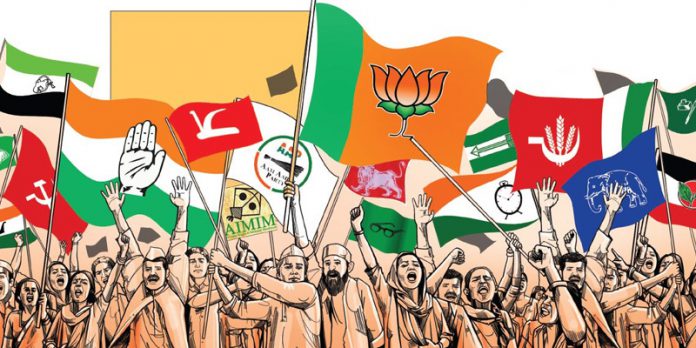
The rapid ascent of the CJP has not gone unnoticed by India's political establishment. Opposition leaders, including members of the Congress party and other figures, have acknowledged and even amplified the 'cockroach' imagery online, with some expressing willingness to welcome CJP members. Conversely, some senior politicians from the ruling BJP have dismissed the movement, with one senior politician describing it as a 'cross-border influence operation' aimed at destabilizing India and another accusing the CJP of seeking followers from 'arch-enemy Pakistan and the ‘anti-India gang’.' Founder Abhijeet Dipke has, in turn, alleged surveillance and intimidation against the CJP, expressing concerns for his safety upon his return to India.
Looking ahead, the CJP, though satirical and not officially registered as a political party, is already planning to translate its online momentum into offline action. Dipke has announced plans to return to India to lead a 'peaceful protest' on June 6, demanding the resignation of the Education Minister over alleged exam irregularities. This underscores the movement's deeper significance: it reveals a widening disconnect between the citizenry, especially its youth, and an establishment that appears increasingly unwilling to listen or adapt. The phenomenon of the Cockroach Janata Party, therefore, is more than just internet virality; it is a powerful socio-political commentary reflecting the profound and growing frustrations of a demographic that feels unheard, unseen, and economically precarious.
How do you feel about this story?