BNN Summary
Leaders from approximately 15 opposition parties forming the Indian National Developmental Inclusive Alliance (INDIA) are set to convene in New Delhi on June 8, 2026. The crucial huddle aims to devise a joint strategy against the BJP-led government, strengthen internal coordination, and address recent electoral setbacks and evolving political dynamics across states. This meeting comes at a pivotal time, testing the alliance's cohesion and its ability to present a formidable challenge.
In-Depth Analysis
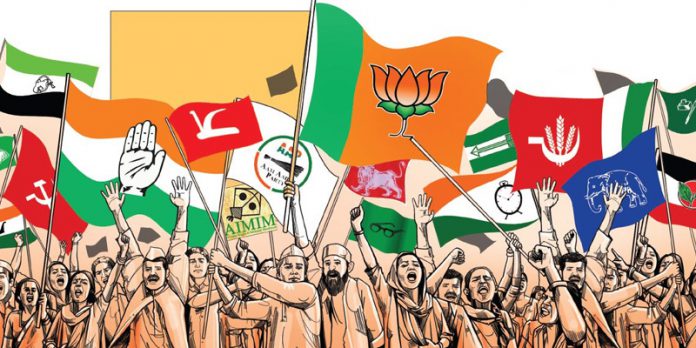
NEW DELHI – The Indian National Developmental Inclusive Alliance (INDIA) is poised for a critical strategy session on June 8, 2026, in New Delhi, bringing together leaders from around 15 opposition parties. The huddle, scheduled to take place at the Constitution Club of India, is aimed at bolstering coordination among alliance partners and mapping out a joint strategy to counter the ruling Bharatiya Janata Party (BJP)-led National Democratic Alliance (NDA) government.
The agenda for this high-stakes meeting is comprehensive, focusing on parliamentary coordination, analyzing state-level political developments, refining electoral strategies, and reinforcing unity amidst growing internal challenges. Discussions are also expected to cover joint campaigns, public outreach initiatives, and formulating a cohesive response to pressing national issues.
Among the prominent figures anticipated to attend are Congress President Mallikarjun Kharge, Leader of Opposition in the Lok Sabha Rahul Gandhi, Trinamool Congress (TMC) supremo and former West Bengal Chief Minister Mamata Banerjee, Shiv Sena (UBT) chief Uddhav Thackeray, and Samajwadi Party president Akhilesh Yadav. Mamata Banerjee is also expected to use the platform to raise concerns regarding alleged attacks on TMC leaders in West Bengal.
The upcoming meeting occurs against a backdrop of significant electoral challenges and shifting political equations for the INDIA bloc. Recent assembly elections saw two key constituents, the TMC in West Bengal and the Dravida Munnetra Kazhagam (DMK) in Tamil Nadu, ousted from power. The BJP, in contrast, registered notable successes in West Bengal and Assam, further strengthening its footprint.
Internal strains within the alliance have also become increasingly apparent. The Congress party's decision to snap ties with the DMK and align with the Tamilaga Vettri Kazhagam (TVK) in Tamil Nadu has created considerable friction, making DMK's attendance at the June 8 meeting unlikely. Efforts are reportedly underway to bring the TVK, led by Tamil Nadu Chief Minister C. Joseph Vijay, into the opposition fold. Furthermore, the Aam Aadmi Party (AAP) has publicly distanced itself from the INDIA bloc and is not expected to participate.
These developments have provided ammunition for the BJP, with its spokespersons declaring the INDIA bloc as 'dead' or having 'no future' due to perceived deep cracks and a lack of coordination. Political analysts have pointed to concerns about internal tensions, contradictions, and the potential for shifting loyalties threatening the bloc's cohesion.
Formed in July 2023, the Indian National Developmental Inclusive Alliance was conceived as a broad coalition of opposition parties aiming to jointly challenge the BJP-led NDA in the 2024 Lok Sabha elections. Its stated objectives include eroding the BJP's electoral dominance, offering a credible alternative, promoting secularism and social justice, and safeguarding democratic institutions. In the 2024 general elections, the alliance demonstrated its potential by securing 235 seats, a significant gain that limited the BJP's ability to form a government with an absolute majority on its own, necessitating reliance on coalition partners.
Despite its recent setbacks, the INDIA bloc has previously shown its capacity for unity, notably in April 2026, when it successfully united to defeat the Constitution (One Hundred and Thirty-First Amendment) Bill in the Lok Sabha. This bill, which proposed expanding Lok Sabha seats, was widely seen as potentially altering parliamentary arithmetic to benefit the BJP's geographical strongholds and was fiercely opposed by the alliance.
The broader political landscape in India continues to be marked by the BJP's efforts to consolidate power, often amidst accusations of undermining democratic institutions and increasing polarization along religious lines. As several states prepare for upcoming Assembly elections and the looming specter of the 'One Nation-One Election' proposal, the June 8 meeting is seen as a crucial opportunity for the INDIA bloc to reaffirm its commitment to unity, address internal discord, and demonstrate its viability as a credible opposition force capable of offering a compelling alternative to the electorate.
How do you feel about this story?