BNN Summary
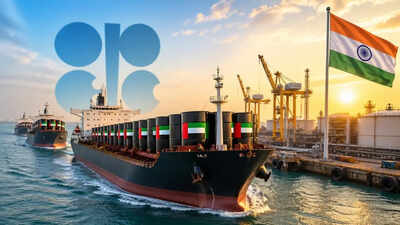
The UAE announced on Tuesday that it would exit OPEC and the wider OPEC+ group, effective May 1, in what could be a significant blow to the cartel's control over prices, long led in practice by Saudi Arabia. The shock announcement comes after the UAE was the target of missile and drone attacks for weeks by fellow OPEC member Iran.
In-Depth Analysis
What Just Happened?
The UAE announced on Tuesday that it would exit OPEC and the wider OPEC+ group, effective May 1, in what could be a significant blow to the cartel's control over prices, long led in practice by Saudi Arabia. The shock announcement comes after the UAE was the target of missile and drone attacks for weeks by fellow OPEC member Iran. Tehran's attacks on shipping in the Strait of Hormuz have also severely constrained the UAE's ability to export oil, threatening the foundation of its economy. The UAE was the group's third-largest oil producer behind Saudi Arabia and Iraq, and had been a member of OPEC since 1967.
Why Did the UAE Leave?
The UAE has the ambition to achieve 5 million barrels per day of capacity by 2027 and wants more freedom of action to pursue that goal. Essentially, OPEC's production quotas were a ceiling the UAE no longer wanted. The UAE's increasingly assertive foreign policy had progressively isolated it from fellow OPEC members, especially Saudi Arabia, which disagrees with its positions on Yemen and elsewhere. Abu Dhabi has doubled down on relations with the United States and Israel, with which it opened ties in the 2020 Abraham Accords, viewing those relations as a critical lever for regional influence.
How Is This Good for India?
India is the world's third-largest oil importer and is extremely sensitive to global crude prices. The UAE's exit from OPEC has several direct and indirect benefits for India:
Lower Oil Prices (Most Direct Benefit) Without OPEC's production quotas constraining it, the UAE can pump oil freely. The UAE has a current capacity of approximately 4.8 million barrels per day and significant room to increase output. More supply on the global market tends to push prices down — which is a major relief for India's import bill.
Weakening of OPEC's Pricing Power The loss of the UAE, a longstanding OPEC member, could create disarray and weaken the oil cartel, which has usually sought to show a united front despite internal disagreements over production quotas. A weaker OPEC means less ability to artificially restrict supply and prop up prices — historically a burden for oil-importing nations like India.
Bilateral Oil Deal Opportunity Free from OPEC rules, the UAE can now negotiate direct, long-term supply deals with India at competitive prices without worrying about OPEC quota compliance. India and UAE already have strong bilateral ties (CEPA trade agreement, large Indian diaspora in UAE), making such deals very plausible.
Rupee-Dirham Trade India has been pushing for trade in local currencies to reduce dollar dependency. A UAE outside OPEC's framework is more likely to pursue flexible, bilateral arrangements — including rupee-dirham oil trades — which would help India manage forex reserves better.
India's Energy Security Alongside Saudi Arabia, the UAE is one of the few OPEC members with meaningful spare capacity, which allows quick response to supply shocks. With the UAE now acting independently, India can potentially lock in supply agreements that are insulated from OPEC political dynamics.
Diversification Away from Russia Dependence India has relied heavily on discounted Russian crude since 2022. A UAE free from OPEC constraints offers India another reliable, geographically close supplier at competitive rates, reducing over-dependence on any single source.
How do you feel about this story?