BNN Summary
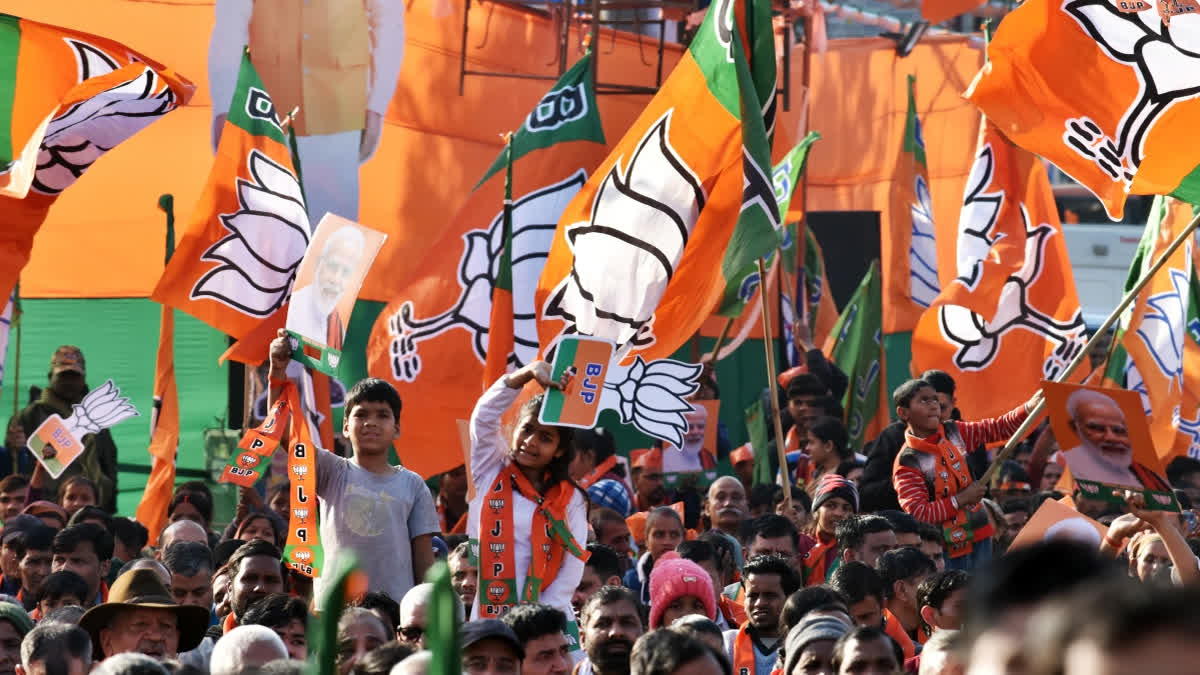
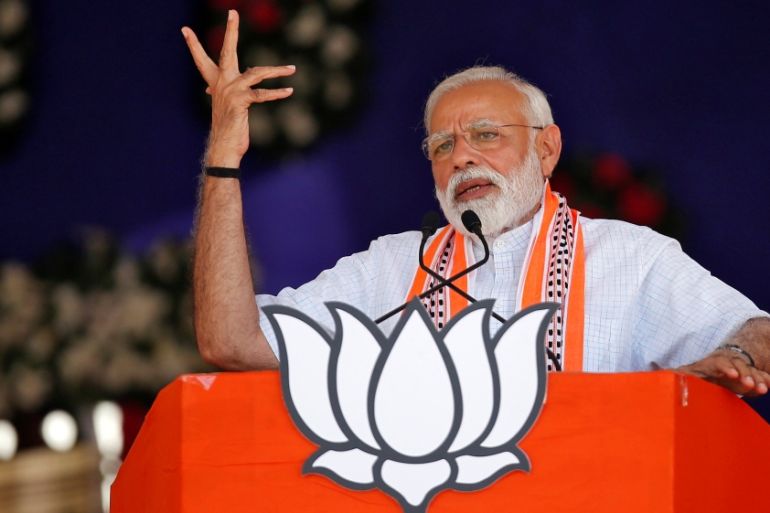
In the last 12 years Modi led the Bharatiya Janata Party government has been marked by transformative reforms, strong governance, and decisive leadership. The BJP government took bold steps such…
In-Depth Analysis
In the last 12 years Modi led the Bharatiya Janata Party government has been marked by transformative reforms, strong governance, and decisive leadership. The BJP government took bold steps such as the Abrogation of Article 370, which removed the special status of Jammu and Kashmir. The government also passed the Citizenship Amendment Act, which became a major political and social milestone. The Government succeeded in the construction of the Ram Mandir in Ayodhya, which fulfilled a long-standing political and social commitment. In addition to that, BJP is also focusing on some more bold decisions in the coming time which will strengthen the nation, party and ideology by implementing the UCC, ONOE, Delimitation Commission, implementation of Womens reservation act etc.
However, ongoing elections in West Bengal, Assam, Kerala, Tamil Nadu, and Puducherry are important for the Bharatiya Janata Party (BJP) for implementing the above reforms. Some of the opinion polls are predicting, BJP will retain Assam and Puducherry. In states like Tamilnadu and west bengal, NDA will give close contests with regional players DMK and TMC. Even if BJP gives tough fight to TMC in west bengal, It is a big achievement for BJP.
Winning in these elections advancing the Uniform Civil Code (UCC) because these regions reflect India’s social and religious diversity. Electoral success or even incremental growth in such states enables the BJP to argue that support for a uniform set of civil laws is not confined to its traditional northern and western strongholds. In states like West Bengal and Assam, where minority populations are significant, electoral gains help the party project UCC as having wider acceptance. In Kerala and Tamil Nadu, where regional identity and pluralism are politically strong, any expansion of BJP’s presence allows it to frame UCC as a national reform rather than an ideologically narrow proposal. Puducherry adds symbolic value by extending this acceptance to a union territory with a distinct political context.
These elections are also crucial for the BJP’s push toward One Nation One Election (ONOE), which aims to synchronize elections across the country. Implementing ONOE requires broad political consensus and, potentially, constitutional amendments, making electoral strength across diverse states essential. Success in West Bengal and Assam contributes to greater parliamentary numbers, while gains in Kerala and Tamil Nadu help the BJP engage with regions that have traditionally been skeptical of centralized reforms. Building a presence in these states allows the party to negotiate political acceptance and reduce resistance to ONOE by presenting it as an efficiency-driven reform rather than a centralizing move. Puducherry’s smaller political landscape can serve as a testing ground for administrative coordination and alignment with national electoral cycles.
The importance of these elections extends to the Delimitation Commission Act and the delimitation process, which will redraw parliamentary constituencies after the census. Strong performance in West Bengal and Assam can increase the BJP’s representation in the Lok Sabha, giving it a stronger voice when constituency boundaries are redefined. At the same time, southern states like Kerala and Tamil Nadu have expressed concerns about potential loss of representation due to lower population growth. By improving its electoral footprint in these regions, the BJP can better manage political opposition and participate more effectively in shaping the narrative around delimitation as a fair national exercise. Puducherry, though small, still contributes to the broader parliamentary arithmetic and alliance-building efforts. The elections are equally significant for the implementation of the Women's Reservation Act, which reserves seats for women in legislatures and is expected to be operational after delimitation. In states like West Bengal and Assam, where women voters play a decisive role, stronger electoral performance helps the BJP consolidate support among women and identify future women leaders who can contest reserved seats. In Kerala and Tamil Nadu, where women’s literacy and political participation are relatively high, electoral gains enhance the party’s image as inclusive and progressive. Puducherry provides a smaller and more flexible political environment where strategies related to women’s representation can be tested and refined.
Overall, electoral success or expansion in these states strengthens the BJP’s national legitimacy, increases its parliamentary strength, and provides the political and social foundation needed to advance reforms such as UCC, ONOE, delimitation commission, and the Women’s Reservation Act, while also helping the party manage regional sensitivities and opposition more effectively.
Author is a Visiting Fellow, India Foundation, New Delhi and Assistant Professor, Dept of CSE, NIT Warangal
How do you feel about this story?