BNN Summary
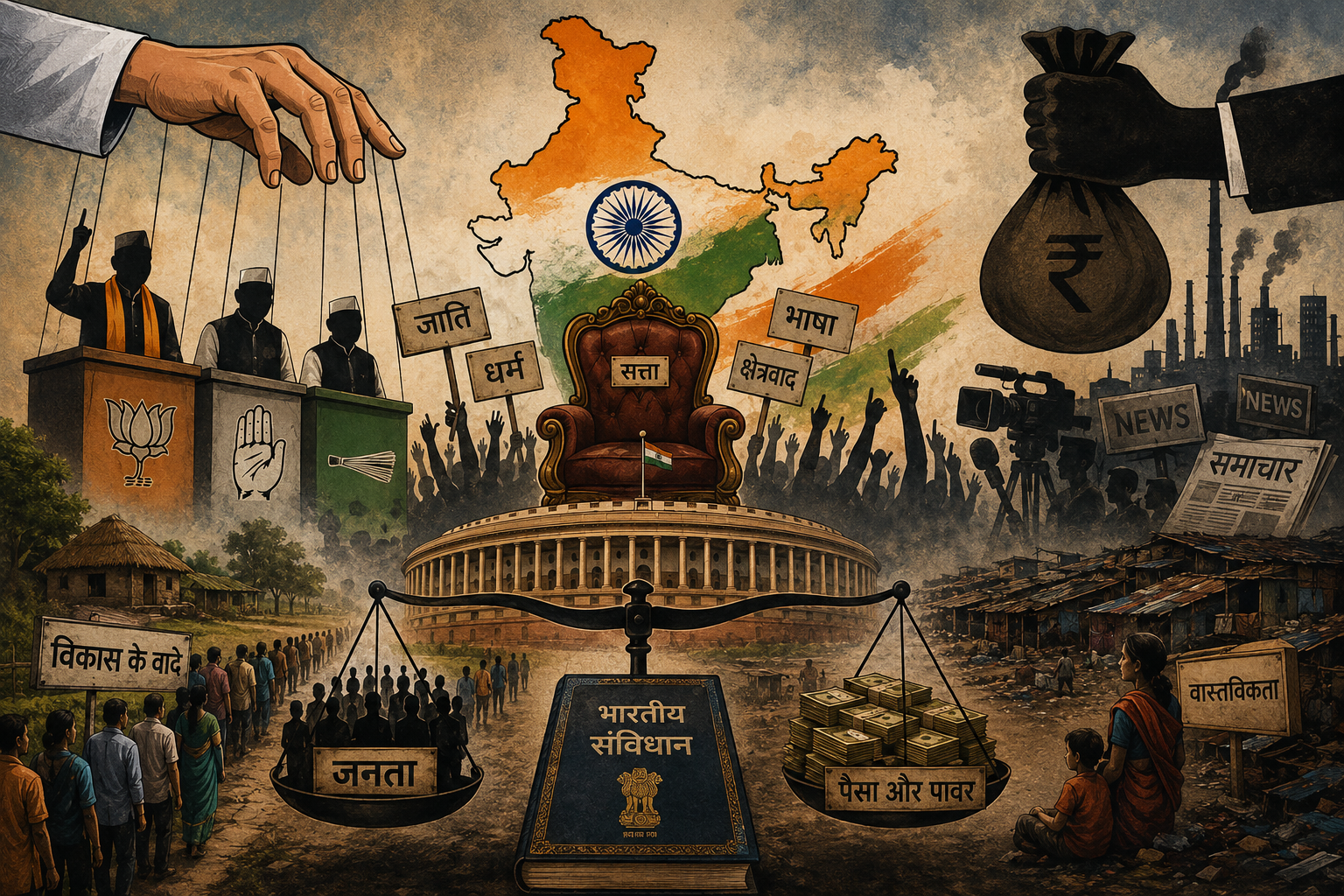
Communist Party of India (Marxist-Leninist) state secretary Sudhakar Yadav has criticized the current administration, alleging a decline in accountability among officials and a narrowing of constitutional rights in India.
In-Depth Analysis
The political landscape in India has witnessed a surge in critical discourse regarding the functioning of the executive branch and the preservation of democratic institutions. Sudhakar Yadav, the Uttar Pradesh state secretary of the Communist Party of India (Marxist-Leninist) (CPI-ML), recently voiced strong concerns during a public address in Mirzapur, highlighting what he perceives as a systemic erosion of accountability within the current governing framework.
The Crisis of Accountability
Yadav argued that under the current administration, led by Prime Minister Narendra Modi and Chief Minister Yogi Adityanath, the fundamental relationship between the government and the citizenry has undergone a negative shift. According to his assessment, ministers and administrative officers are increasingly insulated from the concerns of the common public. He emphasized that the primary responsibility of a public servant is to remain answerable to the people, a principle he claims is being systematically sidelined in favor of centralized decision-making and administrative opacity.
Constitutional Concerns and Democratic Rights
The critique extended beyond local administration to the broader national context. Yadav stated that democratic rights are currently under attack, with constitutional safeguards being increasingly restricted. He suggested that the space for dissent and civil society engagement, which is vital for a healthy democracy, is shrinking. His remarks resonate with broader debates occurring within the Indian political spectrum regarding the independence of state institutions and the protection of constitutional mandates.
Institutional Challenges
The CPI-ML leader's remarks are part of a larger conversation regarding the effectiveness of governance in the states and the center. Critics often point toward a perceived lack of transparency in policy implementation, particularly in sectors that directly impact the rural and marginalized populations. When administrative officials operate without sufficient oversight or feedback loops from the electorate, the potential for policy disconnect increases significantly.
Looking Forward
The statements made by the CPI-ML leader serve as a reminder of the role of political opposition in highlighting systemic lapses. Whether these concerns regarding the lack of accountability will translate into policy shifts or increased administrative scrutiny remains to be seen. However, the call for a more responsive and transparent government remains a central theme in Indian political rhetoric.
As the country navigates complex challenges, ranging from economic pressures to social welfare demands, the integrity of its democratic institutions remains the cornerstone of its stability. The demand for ministers and officers to be held strictly accountable to the public is not merely a political talking point but a fundamental requirement for the maintenance of a robust and functioning republic. Ensuring that constitutional rights are preserved while fostering an environment where public officials feel a moral and professional duty to serve the citizenry is essential for the long-term prosperity of the nation.
How do you feel about this story?
Discussion
No comments yet. Be the first to share your thoughts.
Join the discussion
Sign in to share your thoughts on this story.