BNN Summary
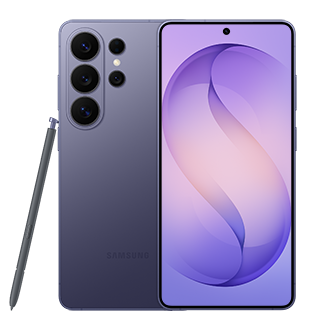
Xiaomi has officially announced its latest flagship smartphone, the Xiaomi 18 Pro Max, featuring a groundbreaking built-in hardware privacy display. Outperforming competing flagship devices like the anticipated Samsung Galaxy S26 Ultra, this innovative technology allows users to dynamically narrow viewing angles directly from the operating system, ensuring sensitive personal and professional data remains entirely hidden from prying eyes in public spaces.
In-Depth Analysis
The smartphone industry has long grappled with the challenge of balancing immersive, wide-angle viewing experiences with the growing demand for user privacy in public spaces. Traditionally, consumers have relied on aftermarket plastic or tempered glass privacy screen protectors, which frequently degrade display brightness, impair touch sensitivity, and diminish color accuracy. Xiaomi is shifting the paradigm entirely with the debut of the Xiaomi 18 Pro Max, introducing a proprietary, integrated hardware-level privacy display that redefines mobile security.
Groundbreaking Hardware Innovation
Unlike software-based dimming solutions or generic filters, the Xiaomi 18 Pro Max incorporates a sophisticated secondary liquid crystal layer embedded directly into the AMOLED panel stack. When activated, this specialized layer realigns sub-pixels to restrict light emission strictly to a perpendicular viewing cone. Users sitting directly in front of the device experience vibrant colors, pristine contrast, and peak brightness without compromise. However, anyone attempting to peer at the screen from an angle exceeding thirty degrees will see only a darkened or completely obscured panel.
Industry analysts have already begun comparing the technology to upcoming competitors, noting that the Xiaomi 18 Pro Max implementation surpasses rival solutions such as those rumored for the Samsung Galaxy S26 Ultra. While competitors often rely on software tricks or static polarization, Xiaomi's hardware approach can be toggled instantly via a quick-settings tile or automated context rules. For instance, the device can be programmed to automatically engage the privacy mode the moment a banking application, password manager, or secure messaging client is launched.
Advanced Features and Specifications
Beyond its revolutionary privacy screen, the Xiaomi 18 Pro Max is a powerhouse engineered for enthusiasts and professionals alike. Driven by the latest generation Qualcomm Snapdragon chipset, the device delivers unprecedented computational efficiency and graphical performance. The expansive OLED panel boasts a variable 120Hz refresh rate, ultra-thin bezels, and a peak local brightness that ensures outdoor readability even when the privacy layer is fully engaged.
Photography enthusiasts will find a versatile multi-sensor camera array co-engineered with optical industry leaders. The primary wide sensor captures stunning dynamic range in low-light conditions, supported by a dedicated periscope telephoto lens and an ultra-wide angle sensor equipped with advanced autofocus capabilities. Battery life is equally impressive, featuring high-density silicon-carbon cell technology coupled with blazing-fast wired and wireless charging standards.
Software Integration and Availability
Operating on the latest iteration of Xiaomi HyperOS, the software experience is deeply integrated with the privacy hardware. Users can customize privacy intensity levels, set application-specific triggers, and even restrict specific notification contents from appearing when peripheral movement is detected by the front-facing infrared sensors.
Industry insiders confirm that the Xiaomi 18 Pro Max is launching this week in select global markets, with broader international rollouts expected over the coming months. Pricing and configuration options vary by region, but early consumer interest suggests that built-in hardware privacy displays will quickly become an industry-standard benchmark for future flagship smartphones. As mobile devices increasingly store sensitive financial and personal credentials, Xiaomi's forward-thinking hardware integration marks a significant leap forward for consumer data security.
How do you feel about this story?
Discussion
No comments yet. Be the first to share your thoughts.
Join the discussion
Sign in to share your thoughts on this story.