BNN Summary
The Jammu and Kashmir Legislative Assembly passed a crucial resolution urging the Union Government to restore the region's full statehood. The move sparked intense political friction, leading to vehement protests and a walkout by Bharatiya Janata Party legislators who decried the timing and legitimacy of the legislative action.
In-Depth Analysis
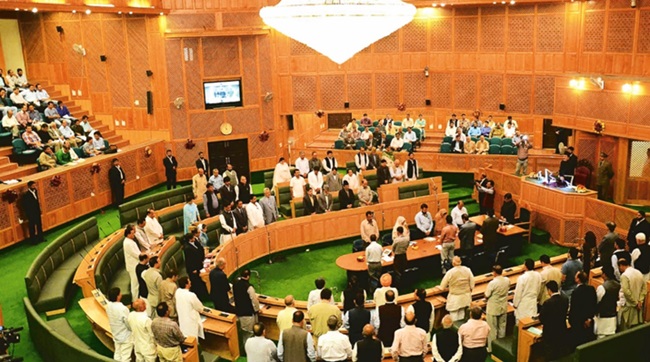
The Jammu and Kashmir Legislative Assembly witnessed a stormy session as lawmakers overwhelmingly passed a resolution pushing for the immediate restoration of the region's full statehood. This high-stakes political development marks a significant milestone in the Union Territory's post-2019 legislative history, bringing the sensitive issue of constitutional status back to the forefront of national discourse.
Heated Debates and Procedural Chaos
The proceedings began amidst high tension on the floor of the House. As soon as the resolution regarding statehood was introduced, opposition members belonging to the Bharatiya Janata Party (BJP) rose in fierce protest. BJP legislators argued that the resolution was brought forward through unconstitutional means and lacked proper prior notification on the official business agenda. Shouting slogans, the protesting members rushed into the well of the House, demanding an immediate rollback of the motion.
Despite the intense disruptions, pandemonium, and vociferous slogan shouting from the opposition benches, the Speaker of the Assembly maintained order long enough to put the resolution to a voice vote. With the majority of the members present supporting the motion, the resolution seeking the urgent restoration of full statehood was declared passed.
BJP Walkout and Strong Condemnation
Following the passage of the resolution, BJP lawmakers staged a walkout from the Assembly hall in deep frustration. Addressing the media outside the legislative complex, senior BJP leaders strongly condemned the ruling administration's move. They characterized the resolution as a political stunt designed to stoke regional tensions and distract the public from core developmental issues.
'The way this resolution was smuggled into the assembly proceedings without proper consensus or adherence to rules makes a mockery of democratic norms,' a senior BJP leader stated. The party vowed to take its opposition to the streets and legally challenge any move that undermines the governance framework established after the abrogation of Article 370.
Implications for Regional Governance
The passage of this resolution places the local administration on a direct collision course with the central government in New Delhi. The Union Territory status, which was instituted in August 2019 following the bifurcation of the erstwhile state of Jammu and Kashmir, has been a deeply polarizing subject. While regional political parties have consistently campaigned for the reinstatement of statehood to ensure greater accountability and local autonomy, the central leadership has maintained that the decision will be reviewed at an appropriate time based on overall security and administrative assessments.
Political analysts suggest that while the resolution holds immense symbolic value for the ruling local government and its supporters, its practical implementation ultimately rests entirely with the Union Cabinet and the Parliament of India. As political temperatures soar, all eyes remain on New Delhi to see how the central executive responds to this formal legislative demand from Srinagar.
How do you feel about this story?
Discussion
No comments yet. Be the first to share your thoughts.
Join the discussion
Sign in to share your thoughts on this story.


/theprobe/media/media_files/2026/09/23/cec-gyanesh-kumar-eci-controversy-2026-09-23-17-07-14.jpg)