BNN Summary
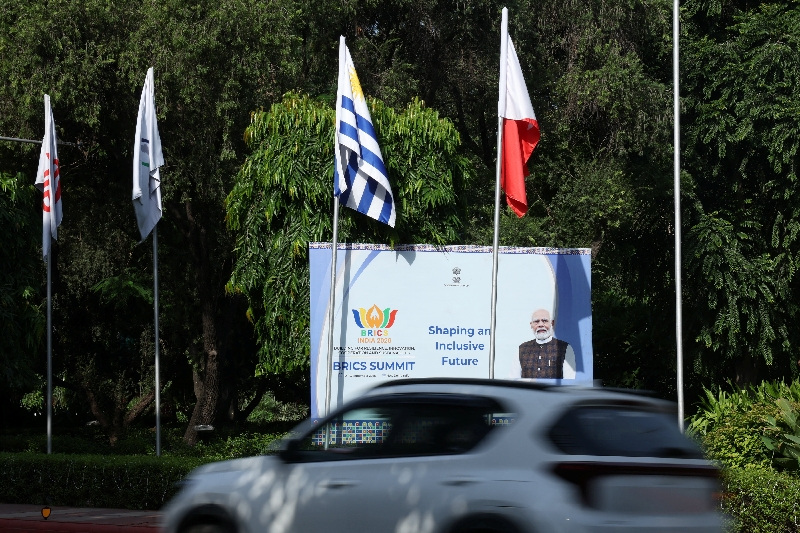
India's Ministry of External Affairs has spotlighted ongoing high-level diplomatic dialogues with China, echoing recent remarks by Union Minister Piyush Goyal regarding potential avenues for renewed bilateral engagement. Highlighting recent interactions, officials pointed to discussions held during the BRICS Summit as key milestones in managing cross-border relations and exploring cooperative economic pathways between the two major Asian economies.
In-Depth Analysis
The Ministry of External Affairs (MEA) has recently drawn attention to the sustained diplomatic channels operating between India and China, underscoring a continuous effort to stabilize and navigate complex bilateral ties. This development runs parallel to signals from Union Minister Piyush Goyal, who has indicated that there is tangible scope for renewed engagement across various sectors, pointing toward a pragmatic approach in dealing with regional and economic cooperation.
Highlighting the frequency and significance of high-level diplomatic contact, officials recalled key interactions, including the summit-level meeting between Prime Minister Narendra Modi and Chinese President Xi Jinping during the BRICS Summit. Such engagements are seen as vital stepping stones in addressing long-standing border tensions while concurrently allowing both nations to explore constructive avenues for dialogue. Observers note that these high-level discussions demonstrate a willingness on both sides to maintain communication channels at the highest political and bureaucratic levels, even as underlying strategic challenges persist.
Piyush Goyal's remarks regarding renewed engagement have further sparked discussions within business and geopolitical circles about the future trajectory of India-China relations. While India has consistently maintained that peace and tranquility along the Line of Actual Control (LAC) are prerequisite conditions for the normalization of bilateral ties, government officials have acknowledged the economic interdependencies and the necessity of managing commercial interactions pragmatically. The dialogue reflects a nuanced diplomatic balancing act, where national security concerns are firmly prioritized alongside the exploration of multilateral cooperation through forums like BRICS and the Shanghai Cooperation Organisation.
The Ministry of External Affairs emphasized that diplomatic and military talks will continue to address remaining friction points along the border. These ongoing negotiations involve specialized working mechanisms, such as the Working Mechanism for Consultation and Coordination on India-China Border Affairs (WMCC), ensuring that commanders and diplomats remain in regular contact to de-escalate tensions. Analysts point out that sustained engagement does not signal an immediate return to business-as-usual, but rather an institutionalized commitment to dialogue aimed at preventing misunderstandings and fostering regional stability.
Furthermore, the economic dimension highlighted by leaders like Piyush Goyal points to the reality of global supply chains and trade dynamics. While India continues to implement measures aimed at boosting domestic manufacturing and reducing strategic vulnerabilities through initiatives like 'Atmanirbhar Bharat', policymakers recognize the importance of targeted sectoral engagements and maintaining clear channels of communication with its largest neighboring market. As both nations navigate this complex phase of bilateral relations, the emphasis remains on strategic autonomy, firm protection of national interests, and the pursuit of diplomatic solutions to unresolved disputes.
How do you feel about this story?
Discussion
No comments yet. Be the first to share your thoughts.
Join the discussion
Sign in to share your thoughts on this story.