BNN Summary
Russia's Su-57 fifth-generation fighter jet remains a subject of intense global scrutiny as it features prominently in military drills and faces potential international interest amid delays in domestic alternatives like India's AMCA program.
In-Depth Analysis
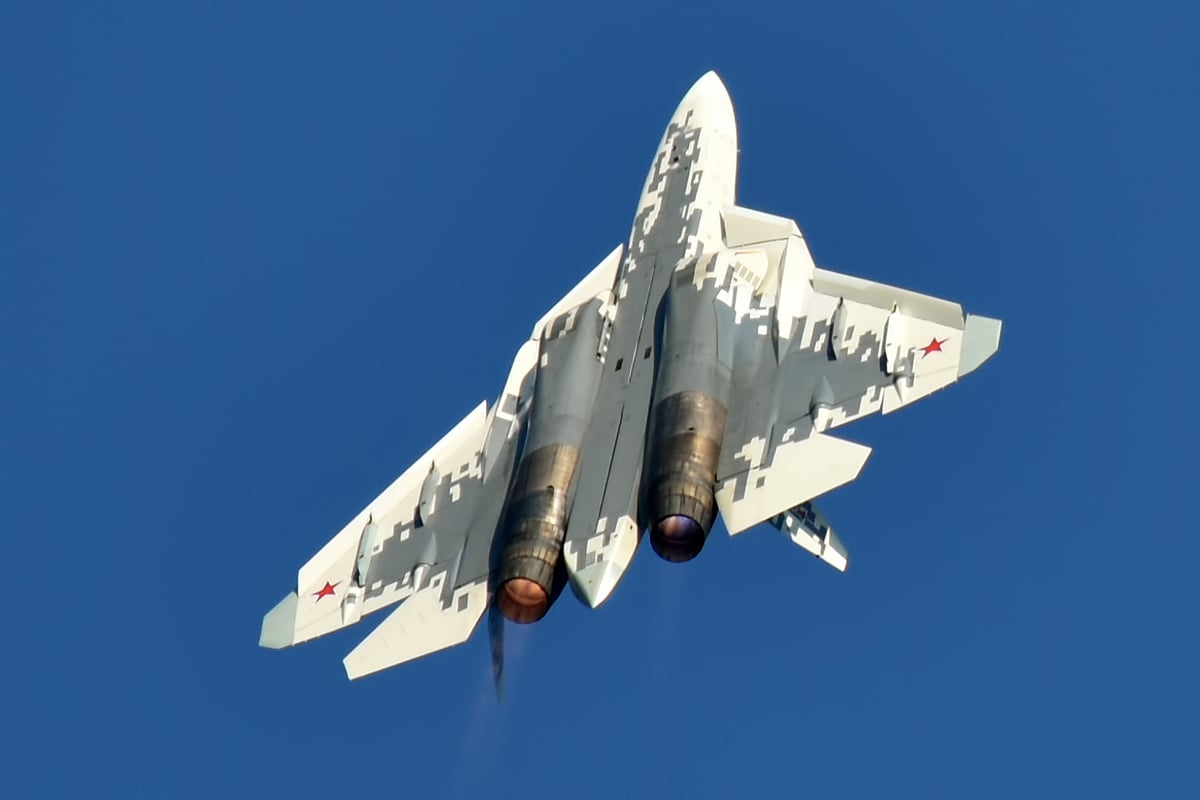
The Sukhoi Su-57, designated by NATO as the 'Felon', continues to occupy a complex and controversial position in modern military aviation. As Russia's premier fifth-generation multirole fighter, the aircraft is designed to perform air-superiority and strike roles, incorporating stealth technology, supermaneuverability, and advanced avionics. However, military analysts and defense experts worldwide frequently debate its true combat readiness, production scale, and tactical efficacy when compared to Western counterparts such as the American-built F-16 or more advanced fifth-generation platforms like the F-35 Lightning II.
Recent reports indicate that Su-57 fighter jets have taken center stage in various Russian military exercises, particularly those focusing on complex air strike operations and integrated network-centric warfare. These drills are designed to showcase the aircraft's capability to operate in contested airspace, penetrate sophisticated air defense networks, and coordinate with other assets. Despite these demonstrations, defense observers note that the operational deployment of the Su-57 in active conflict zones has been relatively limited, with Moscow exercising caution to protect its high-value technological assets from potential losses or the risk of compromising classified electronic systems.
On the international stage, the Su-57 has also emerged in strategic defense discussions beyond Russia's borders. Notably, the Indian Air Force has occasionally evaluated its options regarding fifth-generation fighter aircraft, especially as domestic initiatives like the Advanced Medium Combat Aircraft experience projected timelines and delays. While India has maintained a traditional defense partnership with Russia, acquisition decisions involve rigorous technical evaluations, transfer of technology considerations, and financial assessments. The potential consideration of foreign fifth-generation alternatives highlights the urgent operational requirements facing modern air forces as regional security dynamics evolve rapidly.
Technically, the Su-57 incorporates several distinct design features aimed at reducing its radar cross-section, though critics frequently argue that its stealth profile is less optimized than that of American fifth-generation aircraft. The aircraft utilizes internal weapons bays, advanced composite materials, and sophisticated sensor fusion systems, including active electronically scanned array radars and infrared search-and-track suites. Powered by advanced engines capable of supercruise—sustained supersonic flight without afterburners—the Su-57 is designed for high maneuverability through thrust-vectoring control.
Nevertheless, the broader defense manufacturing ecosystem surrounding the Su-57 faces persistent challenges. Western economic sanctions and supply chain constraints have impacted Russia's defense industrial base, potentially slowing the rate of serial production and technological upgrades. Consequently, while the Su-57 remains a potent symbol of Russian aerospace engineering and a significant factor in military planning, its long-term strategic impact will depend heavily on manufacturing scalability, electronic warfare advancements, and proven performance in high-intensity modern warfare scenarios.
How do you feel about this story?
Discussion
No comments yet. Be the first to share your thoughts.
Join the discussion
Sign in to share your thoughts on this story.