Public Reaction Summary
“Beyond the Valley of Shadows: Why Kashmir's Future Demands a Bold New Paradigm”
Analysis based on 984 commentsJoy
Summary
Social media discourse surrounding the topic reflects a mix of strong patriotic sentiment, international geopolitical commentary, and significant chatter on unrelated popular culture and sports. Positive reactions center around regional support for India, admiration for External Affairs Minister S. Jaishankar, and pride in national achievements. Conversely, critical commentary highlights concerns about local infrastructure like heavy rainfall alongside general public dissatisfaction, illustrating how core geopolitical discussions are often contextualized within broader everyday concerns.
Breakdown of emotional tone across all comments
Key Takeaway
Public engagement demonstrates resilient nationalist alignment and confidence in India's diplomatic leadership, though news outlets must account for a noisy digital audience that frequently blends geopolitical issues with mainstream entertainment and sports.
Full Dashboard
Trending Keywords
✅ Top Positive Reactions
“AFGHANISTAN 🇦🇫 " I SUPPORT INDIA "UAE 🇦🇪 " I SUPPORT INDIA "PAKISTAN 🇵🇰 " THIS IS CHEATING "”
“I an in Pakistan but I an sad for India 🇮🇳 😢 Allah will help india people ❤”
⚠️ Critical Perspectives
“Allah sabki hifazat karein😭❤️”
“Gukesh's tournament arc alone deserves a documentary. Man drops under 2700 in round 2 against an Indonesian IM, everyone starts panicking in the comments, and then he claws back with wins over Brunello and Shirov like nothing happened. That h3 idea against Donchenko in round 9 turning a dead lost po”
BNN Summary
Kashmir has surged as India's top political trend, driven by intense digital discourse surrounding governance, security, and post-2019 integration milestones. This spike reflects the region's enduring geopolitical significance in the national consciousness. Public sentiment remains deeply polarized, balancing government-touted developmental progress against ongoing operational realities on the ground.
In-Depth Analysis
Introduction and Core Facts
Over the past week, "Kashmir" has emerged as a dominant focal point across digital platforms in India, securing its position as the weekly top trending story in the politics category with an estimated search volume exceeding 10,000 queries. This surge in public interest underscores the region’s enduring resonance in the national consciousness. While specific breaking catalysts vary day-to-day, the current spike is driven by an intersection of ongoing administrative updates, security reassessments, and continuous political discourse regarding the region's governance and integration trajectory. Observers note that discussions are centering on both the developmental milestones claimed by the administration and the operational realities on the ground, keeping the region at the very forefront of public attention.
Context and Implications
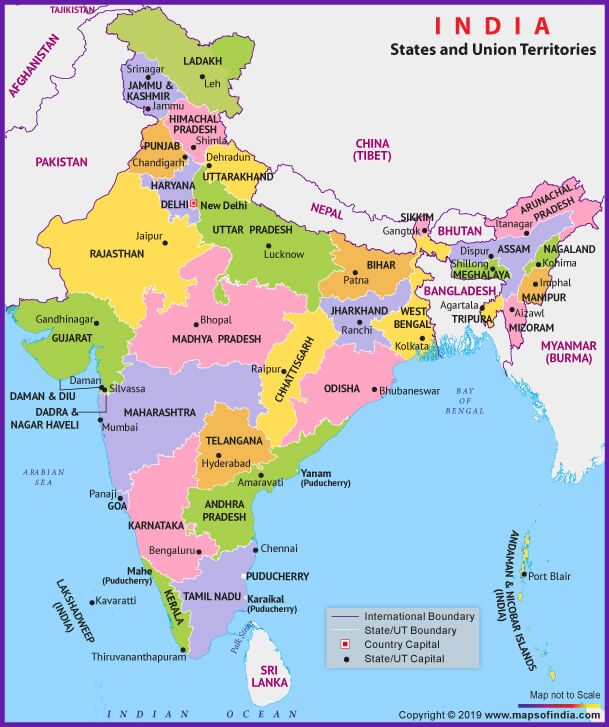
The persistent prominence of Jammu and Kashmir in public and political spheres is rooted in its unique geopolitical and constitutional significance for India. Since the historic restructuring of August 2019, the region has undergone a profound transformation, moving from a semi-autonomous state to Union Territories directly administered by New Delhi. For the central government, this policy shift was envisioned as a permanent solution to integrate the region fully into the Indian constitutional framework, curtail militancy, and spur economic growth through tourism, infrastructure development, and private investment.
However, the implications of these sweeping changes remain a subject of intense national debate. On one hand, supporters point to declining incidents of localized unrest, rising tourist inflows, and the expansion of central welfare schemes as markers of normalcy and progress. On the other hand, critics and regional stakeholders emphasize the lingering democratic deficit—specifically the prolonged absence of a locally elected legislative assembly—and the challenges of bureaucratic governance. For India as a whole, the Kashmir narrative is intricately tied to questions of federalism, national security, and the delicate balance between state authority and civil liberties, making every policy shift a matter of profound constitutional and social consequence.
Public Response and Sentiment
Public sentiment surrounding Jammu and Kashmir, as reflected in digital discourse and social media reactions, remains deeply polarized yet intensely passionate, capturing a duality of emotional attachment and administrative scrutiny.
On the positive end of the spectrum, expressions of deep regional pride and national solidarity dominate. Citizens frequently voice their affection for the valley, with comments such as, "I am from Jammu Kashmir ❤" and "Kashmir hamari shaan he ❤ ilove kashmir," highlighting a strong sense of local identity intertwined with national belonging. These voices often emphasize the cultural richness, scenic beauty, and resilience of the local populace, pushing back against generalized narratives of perpetual conflict.
Conversely, a substantial segment of the digital commentary adopts a more analytical and skeptical tone, focusing on governance efficacy and transparency. Critical observers point out that administrative initiatives often suffer from structural bottlenecks, noting that "execution details remain extremely blurry" and arguing that "a critical overview indicates policy execution gaps." These critiques reflect broader public demands for greater clarity regarding employment generation, land policy regulations, and the tangible grassroots impact of central policies. Together, these contrasting viewpoints illustrate a populace deeply engaged with the region's future—torn between celebrating its cultural essence and demanding sharper accountability from policymakers.
How do you feel about this story?
Discussion
No comments yet. Be the first to share your thoughts.
Join the discussion
Sign in to share your thoughts on this story.