BNN Summary
As Japan prepares to host the 20th Asian Games in Aichi-Nagoya in 2026, organizers are balancing sustainability with logistical challenges. Meanwhile, athletic powerhouses like India are gearing up for intense competition following dominant regional performances.
In-Depth Analysis
The 20th Asian Games, scheduled to take place in Aichi-Nagoya, Japan, in 2026, are already generating intense global interest as organizers race against time to deliver a world-class sporting event. Co-hosted by the Aichi Prefecture and the city of Nagoya, the Games represent a major milestone for Japan, which has a long and storied history of hosting major international sports tournaments. However, the path to 2026 is not without its hurdles, as organizers grapple with complex logistical, financial, and organizational challenges that have drawn scrutiny from sports analysts and international bodies alike.
Logistical Challenges and Sustainability Focus
Unlike traditional iterations of the Asian Games, which often feature massive, custom-built athlete villages, the Aichi-Nagoya organizers are adopting a highly decentralized approach. This strategy is designed to promote fiscal responsibility and environmental sustainability, utilizing existing hotel infrastructure and university housing instead of constructing a single mega-complex. While this decision has been praised by sustainability advocates, it has also sparked concerns regarding transport efficiency, team cohesion, and daily commutes for athletes. Observers have pointed out that coordinating transport across various scattered accommodations could lead to delays, potentially affecting athletes' preparation and performance. There have also been minor diplomatic and technical debates surrounding official anthems and protocol, raising questions about whether Japan can streamline its administrative processes before the opening ceremony.
India's Rising Stature in Continental Sports
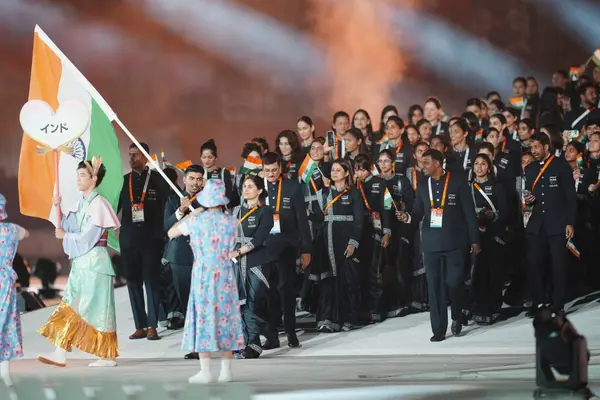
For competing nations, particularly India, the 2026 Games represent a crucial testing ground. Indian athletes have enjoyed a meteoric rise in continental sports, as evidenced by stellar performances in recent multisport events. Indian shooters, including Elavenil Valarivan and the 'women's 10m air rifle team', have consistently delivered silver and gold medal performances on the global stage. Furthermore, the expansion of the sporting program to include emerging disciplines like Mixed Martial Arts (MMA) has opened new avenues for Indian competitors, with athletes like Suchika already establishing a formidable presence in early bouts.
The Indian Olympic Association (IOA) is expected to field one of its largest contingents ever for the 2026 edition, aiming to break previous medal records. The government's targeted funding programs, such as the 'Target Olympic Podium Scheme (TOPS)', are heavily focusing on refining the skills of young athletes in archery, athletics, shooting, and combat sports to ensure peak performance in Japan.
A Legacy of Innovation and Excellence
Despite the logistical anxieties, Japan's track record of hosting flawless sporting events—including the Tokyo 2020 Olympics—suggests that the country is more than capable of overcoming these early roadblocks. The Aichi-Nagoya organizing committee is leveraging cutting-edge technology, including automated transit solutions and state-of-the-art digital broadcasting, to enhance the spectator experience. For Japan, the 2026 Asian Games are not just about sporting glory; they are an opportunity to showcase regional revitalization, technological innovation, and a modern, sustainable model for hosting mega-events in the post-pandemic era.
How do you feel about this story?
Discussion
No comments yet. Be the first to share your thoughts.
Join the discussion
Sign in to share your thoughts on this story.