Public Reaction Summary
“ब्यूरोक्रेसी के 'संकटमोचक' से चुनाव आयुक्त तक: क्या निष्पक्षता की कसौटी पर खरे उतरेंगे सुखबीर सिंह संधू?”
Analysis based on 5,000 commentsJoy
Summary
The public reaction is mixed. Some commenters express optimism and appreciation, while others remain skeptical or concerned about the implications of the development. The discussion reflects multiple perspectives across the collected comments.
Breakdown of emotional tone across all comments
Key Takeaway
The strongest public reaction should be treated as the main signal, while the most repeated concerns should guide further editorial review.
Full Dashboard
Trending Keywords
✅ Top Positive Reactions
“Bhaii sunneme achha lag raha tha phir sidha 2047 tak sun liya 😂😅😅”
“Ye acha kam kiya hai❤❤❤❤🎉🎉🎉”
⚠️ Critical Perspectives
“Trick -- "BHAJI SABJI FOR MAASAAB"- B - बाबर- H - हुमायूं (बीच में कुछ दिन शेरशाह रहा)- A - अकबर- Ji - जहांगीर- S - शाहजहाँ- A - औरंगजेब- B - बहादुरशाह- Ji - जहांदार शाह- For - फर्रुखसियर- M - मुहम्मद शाह- A - अहमद शाह- A - आलमगीर द्वितीय- S - शाह आलम द्वितीय- A - अकबर द्वितीय- B - बहादुर शाह जफ़र”
“Arrest gyanesh Kumar”
BNN Summary
The appointment of former bureaucrat Sukhbir Singh Sandhu as Election Commissioner has sparked intense national debate regarding institutional neutrality within India's democratic framework. While his extensive administrative background is viewed as an asset for managing the nation's vast electoral machinery, public and political discourse remains sharply divided over whether he can uphold strict impartiality.
In-Depth Analysis
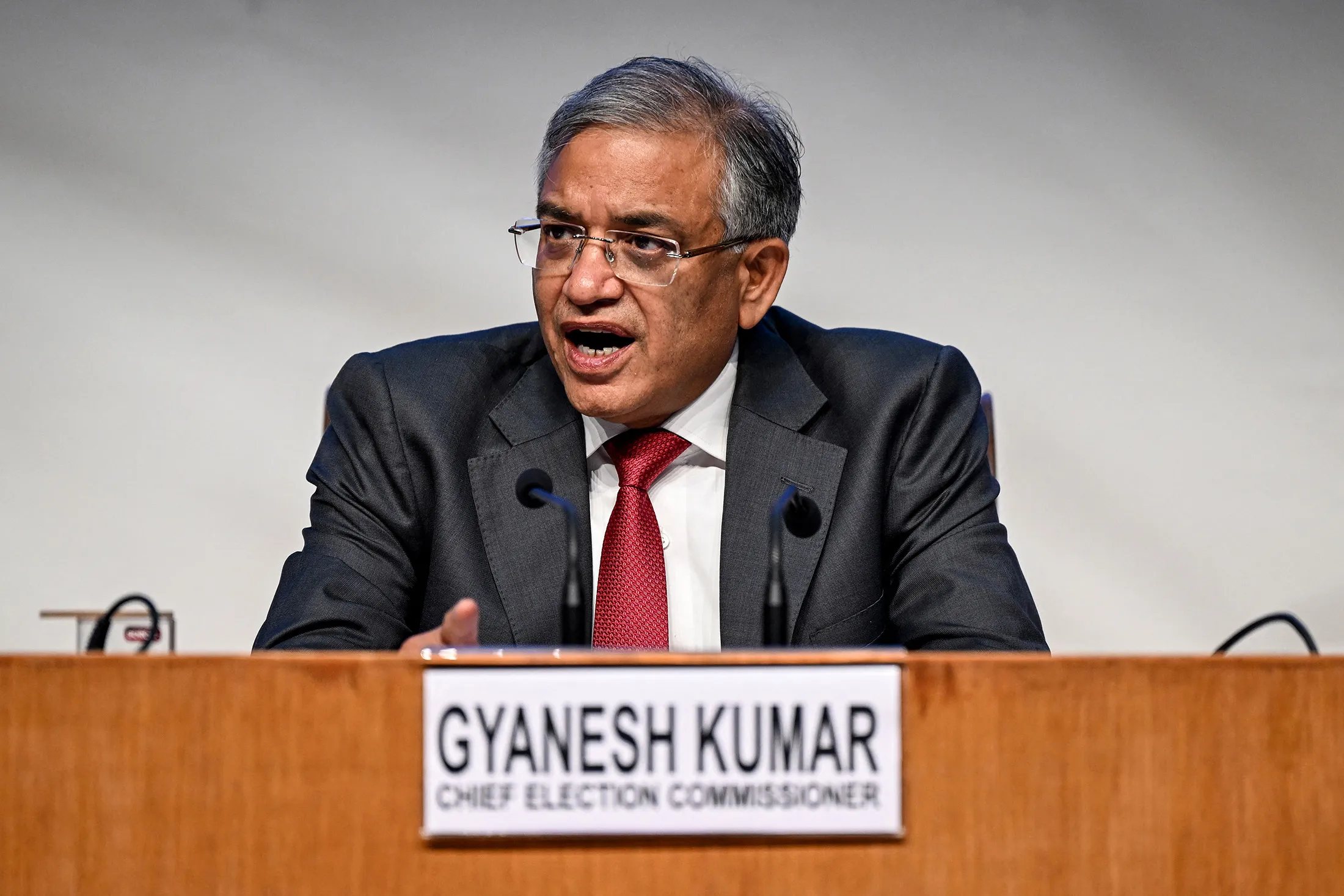
In the landscape of Indian administration and electoral politics, the name Sukhbir Singh Sandhu has recently emerged at the forefront of national discourse. Ranking as a weekly top trending story in politics with a search volume exceeding 5,000, Sandhu's trajectory represents a critical juncture in India’s bureaucratic and democratic framework. A retired 1988-batch IAS officer of the Uttarakhand cadre, Sandhu was appointed as an Election Commissioner of India in March 2024. This appointment, executed under the provisions of the newly enacted Chief Election Commissioner and other Election Commissioners Act, 2023, positioned him alongside Gyanesh Kumar as key figures responsible for steering the nation's vast and complex electoral machinery.
The significance of Sandhu’s elevation to the Election Commission of India (ECI) cannot be understated. Having previously served in highly demanding administrative capacities—including as the Chairman of the National Highways Authority of India (NHAI) and the Chief Secretary of Uttarakhand—Sandhu brings a wealth of execution-oriented experience to the poll panel. For India, the world’s largest democracy, the absolute neutrality and efficiency of the Election Commission are paramount to maintaining public trust.
Sandhu’s appointment comes at a time when the ECI faces unprecedented scrutiny over electoral integrity, technological integration, and the enforcement of the Model Code of Conduct. Politically, his decisions carry immense weight, as both the ruling coalition and opposition parties dissect every administrative move. The systemic transition of seasoned bureaucrats into constitutional oversight bodies highlights a growing reliance on administrative expertise to navigate increasingly polarized political landscapes, making his tenure a litmus test for institutional independence.
Public reaction to Sandhu's role and the broader reforms surrounding the commission presents a polarized spectrum of optimism and skepticism. On the supportive side, many policy analysts and citizens view his appointment as an opportunity to modernize and streamline complex electoral processes. Proponents of this shift believe his proven track record in infrastructure and state governance will translate into robust structural updates, with one commentator noting that "this development holds significant promise for standard reform." Others welcome the heightened public discourse surrounding these constitutional appointments, describing the ongoing debate as "an insightful look into public perspective."
Conversely, critical voices raise vital questions regarding the operational transparency and long-term autonomy of the commission under the new legislative selection mechanism. Skeptics argue that while high-profile appointments are swiftly executed, the strategic roadmap for addressing deeper systemic vulnerabilities remains ambiguous. Concerns about the practical application of new electoral guidelines are prominent, with critics pointing out that "execution details remain extremely blurry." Furthermore, policy analysts caution against premature celebration, warning that "a critical overview indicates policy execution gaps" that could undermine public confidence if not addressed with absolute clarity and impartiality. Ultimately, the discourse surrounding Sukhbir Singh Sandhu underscores the delicate balance India must maintain between administrative efficiency and unquestionable institutional integrity.
How do you feel about this story?
Discussion
No comments yet. Be the first to share your thoughts.
Join the discussion
Sign in to share your thoughts on this story.