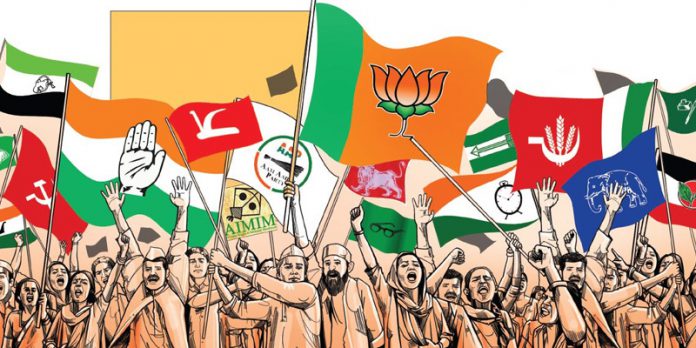
Image: Wikimedia
BNN Summary
Citizens for Justice and Peace activist Saurav Das has publicly criticized the Bharatiya Janata Party's recent outreach efforts targeting Generation Z. Das labeled the initiative as performative, sparking a wider debate regarding the efficacy and authenticity of political engagement strategies aimed at India's younger demographic as the nation prepares for evolving electoral challenges.
In-Depth Analysis
In a pointed critique that has resonated across social media platforms, Saurav Das, a prominent activist associated with Citizens for Justice and Peace (CJP), has taken a sharp swipe at the Bharatiya Janata Party (BJP) for its recent tactical outreach initiative aimed at Generation Z voters. The initiative, which was designed to bridge the gap between the ruling party and India's youngest voting demographic, has been characterized by Das as a superficial exercise in public relations rather than a substantive engagement with the concerns of the youth.
The Nature of the Critique
Das took to digital forums to express his skepticism regarding the sincerity of the BJP's campaign. He sarcastically offered 'three claps' for what he described as a 'marvellous set of Gen Z faces,' implying that the party's reliance on curated visuals and young influencers lacks the depth required to address the systemic issues facing today's youth. His commentary suggests that the political establishment is increasingly struggling to connect with a digitally savvy generation that prioritizes transparency, employment, and social equity over traditional campaign rhetoric.
Contextualizing the Youth Outreach
The BJP has been aggressively expanding its presence on platforms like Instagram and X (formerly Twitter) to engage with younger voters who are eligible to participate in the upcoming electoral cycles. By integrating 'Gen Z' representatives into their communication strategy, the party aims to project a modern, inclusive image. However, critics like Das argue that this strategy ignores the underlying frustrations regarding unemployment, education reforms, and the shrinking space for civil discourse in the country.
'Political parties often treat the youth as a monolithic bloc to be managed,' noted one political analyst observing the situation. 'What Das is highlighting is the growing impatience among the younger generation with what they perceive as window dressing.'
Broader Political Implications
This incident is indicative of a broader trend in Indian politics where civil society activists are holding mainstream political parties accountable for their digital narratives. As elections become increasingly contested in the digital sphere, the battle for the 'Gen Z' vote has become a central theater of operation for all major political players.
While the BJP maintains that its outreach is a genuine effort to bring young voices into the mainstream policy-making process, the backlash from figures like Das underscores a persistent trust deficit. The effectiveness of such initiatives remains to be seen, as the youth demographic in India continues to demand more than just digital appearances. The focus for many young voters remains firmly on economic stability and long-term career prospects, issues that activists believe are not being sufficiently addressed by current engagement models.
As the political landscape continues to shift, the tension between traditional power structures and the demands of a modernized, outspoken younger electorate will likely remain a defining feature of Indian democratic life. Whether these outreach programs will evolve into meaningful policy dialogues or remain confined to the realm of 'performative politics' remains a significant question for observers of the Indian political scene.
How do you feel about this story?
Discussion
No comments yet. Be the first to share your thoughts.
Join the discussion
Sign in to share your thoughts on this story.