Image: Wikimedia
BNN Summary
Recent student-led movements have successfully challenged the political hegemony of the ruling party, signaling a shift in the national atmosphere. By forcing government retreats and reclaiming public spaces for dissent, these protests have effectively punctured the prevailing narrative of dominance and lifted a pervasive sense of fear, restoring a degree of democratic vibrancy to the country's political landscape.
In-Depth Analysis
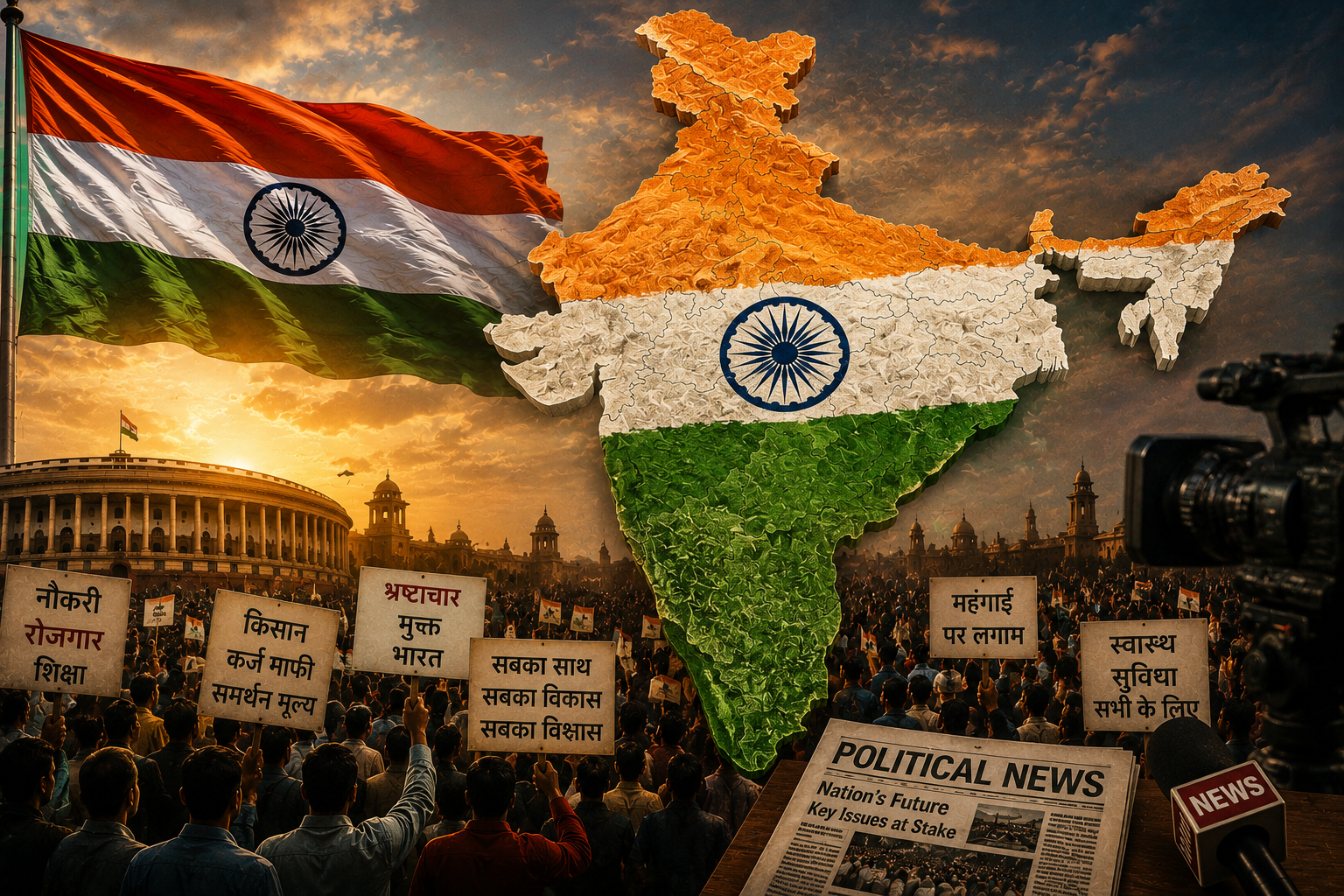
The recent wave of student-led protests has left an indelible mark on the political landscape, fundamentally altering the dynamic between the government and the citizenry. For years, the ruling Bharatiya Janata Party (BJP) maintained a near-total grip on the national narrative, framing dissent as anti-national and utilizing its extensive machinery to marginalize opposing voices. However, the latest pushback from students has proven that this perceived hegemony is not as impenetrable as previously thought.
Breaking the Cycle of Silence
For a significant period, a 'pall of fear' seemed to hang over various sectors of society. Academics, activists, and ordinary citizens often chose silence over confrontation to avoid the wrath of state agencies or online troll armies. The student movement acted as a catalyst, demonstrating that collective action can still produce tangible results. By taking to the streets and refusing to back down, they shifted the momentum from a narrative of inevitability to one of contestation.
Puncturing Narrative Dominance
Central to the BJP's success has been its ability to control the framing of major issues. Whether through legislative changes or ideological shifts, the party frequently dictated the parameters of national debate. The student protests forced the government into a defensive position, compelled to justify policies that were previously presented as settled law. This retreat did more than just delay or repeal specific policies; it demonstrated that the government's authority is subject to public mandate and can be recalibrated through sustained pressure.
Restoring Democratic Space
The democratic space, which many analysts feared was shrinking rapidly, has shown signs of revival. The protests created a platform for diverse voices to coalesce, moving beyond narrow interests to address fundamental questions of governance, equity, and civil liberties. This resurgence of dissent serves as a vital check and balance in a system where parliamentary opposition has struggled to find its footing.
Furthermore, the impact of these protests extends to the wider public consciousness. By successfully challenging the state, these students have validated the importance of public assembly and freedom of speech. This has emboldened other segments of civil society to raise their voices on issues ranging from economic policies to social justice. The 'fear' that once silenced intellectual discourse is slowly being replaced by a more assertive public square where the government must engage with criticism rather than simply dismissing it.
Long-Term Implications
The long-term effects of this shift remain to be seen, but the immediate consequence is a more nuanced political environment. The 'narrative hegemony' has been dented, and the political opposition, both formal and informal, now has a template for resistance. As the nation moves forward, the ability of citizens to force the government to retreat will likely remain a crucial benchmark for the health of the country's democracy. The student movement has proven that power is never absolute and that the active participation of the youth remains the most effective antidote to authoritarian consolidation.
How do you feel about this story?
Discussion
No comments yet. Be the first to share your thoughts.
Join the discussion
Sign in to share your thoughts on this story.