BNN Summary
The INDIA bloc has intensified its support for nationwide student protests against alleged irregularities in the NEET UG 2024 examination. Led by Rahul Gandhi, who declared the Modi government is 'killing democracy' with its handling of the crisis, the opposition demands accountability and a fair resolution. While the government expresses readiness for debate, it insists on dictating terms, escalating a significant political confrontation across India, including a planned rally in Kolkata.
In-Depth Analysis
The INDIA bloc, a formidable alliance of opposition parties, has significantly ramped up its support for student protests sweeping across the nation, demanding accountability and resolution over alleged irregularities in the NEET UG 2024 examination. This show of solidarity comes hot on the heels of a powerful press conference by Congress leader Rahul Gandhi, who issued a stark warning that the Modi government's actions signal it is 'killing democracy' and laid down a set of 'non-negotiable' demands for immediate government action. The protests, initially concentrated in various educational hubs, are now expanding nationwide, transforming into a broader political battleground, with specific plans for a major demonstration in Kolkata.
At the heart of the escalating unrest is the National Eligibility cum Entrance Test (Undergraduate) 2024, an examination critical for aspiring medical students. Numerous allegations of paper leaks, fraudulent grace marks awarded to candidates, and questionable re-test procedures have fueled widespread distrust and anger among students and their families. Thousands of students, feeling betrayed by a system they trusted, have taken to the streets, social media, and legal channels to voice their grievances, demanding transparency, fairness, and justice. The Supreme Court is also seized of the matter, adding another layer of scrutiny to the ongoing controversy.
Rahul Gandhi, articulating the collective frustration of the opposition and the student community, did not mince words during his recent address. He characterized the NEET controversy as not merely an administrative lapse but a systemic failure indicative of a government increasingly unwilling to uphold democratic principles and accountability. His 'non-negotiable' demands include a thorough, independent investigation into all allegations of paper leaks and irregularities, the immediate cancellation of any results found to be compromised, and a complete overhaul of the National Testing Agency (NTA) to restore credibility and prevent future mishaps. Gandhi's powerful rhetoric, asserting that the government is actively undermining democratic institutions by failing to address such a critical issue, has resonated deeply with the protesting students and provided a potent rallying cry for the opposition.
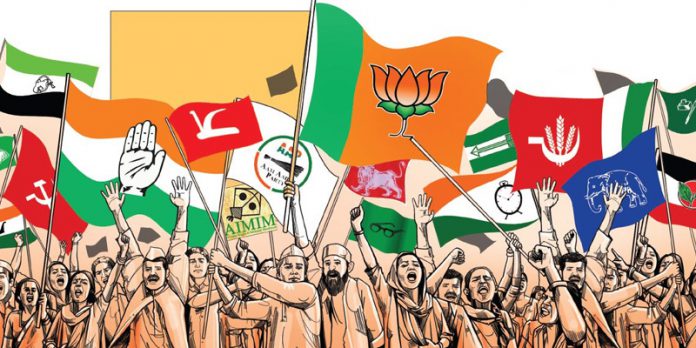
The unified front presented by the INDIA bloc signifies a critical moment in Indian politics. Parties like the Trinamool Congress (TMC) in West Bengal, various factions of the Left, and the Congress party itself, have all thrown their weight behind the student movement. This broad-based support transcends traditional party lines, emphasizing a shared concern for the future of India's youth and the integrity of its examination systems. In West Bengal, the situation is particularly charged, with the TMC, Congress, and Left parties actively backing students' demands. Meanwhile, the ruling Bharatiya Janata Party (BJP) has issued stern warnings against any disruption during a planned rally in Kolkata on Friday, underscoring the high stakes involved and the potential for direct confrontation between political rivals and protesters.
The government, for its part, has indicated a readiness to engage in a parliamentary debate on the NEET protests. However, this readiness comes with a significant caveat: the government insists on retaining the power to decide the rules and duration of such a discussion, rather than leaving it to the Speaker's discretion. This stance has drawn sharp criticism from the opposition, which points to past precedents, such as the ten hours allocated for a debate on 'Vande Mataram' in Parliament, to argue that the government is attempting to curtail meaningful discussion on an issue of national importance like the NEET leaks. The opposition views this as an attempt to control the narrative and minimize scrutiny, further fueling their accusations of democratic erosion.
This political standoff, emerging shortly after a hard-fought general election where the INDIA bloc made significant gains, sets the stage for a tumultuous upcoming parliamentary session. The NEET controversy has provided the opposition with a powerful, emotionally charged issue around which to galvanize public opinion and challenge the government's authority. The alleged 'killing of democracy' by undermining institutions and accountability, as posited by Rahul Gandhi, will likely form a cornerstone of the opposition's strategy. The government faces the twin challenges of addressing the genuine grievances of millions of students and deflecting the political offensive mounted by a newly energized opposition. The outcome of this confrontation will not only determine the fate of the NEET UG 2024 examination but also significantly influence the dynamics of Indian politics in the coming months, shaping public perception of both the ruling dispensation and the united opposition. The resolution, or lack thereof, of the NEET crisis will undoubtedly have far-reaching consequences for India's educational landscape and its democratic future.
How do you feel about this story?
Discussion
No comments yet. Be the first to share your thoughts.
Join the discussion
Sign in to share your thoughts on this story.