BNN Summary
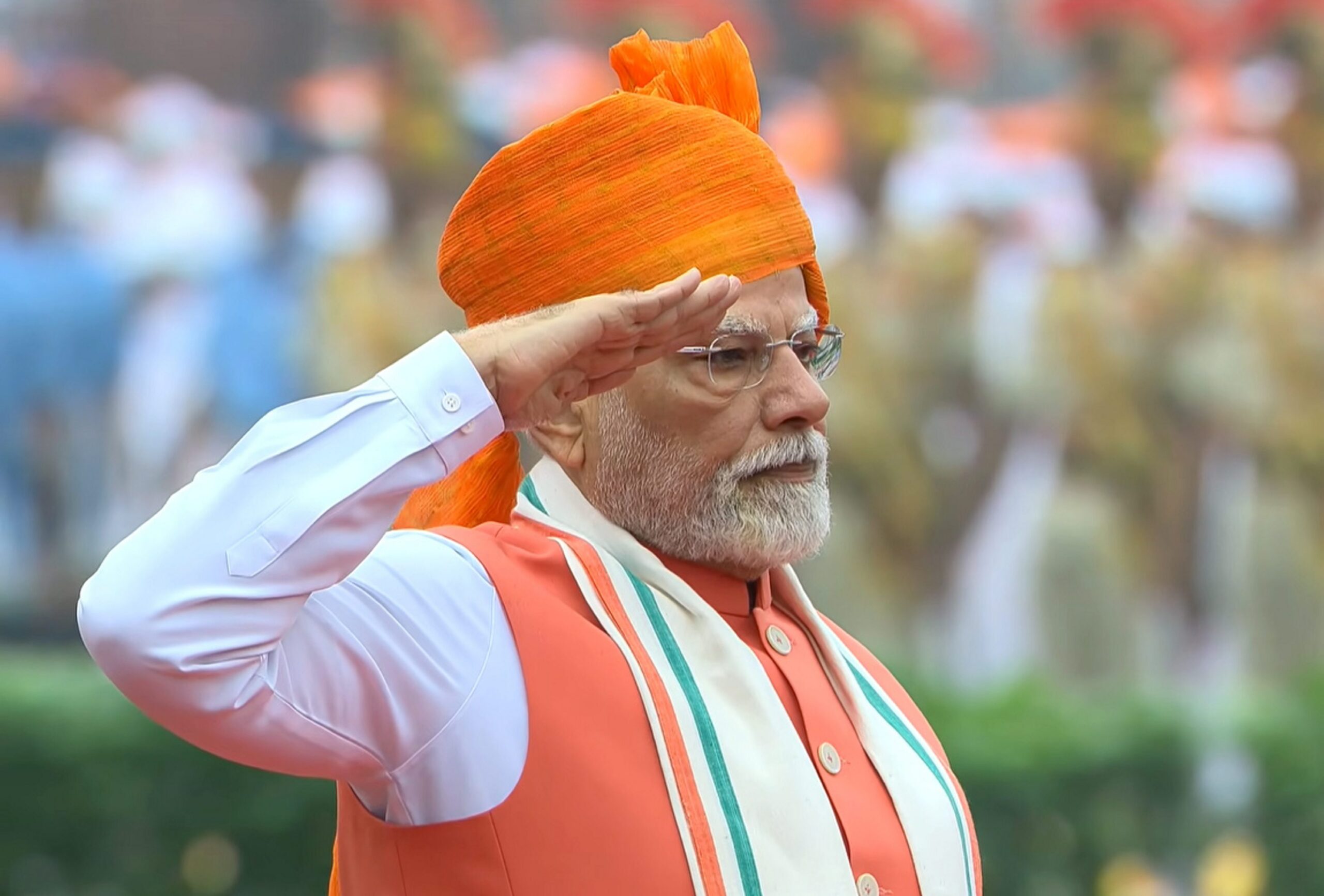
Sky News host James Macpherson has accused Australian Labor Party members of being excessively eager to associate themselves with Indian Prime Minister Narendra Modi during his recent diplomatic engagements, sparking debate over political optics.
In-Depth Analysis
In a recent broadcast on Sky News Australia, host James Macpherson launched a pointed critique directed at the Australian Labor Party, suggesting that government members were 'falling over themselves' to secure proximity to Indian Prime Minister Narendra Modi. The commentary centers on the shifting diplomatic landscape and the political theater that often accompanies high-level state visits, particularly those involving leaders of major emerging global economies.
The Nature of the Critique
Macpherson argued that the fervor displayed by Labor politicians to be seen alongside the Indian Prime Minister indicates a calculated shift in political strategy. According to the host, the eagerness to align with Mr. Modi is not merely about standard diplomatic courtesy, but rather a performative attempt to bolster their own political standing through association with a high-profile international figure. He contended that the enthusiasm shown by the government side was palpable and perhaps disproportionate to the typical decorum expected during such state-level interactions.
Strategic Alliances and Global Realignment
The relationship between Australia and India has become increasingly central to Canberra’s foreign policy, particularly as both nations seek to navigate the complexities of the Indo-Pacific region. India, under the leadership of Narendra Modi, has emerged as a critical strategic partner for Australia, spanning areas from trade and defense to technology and education.
However, Macpherson’s commentary touches upon the internal friction within Australian politics regarding these ties. Critics of the government often point to the optics of foreign policy, questioning whether the pursuit of international validation sometimes supersedes domestic policy focus. By suggesting that Labor members were competing for photo opportunities or public proximity to Mr. Modi, Macpherson aims to frame the government as being more concerned with favorable imagery than with the substantive outcomes of the bilateral relationship.
Political Context of the Remarks
This is not the first time that the interactions between the Australian government and international leaders have come under scrutiny from media commentators. The Sky News host emphasized that the 'falling over themselves' behavior was observed during specific events, implying that the rush to be seen with Mr. Modi was an attempt to signal strong support for the Australia-India partnership to the diaspora and international observers alike.
From the perspective of the Labor government, these engagements are viewed as essential building blocks for long-term economic prosperity and regional security. The 'Quad' framework and various bilateral trade agreements are frequently cited by ministers as evidence that the relationship is maturing. Yet, for critics like Macpherson, the perceived desperation in the behavior of some politicians remains a point of contention, serving as a reminder that foreign policy success is often judged just as much by the optics as by the actual signed agreements.
Broader Implications
As Australia continues to deepen its engagement with the Indian government, the role of political messaging becomes increasingly important. If politicians are indeed perceived as being overly eager to court favor, it may provide ammunition for opposition parties and commentators to question the balance of power and influence in the relationship. Whether this sentiment reflects a genuine shift in diplomatic conduct or merely a media narrative regarding political 'fandom' remains a subject of ongoing debate in the Australian capital.
How do you feel about this story?
Discussion
No comments yet. Be the first to share your thoughts.
Join the discussion
Sign in to share your thoughts on this story.