BNN Summary
Bihar BJP leader Sanjay Saraogi has denounced the 1975 Emergency as the most significant attack on India's democratic framework, reaffirming his party's dedication to upholding constitutional integrity and civil liberties against historical threats to governance.
In-Depth Analysis
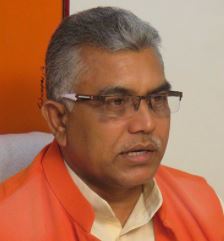
In a pointed assessment of Indian political history, Bihar BJP President Sanjay Saraogi has characterized the 1975 Emergency, imposed by the then-Prime Minister Indira Gandhi, as the most severe assault on the nation's democratic foundations. Speaking at a commemorative event, Saraogi emphasized that the period represented a systematic dismantling of institutional checks and balances, forcing a nationwide reckoning with the fragility of civil rights.
A Legacy of Institutional Disruption
Saraogi argued that the declaration of Emergency on June 25, 1975, was not merely a political maneuver but a fundamental violation of the social contract between the state and its citizens. He highlighted the mass incarceration of political opposition members, the censorship of the press, and the suspension of fundamental rights as evidence of an era where executive overreach completely eclipsed the rule of law. According to the Bihar BJP leader, the trauma inflicted during those twenty-one months continues to serve as a stark reminder of why eternal vigilance is required to safeguard the Indian Constitution.
The BJP Stance on Constitutional Values
During his address, Saraogi asserted that the Bharatiya Janata Party (BJP) maintains a foundational commitment to the protection of democratic values. He stated that the party's ideological roots are deeply intertwined with the resistance movement that emerged during the Emergency. By positioning the current BJP leadership as custodians of democracy, Saraogi aims to draw a clear ideological distinction between the present administration and the authoritarian trends seen during the mid-seventies.
Historical Context and Modern Relevance
'The lessons from the Emergency must be taught to every generation,' Saraogi remarked. He underscored that the constitutional amendments enacted during that period were aimed at concentrating power, and it took a massive, unified struggle by democratic forces to eventually restore the parliamentary system to its original sanctity. The BJP leader noted that the party remains committed to the spirit of the 'Total Revolution'—a movement led by Jayaprakash Narayan—which sought to cleanse the political landscape of corruption and ensure that power remains decentralized and accountable to the people.
Protecting Democratic Frameworks
Saraogi concluded his speech by calling for a renewed national vow to uphold the independence of the judiciary and the freedom of the media. He suggested that the resilience of India's democracy was tested during that dark chapter, and it is the responsibility of contemporary leaders to ensure that no government in the future can ever replicate such a suppression of human rights. The event served as both a historical reflection and a strategic political statement, framing the BJP as the vanguard of national stability and constitutional order in an increasingly complex political environment. As the discourse surrounding historical narratives continues to evolve in Bihar, Saraogi's remarks are expected to ignite further debate regarding the long-term impact of the Emergency on contemporary Indian governance.
How do you feel about this story?
Discussion
No comments yet. Be the first to share your thoughts.
Join the discussion
Sign in to share your thoughts on this story.