BNN Summary
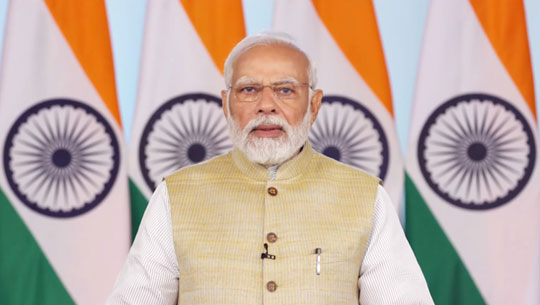
Prime Minister Narendra Modi marks the 50th anniversary of the Emergency in India while receiving a formal invitation from Iran to attend the funeral of Supreme Leader Ayatollah Seyyed Ali Khamenei, highlighting his dual focus on domestic history and international diplomacy.
In-Depth Analysis
Prime Minister Narendra Modi has recently been at the center of both critical domestic reflections and significant international diplomatic developments. On the domestic front, the Prime Minister took a firm stance while commemorating the 50th anniversary of the Emergency, a period he described as a 'dark chapter' in India's democratic history. Simultaneously, on the global stage, he received a formal invitation from the Iranian government to attend the state funeral of Supreme Leader Ayatollah Seyyed Ali Khamenei, reflecting the complex geopolitical engagements currently facing the Indian administration.
Remembering the Dark Days of Emergency
Marking five decades since the imposition of the Emergency in India, Prime Minister Modi utilized the occasion to highlight the importance of safeguarding democratic institutions. In his address, the Prime Minister recalled the hardships faced by the citizens during that period, specifically noting the severe restrictions placed on freedom of expression and the suppression of political dissent. He characterized the era as a 'cruel suppression' of the nation's democratic spirit, emphasizing that the lessons learned from those years remain vital for modern India. By reminding the public of the constitutional crisis that occurred in 1975, Modi aimed to reiterate his administration's commitment to upholding individual rights and parliamentary transparency.
Diplomatic Outreach from Tehran
In a separate yet equally significant development, Prime Minister Modi has been formally invited by Iranian President Masoud Pezeshkian to represent India at the official state funeral and memorial services for the late Iranian Supreme Leader, Ayatollah Seyyed Ali Khamenei. The invitation arrives amidst a delicate regional climate, following reports of an air strike involving American and Israeli interests that resulted in the Supreme Leader's death.
This diplomatic gesture by Tehran underscores the enduring bilateral relationship between New Delhi and Tehran. Despite international pressures and shifting alliances in the Middle East, India has consistently maintained a policy of strategic autonomy. Accepting or acknowledging such an invitation requires a careful balancing act by the Prime Minister's Office, as it navigates deep-rooted ties with Iran while simultaneously maintaining robust partnerships with Western nations and regional allies.
A Confluence of National and International Priorities
These recent events illustrate the multifaceted nature of Prime Minister Modi's current tenure. On one hand, he remains focused on the internal narrative, ensuring that the history of India's political struggles is preserved and remembered as a foundation for current governance. On the other hand, the invitation from Iran places the Prime Minister at the heart of global crisis management. As the international community watches how India responds to the unfolding situation in Tehran, the Prime Minister continues to emphasize the need for stability, respect for sovereignty, and the preservation of democratic values globally. Whether addressing the ghosts of the past or navigating the geopolitical challenges of the present, the Prime Minister remains committed to asserting India's position as a responsible and influential global actor.
How do you feel about this story?
Discussion
No comments yet. Be the first to share your thoughts.
Join the discussion
Sign in to share your thoughts on this story.