BNN Summary
Unlike the ideologically polarized US Congress, India's Lok Sabha operates without a clear Left-Right legislative divide. Instead, its political landscape is deeply shaped by geographical concerns, regional identities, linguistic diversity, and caste dynamics. The rise of powerful regional parties and the first-past-the-post electoral system amplify these localized priorities, often overshadowing broad ideological alignments and leading to significant debates over equitable representation, particularly concerning the proposed expansion of parliamentary seats.
In-Depth Analysis
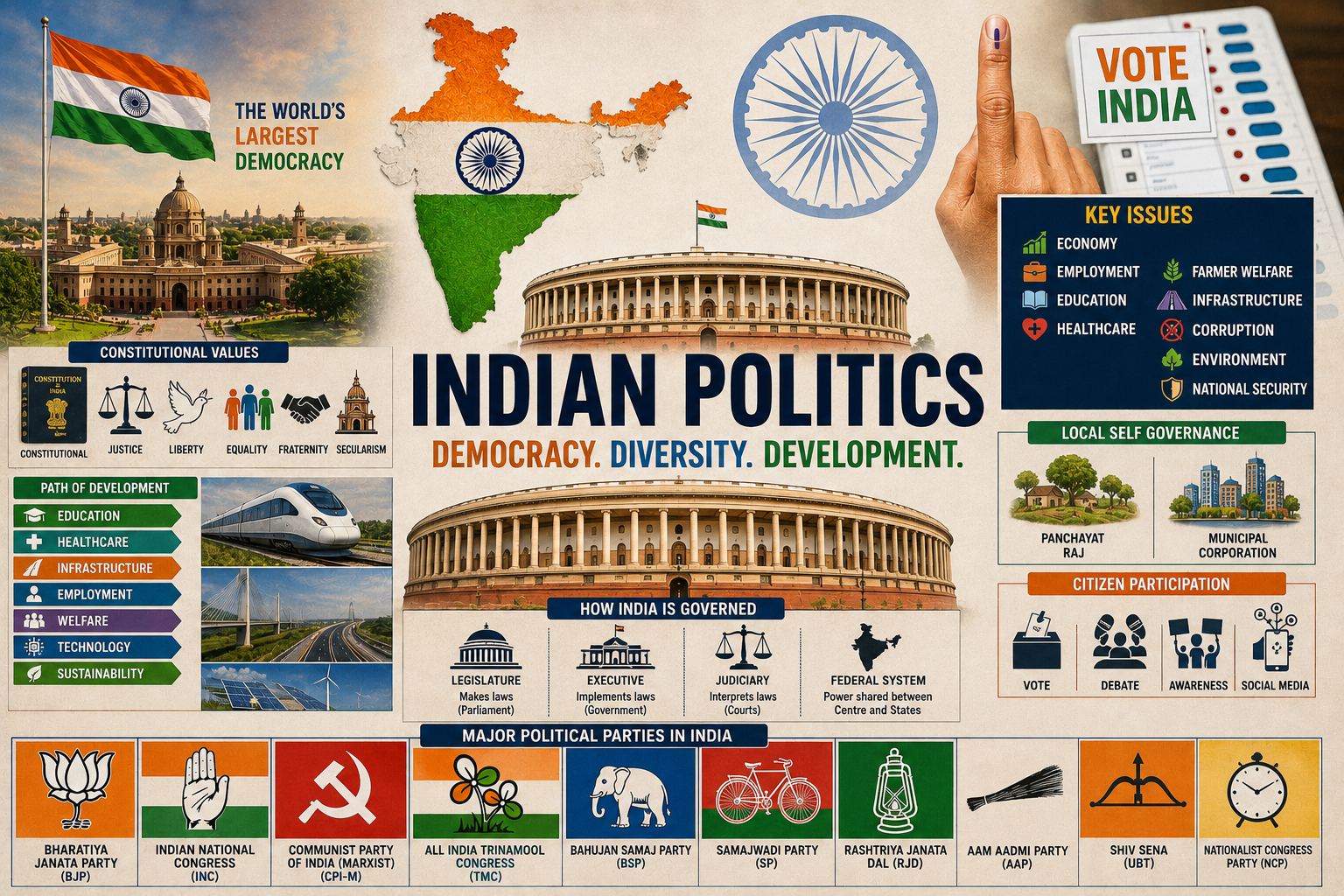
India's parliamentary democracy, particularly its lower house, the Lok Sabha, presents a distinctly different political dynamic compared to legislative bodies like the United States Congress. While the US Congress often sees its members aligning into two nearly perfectly separated ideological clusters—Democrats on one side and Republicans on the other—data indicates that such a clear Left-Right ideological divide is not a defining feature of the Lok Sabha. [cite: original snippet] Instead, the concerns and priorities of Members of Parliament (MPs) in India are intrinsically tied to geography, reflecting the nation's profound diversity.
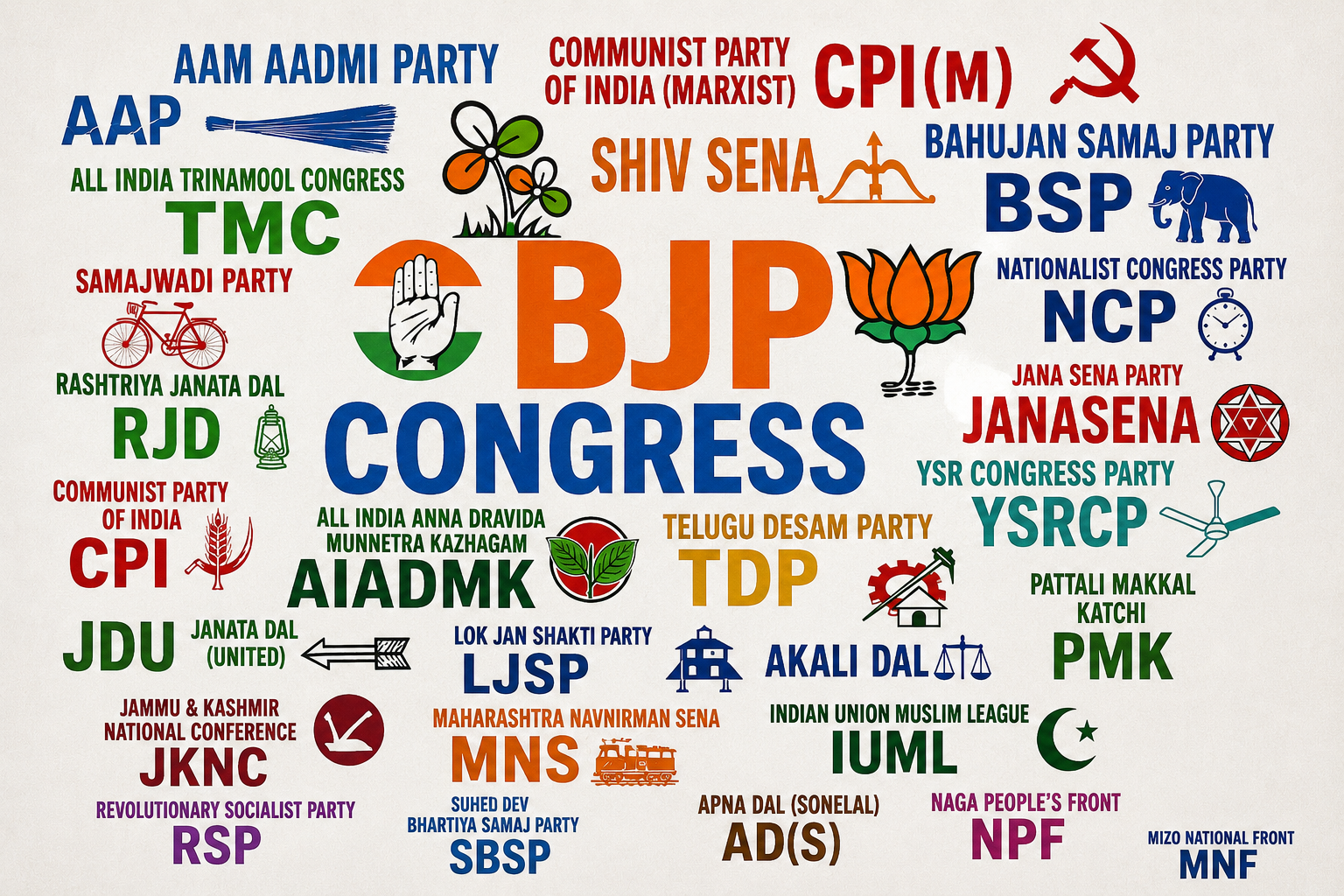
This unique political landscape is largely a consequence of India's inherent fragmentation, which is further amplified by its federal structure and deep sociological pluralism. Factors such as caste stratification, linguistic diversity, and distinct regional identities play a far more significant role in shaping political allegiances and legislative agendas than a broad ideological spectrum. Regional parties have emerged as formidable forces, frequently prioritizing state-level dominance and local issues over a cohesive national ideological alignment. Prominent examples include the Trinamool Congress in West Bengal, the Dravida Munnetra Kazhagam (DMK) in Tamil Nadu, and the Samajwadi Party and Bahujan Samaj Party in Uttar Pradesh, all of whom focus primarily on regional consolidation and specific voter bases.
The historical trajectory of Indian politics also contributes to this phenomenon. For the first four decades post-independence, the Indian National Congress (INC) operated as a dominant political formation, functioning more as a broad umbrella movement that encompassed diverse ideological tendencies, caste groups, regional elites, and social classes. This 'Congress system' was characterized by internal factional competition rather than structured competition between ideologically distinct parties. However, the erosion of Congress hegemony began in the late 1960s, a period marked by increased internal factionalism and the rise of regional aspirations, which weakened centralized authority and paved the way for a more fragmented party system.
In contemporary Indian politics, the Bharatiya Janata Party (BJP) has risen to a dominant position, fundamentally altering the nature of political competition. The BJP's success has been characterized by restructuring electoral cleavages around identity, nationalism, and strong leadership, largely promoting a Hindu-nationalist (Hindutva) ideology. While the BJP has expanded its footprint across states, its electoral strength often exhibits a distinct geographical pattern, with concentrations in specific northern and western states, demonstrating a pronounced spatial dependence in its vote share.
The 'First Past the Post' (FPTP) electoral system further exacerbates the impact of political fragmentation. Under this system, even a modest plurality of votes can secure a victory in a constituency. When multiple regional and national parties contest separately, the anti-incumbent vote can be split, mechanically converting fragmented opposition votes into significant seat bonuses for the most cohesive party, often the BJP in recent elections.
Consequently, the priorities of Lok Sabha MPs are often deeply rooted in local and regional demands. Discussions surrounding economic development, social welfare programs, and infrastructure projects within specific constituencies frequently take precedence. This emphasis on regional concerns has also fueled ongoing debates about equitable representation in the Lok Sabha. The current allocation of seats is frozen based on the 1971 Census, which has led to significant distortions. Southern states, which have achieved better population control and exhibit higher economic productivity, feel increasingly underrepresented. Conversely, northern states, experiencing faster population growth, enjoy greater numerical strength in Parliament.
Proposals to increase the strength of the Lok Sabha, for instance, from 543 to as many as 815 or 816 seats, are currently under discussion. While proponents argue for enhanced representation due to population growth, such proposals have raised concerns among leaders from southern, northeastern, and western states. They warn that a uniform increase in seats based on current population figures would disproportionately benefit northern states, potentially further widening existing regional imbalances and diminishing the influence of other regions in national decision-making. This dynamic underscores that in India's Lok Sabha, political alignment and legislative focus are not primarily driven by a Western-style Left-Right ideological spectrum, but rather by the intricate mosaic of regional identities, developmental needs, and geographical imperatives.
How do you feel about this story?
Discussion
No comments yet. Be the first to share your thoughts.
Join the discussion
Sign in to share your thoughts on this story.