BNN Summary
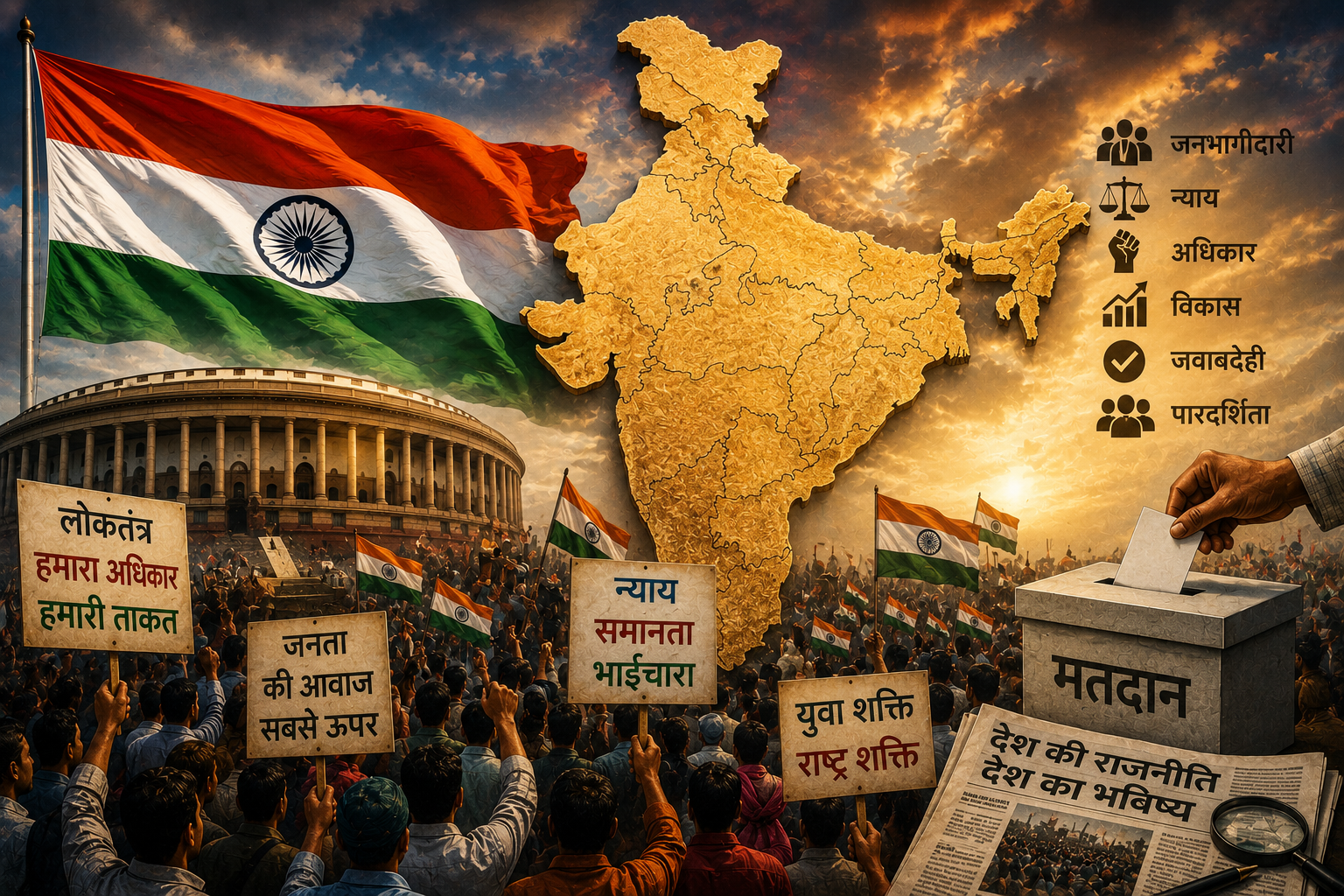
The Indian National Congress has intensified its call to elevate the right to vote to a Fundamental Right within the Constitution, citing concerns over alleged voter suppression and the perceived partisan nature of election bodies. This move aims to provide greater judicial protection and ensure electoral integrity, with party leader Jairam Ramesh referencing Sardar Patel's historical view on universal adult franchise as an implicit fundamental right. The party seeks to safeguard democratic principles against potential infringements by electoral authorities.
In-Depth Analysis
The Indian National Congress has embarked on a robust campaign to classify the right to vote as a Fundamental Right under the nation's Constitution. This significant demand stems from the party's growing apprehensions regarding incidents of alleged voter suppression and what it describes as the increasingly partisan conduct of electoral bodies, specifically the Election Commission of India (EC) and various State Election Commissions (SIRs). By seeking to enshrine this right at a foundational level, the Congress party aims to bolster its judicial protection, thereby providing citizens with stronger legal recourse against any attempts to impede their franchise or arbitrarily disqualify candidates.
Congress leader Jairam Ramesh underscored the historical backing for this position, invoking the stance of Sardar Vallabhbhai Patel, a pivotal figure in India's independence movement. Ramesh stated that Patel himself held the view that universal adult franchise inherently constituted an 'implicit fundamental right'. This historical context provides a strong ideological foundation for the Congress party's current advocacy, suggesting that the spirit of India's democratic framework always envisioned voting rights as a core, inalienable entitlement rather than a mere statutory privilege.
Currently, the right to vote in India is primarily a statutory right, enshrined under laws such as the Representation of the People Act, 1951. While this legislation provides a framework for conducting elections and delineating voting procedures, its status as a statutory right means it can be subject to amendments or interpretations that may not carry the same weight or judicial oversight as a Fundamental Right. Should voting be reclassified, it would place it on par with other essential liberties guaranteed by the Constitution, such as the right to equality, freedom of speech, and protection of life and personal liberty.
Elevating the right to vote to a Fundamental Right would usher in several profound implications for India's democratic landscape. Primarily, it would subject any legislative or executive action affecting voting rights to a much higher degree of judicial scrutiny. Courts would be empowered to strike down laws or decisions that are deemed to infringe upon this fundamental entitlement without due process or reasonable justification. This would offer a robust shield against practices that Congress alleges amount to voter suppression, such as the arbitrary deletion of voter names from electoral rolls, imposition of unreasonable procedural hurdles, or politically motivated disqualifications of eligible voters or candidates.
Furthermore, the move is seen as a direct response to concerns about the perceived impartiality of election management bodies. The Congress party's allegations of a 'partisan EC, SIR' imply a belief that these institutions, which are constitutionally mandated to ensure free and fair elections, may at times be acting in a manner that favors the incumbent government or specific political entities. While the context does not provide specific instances, such allegations typically involve claims of selective enforcement of electoral codes of conduct, delayed responses to complaints against ruling parties, or contentious decisions regarding electoral boundaries or candidate eligibility. Granting Fundamental Right status to voting would, in theory, create a more potent check on the powers of these commissions, obliging them to operate with unimpeachable transparency and fairness under heightened judicial oversight.
The potential impact on voter participation and confidence would also be significant. When citizens perceive their voting rights as constitutionally protected and beyond the arbitrary reach of political whims, it can foster greater trust in the electoral system and encourage broader participation. Conversely, concerns about voter suppression or the manipulation of electoral processes can lead to disillusionment and disengagement, which are detrimental to a healthy democracy.
Amending the Constitution to include a new Fundamental Right is a rigorous process, requiring a special majority in both houses of Parliament (Lok Sabha and Rajya Sabha) and, in some cases, ratification by at least half of the state legislatures. This complex procedure underscores the gravity and long-term implications of such a constitutional change. While the path to achieving this goal is challenging, the Congress party's vocal advocacy signals its commitment to what it views as a critical reform for strengthening India's democratic foundations and ensuring the sanctity of the electoral process for all its citizens. This proposed shift represents a fundamental re-evaluation of how India safeguards one of the most critical aspects of its democratic identity. It underscores a desire to move beyond statutory protections towards an unequivocal constitutional guarantee for every citizen's right to cast their ballot.
How do you feel about this story?
Discussion
No comments yet. Be the first to share your thoughts.
Join the discussion
Sign in to share your thoughts on this story.