BNN Summary
Karnataka's Legislative Council elections concluded with all 222 MLAs casting their votes. Amidst the closely watched contest for seven seats, expelled BJP MLA S.T. Somashekar openly announced he voted for a Congress candidate. His decision, he stated, was guided by his conscience and the imperative of constituency development and public welfare, drawing significant political attention and highlighting the intricacies of cross-party affiliations in the state's political landscape.
In-Depth Analysis
The biennial elections to the Karnataka Legislative Council concluded successfully on Thursday, June 18, 2026, with all 222 members of the Legislative Assembly exercising their franchise. The polling, held at Vidhana Soudha in Bengaluru from 9 AM to 4 PM, was to fill seven seats that will fall vacant following the retirement of incumbent MLCs on June 30.
Among the various interesting incidents that marked the election, a significant declaration came from S.T. Somashekar, an MLA who had been expelled from the Bharatiya Janata Party (BJP). Somashekar openly stated that he cast his vote in favor of a Congress candidate.
Explaining his decision, Somashekar emphasized that his choice was driven by his 'conscience' and the paramount importance of his constituency's development and the welfare of its people. He conveyed that he had brought constituency-related concerns to the attention of Chief Minister D.K. Shivakumar, who reportedly responded positively. Somashekar and another expelled BJP MLA, Shivaram Hebbar, were observed with Congress legislators at a resort where the ruling party's MLAs were camped, and they also met with Chief Minister Shivakumar on the polling day itself.
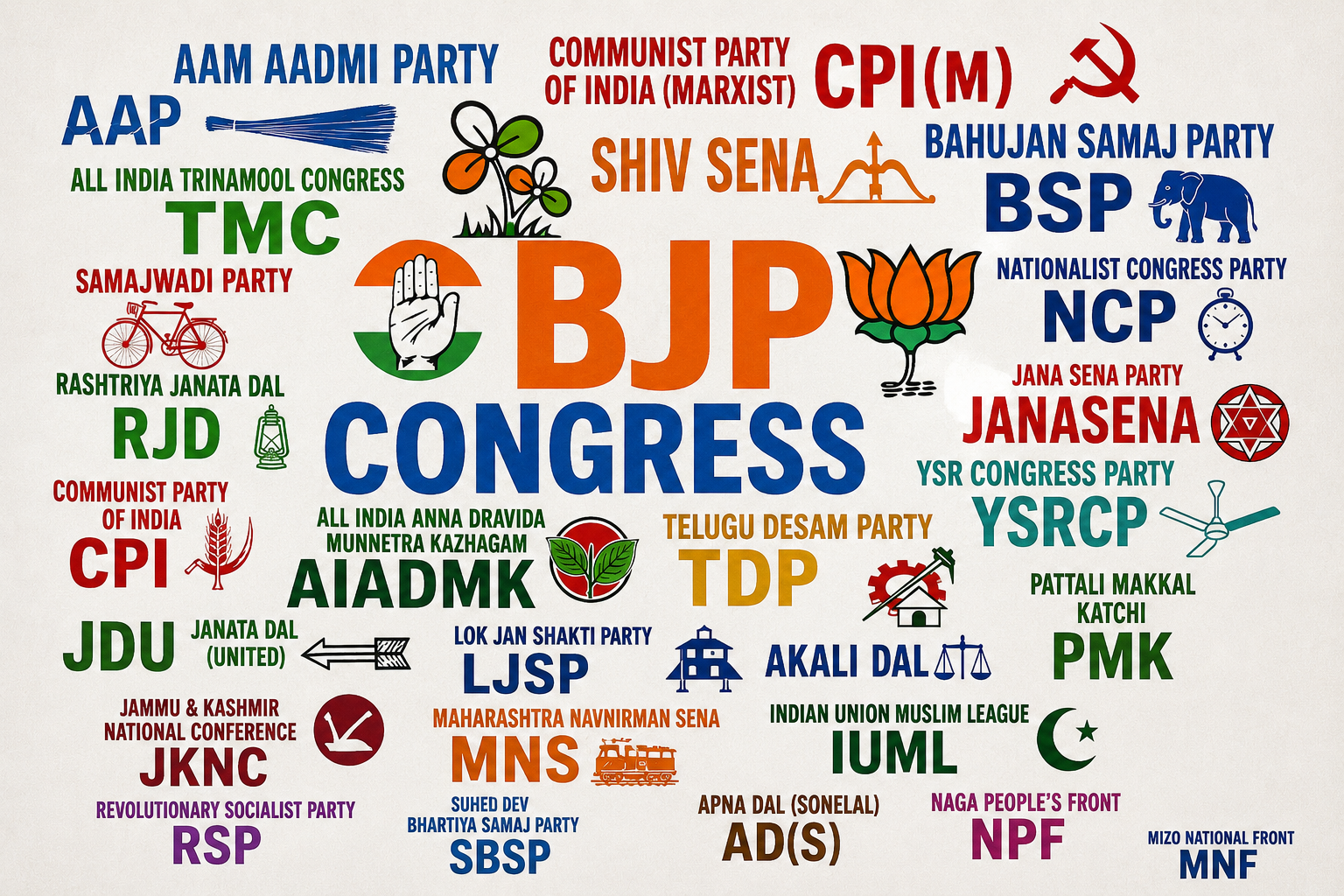
The election was a crucial test for the ruling Congress, especially under the leadership of Chief Minister D.K. Shivakumar, who recently assumed office. The Congress aimed to secure five of the seven seats, leveraging its strength of 135 MLAs in the 222-member Assembly. The BJP, with 63 members, was expected to comfortably win two seats, while its ally, the Janata Dal (Secular) (JD(S)), with 18 MLAs, fielded a candidate despite lacking the requisite numbers to win independently.
Each candidate required a minimum of 28 votes to secure a victory. The main contest was anticipated for the seventh seat, with both the Congress and the JD(S) fielding candidates in a tightly contested battle.
Fears of cross-voting loomed over the election, leading both the Congress and the JD(S) to sequester their legislators in separate resorts on the outskirts of Bengaluru. This practice is common in such elections to prevent unexpected voting patterns. However, despite these measures, the open declaration by Somashekar underscored the complexities and fluidity of political alliances and individual choices in secret ballot elections for the Legislative Council.
The concept of 'cross-voting' in elections like those for the Legislative Council or Rajya Sabha refers to a situation where members vote against their party's official whip or directive. While a whip is typically issued, the open ballot system for Rajya Sabha elections (where MLAs must show their ballot to an authorized party agent) is designed to deter cross-voting, though it doesn't entirely eliminate it. For Legislative Council elections from the Assembly, while parties issue whips, some interpretations suggest the anti-defection law may not strictly apply to votes cast outside the floor of the house, allowing for a 'conscience vote' without immediate disqualification, though disciplinary action from the party remains a possibility. Somashekar's prior history includes defecting from Congress to BJP in 2019, contributing to the downfall of the then-coalition government, and later being re-elected on a BJP ticket, before his recent expulsion from the party.
The successful completion of the voting process, which saw a high turnout, now sets the stage for the counting of votes, scheduled to begin at 5 PM on the same day. The results will reveal the final distribution of seats and the impact of individual decisions, such as Somashekar's, on the state's political dynamics.
How do you feel about this story?
Discussion
No comments yet. Be the first to share your thoughts.
Join the discussion
Sign in to share your thoughts on this story.