BNN Summary
All India Majlis-e-Ittehadul Muslimeen (AIMIM) chief Asaduddin Owaisi has launched his party's campaign for the 2027 Uttar Pradesh Assembly elections from Bahraich, a politically sensitive district. His rally in Matera, a Samajwadi Party stronghold, aims to consolidate Muslim support and disrupt established political dynamics. Owaisi's visit is strategically timed amidst a renewed debate over the historical figures of Maharaja Suheldev and warrior-saint Syed Salar Masood Ghazi, a narrative actively leveraged by the BJP.
In-Depth Analysis
Asaduddin Owaisi, the prominent chief of the All India Majlis-e-Ittehadul Muslimeen (AIMIM), has commenced his party's electoral campaign for the crucial 2027 Uttar Pradesh Assembly elections with a significant rally in Bahraich. This strategic move, originating from Matera—a long-standing stronghold of the Samajwadi Party (SP) since its creation in 2008 following the delimitation exercise—is designed to consolidate Muslim support and challenge the entrenched political equations between the Bharatiya Janata Party (BJP) and the SP in eastern Uttar Pradesh.
Owaisi's choice of Bahraich is particularly symbolic, as it places AIMIM directly into a contentious historical and political debate surrounding Maharaja Suheldev and warrior-saint Syed Salar Masood Ghazi. The region has a substantial Muslim population, estimated at around 33.53% of the district's total, evenly distributed across its seven assembly constituencies. This demographic makes Bahraich a fertile ground for parties seeking to influence the Muslim vote.
The 'Maharaja Suheldev-Ghazi' debate has gained renewed prominence under the BJP government in Uttar Pradesh. Maharaja Suheldev is a legendary 11th-century king from Shravasti, widely believed to have defeated and killed the Ghaznavid general Ghazi Saiyyad Salar Masud in Bahraich in 1034 CE. Historically, Ghazi Miyan's tomb in Bahraich serves as a pilgrimage site for both Muslims and Hindus. However, Hindutva forces, including the BJP, Vishwa Hindu Parishad (VHP), and Rashtriya Swayamsevak Sangh (RSS), have actively sought to appropriate Suheldev's legacy, portraying him as a Hindu Dalit who championed the faith against a Muslim invader. Prime Minister Narendra Modi, since 2016, has frequently invoked Suheldev as a 'saviour of Hindu religion,' and in 2021, laid the foundation stone for a Maharaja Suheldev Memorial in Bahraich.
The BJP's narrative aims to consolidate OBC (Other Backward Classes) and Dalit votes, particularly the Rajbhar community, which claims affinity with Suheldev. Conversely, those who venerate Ghazi Miyan sometimes view Suheldev as an oppressive local ruler, from whose grasp their ancestors were liberated by Ghazi Miyan. This complex historical interpretation provides a potent political battleground. Uttar Pradesh minister Anil Rajbhar recently intensified the controversy by claiming the Ghazi dargah site was originally a 'Surya Kund' (sun temple) and sought an Archaeological Survey of India (ASI) survey.
Owaisi's decision to launch his campaign from Bahraich, and his plan to offer prayers at the Dargah of Syed Salar Masood Ghazi, directly engages with this deeply sensitive issue. It positions AIMIM as a voice for Muslim voters who traditionally have been a significant support base for the Samajwadi Party. AIMIM's Uttar Pradesh president, Shaukat Ali, confirmed Owaisi's visit and public meeting near Shankarpur Chauraha in Matera. Matera is a backward and flood-prone constituency with a significant Muslim, Yadav, OBC, and Scheduled Caste population, having been an SP bastion since 2012, with Mariya Shah currently holding the seat.
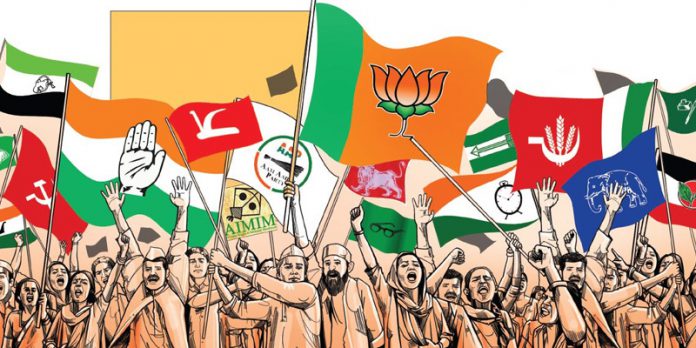
AIMIM views itself as an alternative political platform that can attract Muslim voters who feel taken for granted by 'secular' parties like the SP, BSP, and Congress. The party aims to create an 'independent Muslim political voice' and has accused the SP of exploiting Muslim votes without ensuring development. In previous elections, despite contesting a significant number of seats, AIMIM failed to secure an assembly seat in Uttar Pradesh. However, this time, AIMIM plans to contest around 200 seats for the 2027 elections and remains open to alliances, specifically mentioning a potential partnership with the Bahujan Samaj Party (BSP), believing a Dalit-Muslim alliance could significantly alter the electoral arithmetic, given that Muslims and Dalits together constitute nearly 40% of the vote share. This strategy directly challenges the SP's long-held dominance over a significant portion of the Muslim vote.
The intervention by Owaisi has transformed what was largely seen as a bipolar contest between the BJP and the SP into a potential three-cornered fight in eastern UP, with the 2027 Assembly elections on the horizon. The move has drawn sharp responses, including from Om Prakash Rajbhar, chief of the BJP ally Suheldev Bharatiya Samaj Party (SBSP), who reiterated his stance describing Ghazi as a 'foreign invader.' Owaisi's campaign signals a broader, more ambitious electoral strategy for AIMIM in India's most politically significant state, focusing on expanding its organizational presence in key regions like western Uttar Pradesh and the Awadh region, including districts such as Bahraich, Balrampur, and Basti.
How do you feel about this story?