BNN Summary
Following an attack, Trinamool Congress leader Abhishek Banerjee publicly thanked Rahul Gandhi for his support, signaling strong solidarity within the Indian National Developmental Inclusive Alliance (INDIA). The incident has prompted the INDIA bloc to reaffirm its united front, potentially rebuilding opposition cohesion amidst earlier questions about Mamata Banerjee's standing within the alliance. Leaders across the coalition are emphasizing their shared commitment to fight unitedly.
In-Depth Analysis
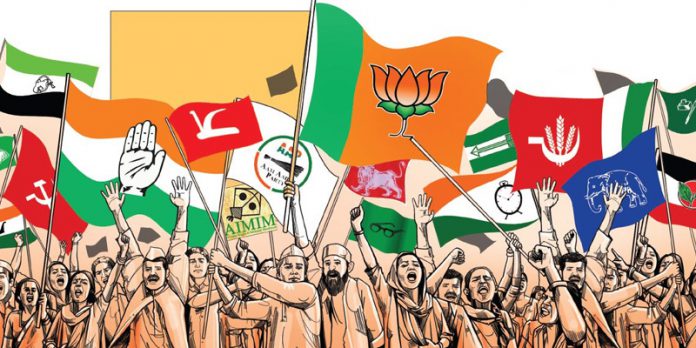
In a significant demonstration of inter-party solidarity within the Indian National Developmental Inclusive Alliance (INDIA), Trinamool Congress (TMC) leader Abhishek Banerjee recently extended his sincere gratitude to Rahul Gandhi for his support following a recent attack. This public acknowledgment from a key figure within the TMC, coupled with a resounding affirmation of unity from various constituents of the INDIA bloc, has forcefully underscored the alliance's collective resolve to present a cohesive front against political adversaries. Banerjee's declaration, 'We stand united,' serves as a powerful message, specifically aimed at dispelling any lingering doubts about the overall cohesion and operational strength of the opposition coalition.
While the precise nature and specific details surrounding the attack on Abhishek Banerjee remain a subject of ongoing discussion and potential investigation, its immediate aftermath has inadvertently served as a critical test for the INDIA bloc's unity. The incident prompted a rapid and largely collective outpouring of support from prominent leaders across the alliance. This swift and coordinated response effectively transformed what could have been a moment of vulnerability for an individual leader into a strategic opportunity for the bloc to visibly demonstrate its collective strength and shared resolve. Such a prompt and unified show of solidarity is particularly crucial in the current complex political climate, where the ability of diverse opposition parties to present a cohesive and formidable challenge to the ruling dispensation is constantly scrutinized by both the public and political observers.
The specific mention of Rahul Gandhi's support by Abhishek Banerjee carries substantial political weight. As a senior leader of the Indian National Congress, which is a pivotal and foundational member of the INDIA bloc, Gandhi's public or private outreach to Banerjee signifies a strategic effort to bridge any perceived ideological or regional divides and actively reinforce inter-party camaraderie. This gesture transcends mere political courtesy; it signals a deeper, more strategic understanding among alliance members regarding the imperative need for mutual support to effectively counter the ruling party. Such acts of solidarity are absolutely essential for fostering genuine trust and ensuring that the alliance can successfully navigate future political challenges as a singular, more potent entity, rather than as a loose or fragmented collection of disparate parties.
The incident and the subsequent display of unity also bring into sharper focus previous questions that had surfaced regarding Trinamool Congress chief Mamata Banerjee's precise standing and level of influence within the broader INDIA bloc. Recent political maneuvers and public statements had, at times, fueled speculation about potential fissures or a possible re-evaluation of her significant role within the alliance. However, the concerted and widespread support extended to her nephew, Abhishek Banerjee, from the wider alliance—critically including the prominent and timely endorsement from Rahul Gandhi—suggests a concerted and successful effort to mend any perceived cracks and emphatically reaffirm the TMC's integral and indispensable position within the coalition. This renewed and highly visible demonstration of unity could prove instrumental in 'rebuilding opposition unity,' as perceptively suggested by various political commentators, especially as the nation anticipates upcoming major electoral contests.
Abhishek Banerjee's emphatic declaration that the 'INDIA bloc will continue to fight unitedly' is far more than a simple statement of intent; it is a meticulously crafted strategic message intended for both internal alliance members and external political observers. It fundamentally seeks to project an image of an unyielding and resilient alliance, one that is thoroughly prepared to confront and overcome political obstacles with a collective strategy, a unified voice, and a shared purpose. For an alliance comprising numerous regional and national parties, each possessing diverse ideologies and distinct electoral interests, maintaining such a high degree of unity is an ongoing and significant challenge. Incidents like the attack on Banerjee, while regrettable and concerning, can sometimes paradoxically serve as powerful catalysts for strengthening bonds, effectively forcing members to rally around a common cause and reinforcing their shared political objectives. The ability to demonstrate unwavering resilience and steadfast solidarity in the face of adversity is, indeed, a critical litmus test for any large-scale political coalition aspiring to national influence.
The reaffirmation of unity within the INDIA bloc following this incident carries profound strategic implications for the broader landscape of Indian politics. It sends an unequivocal signal to the ruling party that the opposition remains firmly committed to its alliance despite internal complexities and external pressures. For the vast electorate, it endeavors to present a credible and viable alternative, one that is demonstrably capable of collective action and coherent leadership. The ultimate success of the INDIA bloc hinges not just on the formulation of policy agreements but, more crucially, on its ability to consistently project a harmonious and united front. This recent episode, characterized by shared support and public declarations of solidarity, marks a crucial juncture in the alliance's ongoing and concerted efforts to consolidate its political position and robustly prepare for future electoral battles, aiming to successfully navigate and overcome the inherent challenges in uniting such a diverse group of political entities under a single, overarching banner.
How do you feel about this story?