BNN Summary
Tamil Nadu has entered a new phase of coalition politics with the induction of ministers from the Congress, Indian Union Muslim League (IUML), and Viduthalai Chiruthaigal Katchi (VCK) into the government. This strategic move, spearheaded by leader Vijay, signifies a calculated decision to share power and build a broad-based alliance, aiming for comprehensive representation and political stability in the state's dynamic electoral landscape.
In-Depth Analysis
Asignificant shift in Tamil Nadu's political architecture has materialized with the formation of a new coalition government, spearheaded by leader Vijay, marking a decisive moment in the state's political history. This strategic alliance sees ministers from the Congress party, the Indian Union Muslim League (IUML), and the Viduthalai Chiruthaigal Katchi (VCK) being inducted into the state cabinet, signaling a conscious decision to foster power-sharing and inclusive governance.
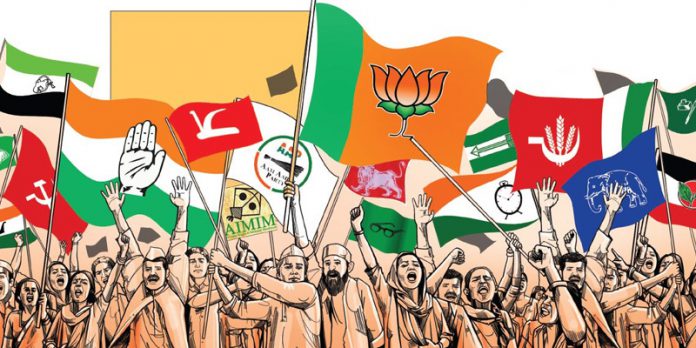
This development is not merely a reshuffling of portfolios but represents a profound recalibration of political strategy within Tamil Nadu. The decision by Vijay to extend an invitation for power-sharing to these diverse political entities underscores a recognition of the complex electoral arithmetic and social fabric of the state. In a region where political mandates are often fiercely contested and regional identities hold immense sway, such a broad-based coalition is designed to consolidate support across various demographic segments and ideological leanings. The inclusion of national party Congress, along with prominent regional and identity-based parties like IUML and VCK, highlights a multifaceted approach to governance and electoral viability.
For the Congress party, its induction into the Tamil Nadu government, albeit with a single ministerial berth, signifies a renewed presence and influence within the state's corridors of power. While its electoral strength in Tamil Nadu has varied over time, the Congress maintains a national footprint and brings a certain ideological alignment that can broaden the coalition's appeal. Its participation can be seen as an effort to strengthen secular fronts and provide a link to national political discourse, potentially offering a broader platform for the state's issues on the national stage.
The Viduthalai Chiruthaigal Katchi (VCK), a party rooted in Dalit liberation politics and social justice, plays a crucial role in this new alignment. The VCK's representation ensures that the voices and concerns of marginalized communities are directly integrated into the government's decision-making process. Their inclusion is a powerful statement about inclusive representation and the recognition of diverse social movements as integral to the state's political landscape. The VCK's influence in specific electoral pockets, particularly in northern Tamil Nadu, is a significant asset for any coalition seeking a robust mandate.
Similarly, the Indian Union Muslim League (IUML), a party with a long history of representing Muslim interests, brings its distinct perspective to the ruling coalition. The IUML's presence helps to ensure that the concerns of the Muslim community are addressed and that the government's policies are reflective of the state's pluralistic society. The party’s disciplined cadre and historical electoral strongholds contribute to the coalition’s overall strength and demonstrate a commitment to safeguarding minority rights. Like the VCK, the IUML's disciplined voter base and historical presence in specific regions are invaluable.
Vijay’s choice to embark on this coalition path, rather than attempting to govern unilaterally, can be interpreted as a pragmatic and forward-looking strategy. In a political environment characterized by intense competition and the need for strong alliances to secure and maintain power, sharing ministerial responsibilities is a common and often effective approach. This allows for the distribution of political capital and leverages the strengths of each constituent party, forming a formidable front against political adversaries. It also mitigates the risk of voter fragmentation by uniting disparate groups under a common banner, thereby maximizing the coalition's electoral potential.
The challenges and opportunities presented by this multi-party governance model are substantial. While it promises broader representation and a more inclusive approach to policy-making, it also necessitates careful coordination, consensus-building, and deft political management to navigate the potentially divergent interests of the coalition partners. However, the benefits of such an arrangement often outweigh the complexities, particularly in ensuring political stability and the effective implementation of public welfare schemes that cater to a wide array of societal needs. The success of this coalition will ultimately depend on the ability of its leaders to maintain unity, address internal disagreements, and collectively work towards the development and welfare of Tamil Nadu.
This new political formation is poised to redefine the future trajectory of Tamil Nadu politics, potentially setting a precedent for future alliances and governance models in a state known for its unique political culture and strong regional identities. It reflects a maturing political landscape where power-sharing and collaborative governance are increasingly seen as essential for effective and representative leadership.
How do you feel about this story?