BNN Summary
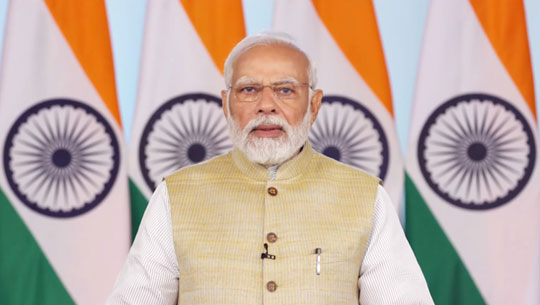
Prime Minister Narendra Modi recently asserted that the Bharatiya Janata Party has fundamentally transformed Indian politics by institutionalizing a 'Nation-First' approach. This ideological shift, according to party leadership, serves as the primary engine behind the party's unprecedented electoral growth and governance model.
In-Depth Analysis
In a series of recent addresses, Prime Minister Narendra Modi articulated a transformative vision for Indian democracy, emphasizing that the Bharatiya Janata Party (BJP) has successfully established a new political paradigm centered on the principle of 'Nation-First'. According to the Prime Minister, this ideological shift is not merely a campaign slogan but a fundamental restructuring of how political parties should engage with governance and public service in India.
The Shift Toward Ideological Governance
The Prime Minister argued that the BJP has transitioned from a traditional political entity into a movement defined by its commitment to national interests above party gains. By prioritizing long-term structural reforms and national security, the party aims to distance itself from the dynastic and identity-based politics that historically dominated the Indian landscape. This doctrine suggests that every policy decision, whether economic or social, must first pass the test of national benefit, an approach that supporters claim has led to a more cohesive and assertive India.
Historical Context of Electoral Growth
Supporting this narrative, Uttar Pradesh Chief Minister Yogi Adityanath recently traced the party's journey from its modest origins in 1984, where it secured only two parliamentary seats, to its current position of national dominance. He attributed this meteoric rise to a steadfast adherence to core values and an uncompromising nationalist identity. According to Adityanath, the transition from the margins of Indian politics to the center stage was fueled by the party's ability to connect with the aspirations of the common citizen while fostering a sense of collective national pride.
Security and Economic Assertiveness
Central to this 'Nation-First' principle is the emphasis on rigorous security protocols and economic self-reliance. Under the current leadership, the government has moved to secure its borders with newfound urgency and has pushed initiatives like 'Atmanirbhar Bharat' (Self-Reliant India) to reduce dependence on foreign imports. The leadership contends that a nation can only truly flourish when it possesses both the internal stability to manage its domestic affairs and the external strength to command respect on the global stage.
Challenges and Criticisms
While the BJP leadership celebrates this transition as a victory for Indian democracy, critics often point to the implications of such a sharp ideological focus. Political observers note that while the 'Nation-First' narrative has proven to be a highly effective mobilizer of the electorate, it also presents challenges in managing India's vast and pluralistic cultural landscape. The party remains firm, however, that prioritizing national interest is the only sustainable path for a country with India's size and geopolitical responsibilities.
The Road Ahead
As the political landscape continues to evolve, the BJP's emphasis on ideology-driven governance remains its most potent tool. Prime Minister Modi has signaled that the coming years will focus on deep-rooted institutional changes designed to ensure that the 'Nation-First' principle remains the cornerstone of Indian governance for generations to come. By institutionalizing these values, the party seeks to create a permanent shift in the political culture, ensuring that future administrations are inherently aligned with this nationalistic focus regardless of the changing electoral tides.
How do you feel about this story?
Discussion
No comments yet. Be the first to share your thoughts.
Join the discussion
Sign in to share your thoughts on this story.